

What Is The National Dish Of Mexico?
We may receive a commission on purchases made from links.
There are plenty of food items that embody the spirit of Mexico, like tequila, chocolate, taquitos, and ceviche. You really get a feel for the country when you're slow-roasting pork for the Yucatan's cochinita pibil or making Central Mexico's iconic brunch nachos known as chilaquiles. But there is one type of food that has become an icon of Mexican cuisine, one that's widely considered the national dish of Mexico — the versatile and ancient mole sauce.
A lot of Mexican cuisine is smothered with mole, and it's a secret ingredient in many other dishes. It's believed to have originated in the Aztec empire and has been passed down through generations, with creative chefs making riffs off the original recipe ever since. Cookbook author of "Muy Bueno Fiestas," Yvette Marquez-Sharpnack, puts it this way: "Mole is so much more than just a sauce. It's a celebration on a plate. It's deeply rooted in tradition, and making it is often a labor of love."
Marquez-Sharpnack spoke exclusively with Chowhound about the role of mole in Mexico, adding her insight to two other experts on Mexican cuisine: Raul Luis, chef at Birrieria Chalio in Los Angeles, and Rick Martínez, author of the new cookbook, "Salsa Daddy." Luis also calls mole a "very elaborate labor of love dish," and Martínez highlighted its significance to the history and culture of Mexico.
The many sides of mole in Mexico
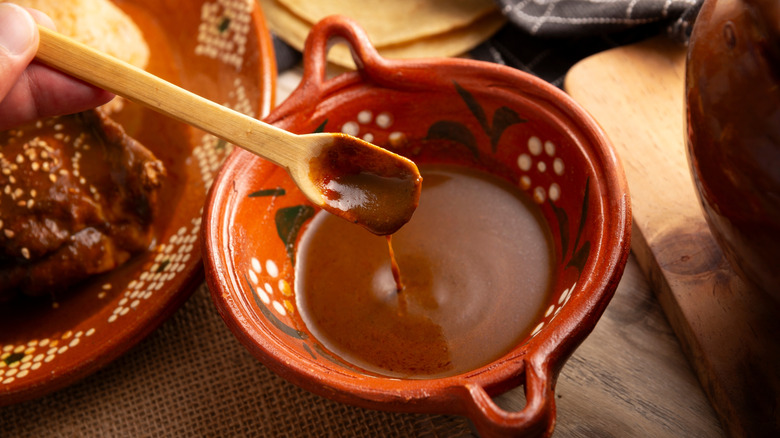
The mole that is made in Mexico is unique to each region's ingredients and cooking traditions. Often, mole is named for its color — like verde, rojo, and negro — and it has a wide variety of flavors. "Some are sweet with fruit or sugar," Yvette Marquez-Sharpnack explains, including mole sauces made with chocolate. "Some are spicy from dried chiles, and others have a tangy kick from tomatillos. If you ever get the chance to taste moles from places like Oaxaca or Puebla, you'll see just how special each one can be."
Mole has transformed over the years, and its evolution hasn't stopped. Instead, it's just as popular in newer dishes and cutting-edge cuisine as it is in traditional Mexican cooking. "There are so many fusions of mole that have come to life thanks to the melting pot of people from across the different Mexican states and the world," Raul Luis says. "As people get introduced to different spices from different countries that at one time were not readily accessible."
While mole is culturally significant, it isn't the isn't the go-to sauce everywhere in the country. Rick Martínez said where he lives in Mazatlán, a different type of sauce is used instead of mole. "Here where I live, they make guisos, which are similar, but there are fewer ingredients and the ratios are a bit different," he comments. "I think there are more states in Mexico like this, where mole is a part of the canon, but it's not just widely made."
So, should mole really take the title of Mexico's national dish?
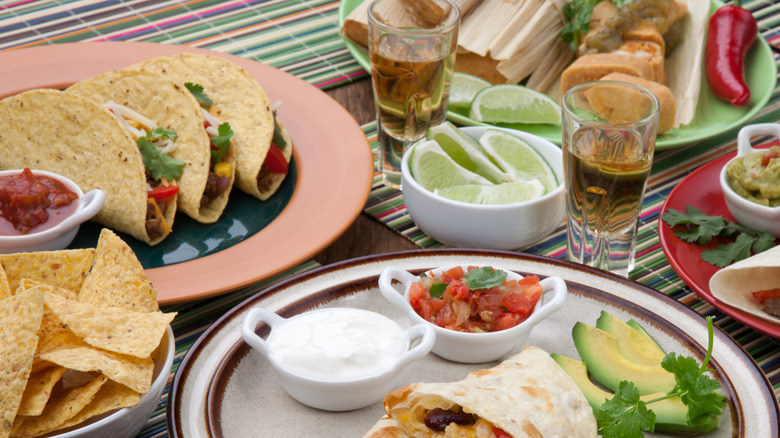
Mole certainly has the essence of Mexico with all of its spicy and sweet undertones. But, every city in the country isn't saturated with it. There are other, more prolific dishes in Mexico. Rick Martínez suggests tacos as a contender for the title, since they're sold "on just about every street corner," and there are many different styles of Mexican tacos to choose from. Raul Luis says traditional Birria de Chivo would do nicely for Mexico's national dish because it has a history in Mexico dating back hundreds of years. Birria and tacos are both wildly popular around the world and already have a built-in tie to many elements of Mexican culture.
But there's another dish in the running, one that our experts say could also embody Mexico enough to be the national dish: tamales. Tamales can be made dozens of ways. They have a rich connection to home cooking in Mexico and deep roots in Mexican history and tradition. Mole and tamales both "speak to the heart of Mexican cooking," Yvette Marquez-Sharpnack adds. They are a dish that's made in bulk with an expectation to share, and they really are as popular in person as they are in the story and lore of Mexico. "There are tamales stands all over the country," Martínez relates. "But generally it's who you would imagine making them, somebody that looks like your abuelita or your old aunt, and they make amazing tamales."