

Do Chives Regrow When You Cut Them?
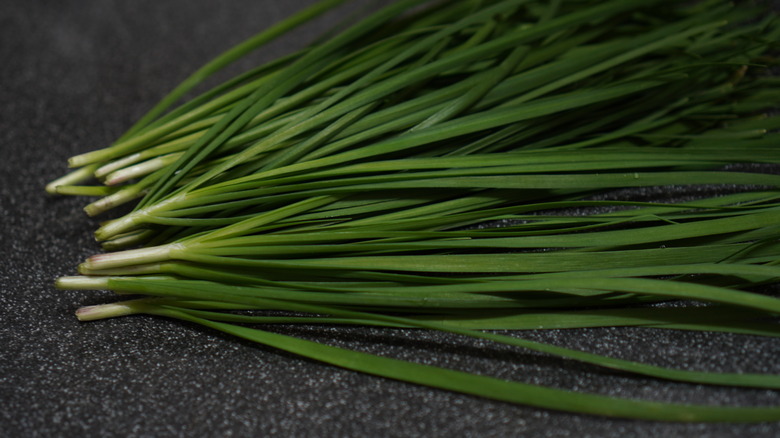
Chives are small, narrow herbs that are related to vegetables like onions and garlic, though they're not to be confused with scallions or green onions. They have a similar bite to those other veggies, so chives are frequently used in cooking, sometimes as a garnish to enhance rich, salty dishes. Chives somewhat resemble tall grass, and the best part about growing this herb at home is that, as long as you cut it properly, it will grow back.
Chives are perennial herbs that are fairly easy to grow because they're not overly picky about their environment. But they spread seeds quickly and easily, so you should cut them back to avoid ending up with chives all over your garden. The first step is cutting them at the right time: roughly two months after you've planted the seeds, then as needed after that.
How to cut back chive plants
To ensure you have chives year after year, cut them back close to the bulb and soil; the chives should only be about one to two inches tall once you've cut them. Chives grow from the center of the plant and bulb, and cutting them back helps promote that growth. Other than properly trimming them as needed, chives are pretty forgiving and don't need much attention to grow.
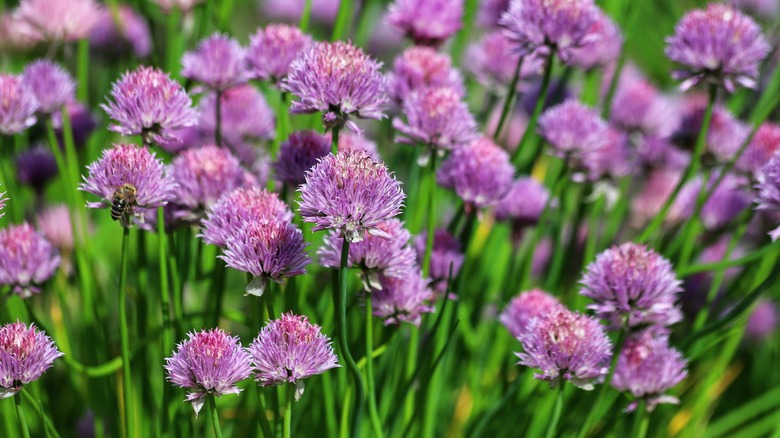
If you let the chives grow for too long, they'll blossom — and there are tons of seeds in these blossoms, which is what could lead to chive overload in your garden if they're not maintained. Plus, stems that have blossoms are different from the chives we eat; though edible, the blossom stems are tougher and less palatable, so there's no real benefit to letting them grow that long, even if chives, like some other alliums that are used in cooking, do produce pretty flowers.