

The Kitchen Layout Mistake Everyone Makes When Adding An Island
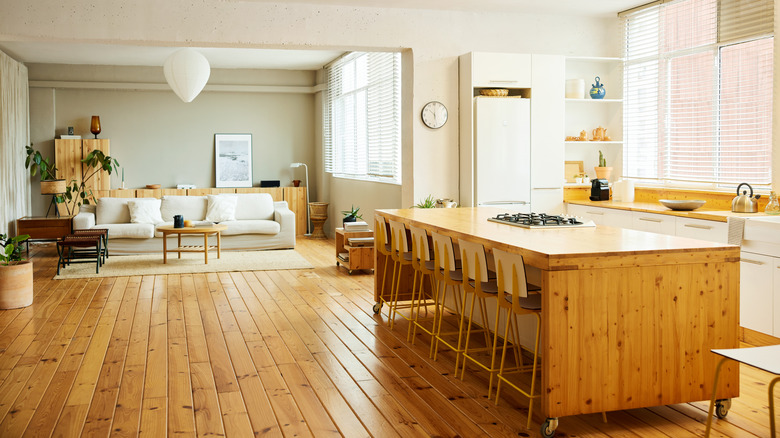
Getting a kitchen island installed is one of the most significant layout decisions you can make for your cooking space. It's a significant investment, drastically changes the workflow of how you cook, and is relatively permanent. It's usually not movable like a table, though a kitchen island alternative that's making a comeback is the chef's table, which is akin to a smaller, movable island. When getting a full-sized kitchen island, or a kitchen island of any size, it's essential to consider the space's layout and all the ways it will be affected by the addition.
While the first thing to consider is that the island offers enough counter and storage space to match your requirements, it's equally important to ensure there is enough space left over around the island to not hinder other elements of the kitchen. At its simplest, it involves making sure that you can walk around the kitchen island even when all your under-counter cabinets and appliance doors are open. Then, look at how it fits into your kitchen work triangle, and whether it actually improves your food prep workflow.
The mistake many people make is falling for kitchen island trends without meticulously ensuring that its size, shape, and even height match their kitchen setup. Therefore, once it's in place, it becomes more of an inconvenience. Remember that this is a feature you will constantly use and have to walk around when in the kitchen, so no aspect is too small to consider.
Finding the right island for your kitchen space

A well-fitting kitchen island should fulfill functional and practical requirements, and also be aesthetically pleasing. It helps demarcate space, and depending on the home's layout, a kitchen island can help separate living and kitchen spaces. It even gives the kitchen more of a social feel, since it's easy to stand around it and interact with the person using the kitchen. The galley and bi-level kitchen islands are two varieties that differ from the usual kitchen island and fulfill the functions of separating living and kitchen areas and also creating a social space, especially in smaller or narrower kitchens.
When it comes to finding the right size for a kitchen island, consider marking the space in your kitchen using tape or rope that you would want occupied by the island. See how your kitchen feels with the demarcated space blocked off, and whether it's convenient to walk around. Ensure you can still navigate the kitchen with oversized objects like large grocery bags or even appliances. If you plan on installing appliances like a dishwasher or oven underneath the kitchen island, and there is an appliance under the opposite counter as well, check to see if there's enough space for the doors on both to open simultaneously. Depending on the space, you can also add aesthetic storage units like a wine rack on one side of the island.
While getting a kitchen island that's too small is something most people will be careful to avoid, it's worth remembering that even if you have enough space in the kitchen, the island size shouldn't be too large. Oversized islands are inconvenient, feel less intimate, and end up wasting space.