

How To Tell The Difference Between Farm-Raised And Wild-Caught Fish
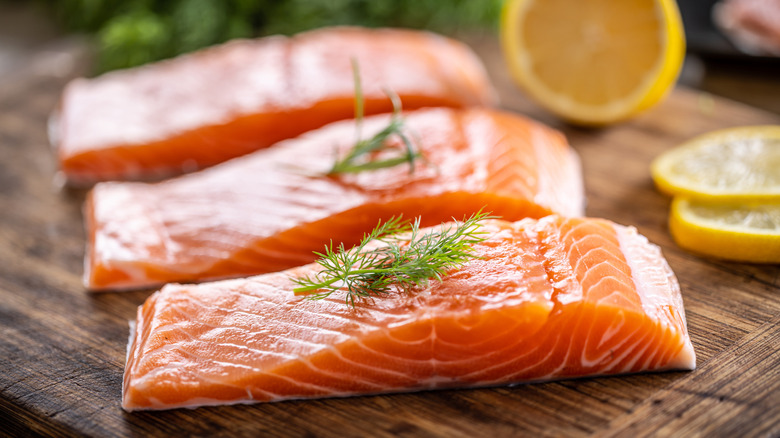
There are so many food terms these days, it's easy to get confused. While perusing the seafood section of your grocery store, you might wonder about the differences between wild-caught and farm-raised salmon and how to tell which is which. Put simply, wild-caught salmon (and fish in general) are caught from their natural habitats, whether that's an ocean, lake, or stream. Farm-raised fish are grown intentionally for harvest in a controlled environment. Matt Ranieri, VP of technical services at Acme Smoked Fish, exclusively told Chowhound that there are two big ways to tell the difference: Visual clues and the fish species.
"Atlantic salmon is always farm-raised," Ranieri said. "It is the most popular species of salmon and most widely available. For wild-caught salmon, sockeye is a popular choice; this species is always wild-caught, often from Alaska. Visually, the sockeye will be bright red, while the Atlantic salmon is pink." Wild-caught salmon have such bright pink skin due to their natural diets, which consist mostly of shrimp and krill. Farmed salmon are fed a "salmon feed" made from mostly plant- and fish-based ingredients, which gives them a duller pink color.
Read labels and check with your fishmonger
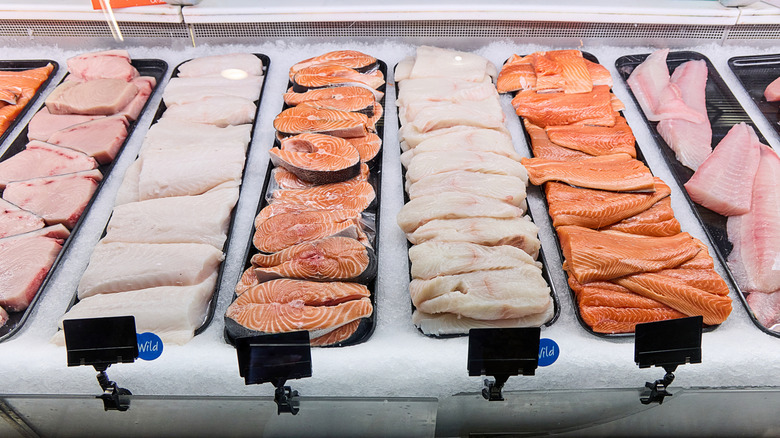
With so many types of fish at the grocery store, including salmon, it's hard to know what to buy. The easiest way to understand whether your fish is wild-caught or farm-raised is to check the package or with the fishmonger. If you're buying a package of frozen fish (which can sometimes be better than fresh), it should be clearly labeled how the fish were harvested; a closer look should also reveal where they came from. If the fish fillets are fresh from a fishmonger, ask where they came from and how they were harvested.
Farmed-raised fish can be sustainable, but Matt Ranieri encourages checking the package before purchasing the fish. "It is important to verify sustainability of your seafood by looking for retailer standards or product packaging that identify compliance with sustainability practices," he says. There are pros and cons to both wild-caught and farm-raised fish, and the decision to purchase one over the other might ultimately come down to the issues. Wild-caught fish lets us eat food from a more natural environment, but it can lead to overfishing. Farm-raised fish can potentially create a smaller carbon footprint, but the fish are more susceptible to disease and can create pollution.