

The First Step You Should Always Take When Cleaning Out Your Refrigerator
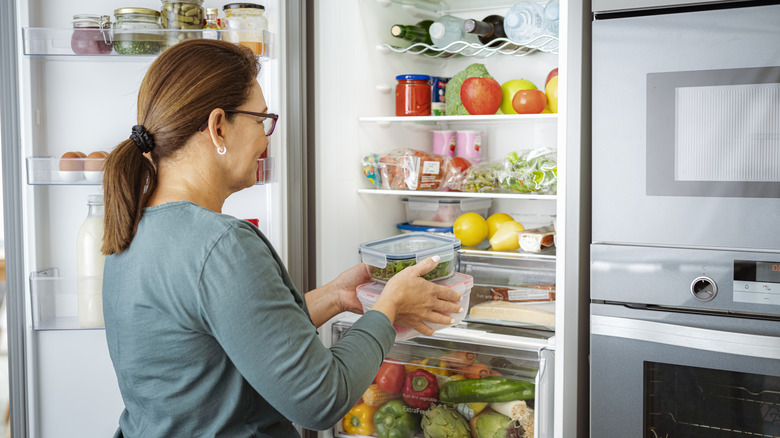
It's always interesting to see a friend's or relative's refrigerator and it's a completely different layout than yours. Like, who would put the ketchup there? It's sort of like going to a grocery store you're unfamiliar with and you can't find what you need. No matter your layout, when it comes to fridge organization, what kinds of containers to use for leftovers, and how to keep your food fresh and safe to eat, there are probably some storage mistakes that are ruining your food. Certain foods should be stored on the top shelf of the fridge, for example, to avoid cross-contamination and keep items in the rest of the fridge fresher for longer.
But, when it's time for a good fridge cleaning, there's a first step everyone should take no matter what they keep inside or how it's organized: Removing everything before you start cleaning. It's one of many best practices for cleaning your fridge, and it's definitely important to keep your fridge clean. Experts recommend you do a deep clean every three to four months to avoid bad odors and ensure a safe, fresh environment for your food. So, let's start from the beginning.
How to empty your fridge for a deep cleaning
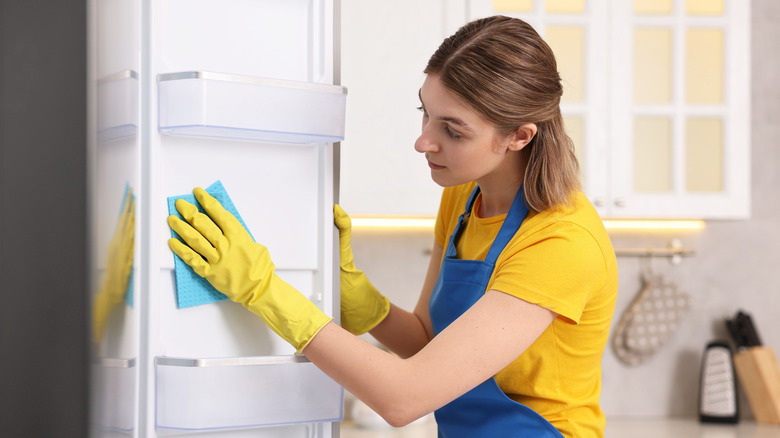
Removing everything from your fridge gives you the opportunity to throw out old food that may have been hiding in the back for weeks or months. Furthermore, removing everything gives you a chance to see if any cross-contamination or leakage is happening, plus you don't cause extra cross-contamination by giving your jars and packages an unnecessary jostling while wiping around them. You can also clean the outside and bottom of containers and bottles that may be sticky, and you're likely to uncover some sticky spills you weren't even aware of. If you're worried about your fridge items spoiling, you can always put them in a cooler while you clean.
Check for any obvious spoilage as you empty items, such as mold or off-colored foods. Although it can be a frightening prospect, open containers and smell them if you're unsure of freshness to ensure it's something you still want to eat. If you're afraid to smell it, it's time to toss it out. Additionally, when we say you should remove everything, that includes removable parts such as shelves, drawers, and racks. Not only is it much easier to give them a good wash outside of the fridge, but they get much cleaner since you can access hard-to-reach and hard-to-see spots. Before it all goes back in, be sure to dry it off: Moisture can encourage mold and bacteria growth, no matter how clean your fridge.