

Why You Shouldn't Wash Strawberries As Soon As You Get Home
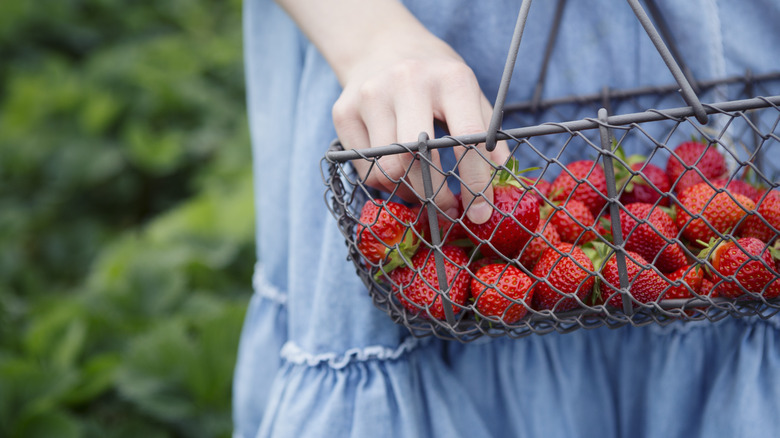
Who doesn't love strawberries? Unless you're among the 9% of adults with a strawberry allergy, chances are you're counting down the days until spring or early summer just to head to the farmer's market and buy a container of those juicy, tart delights. It's important to know how exactly to pick the best ripe strawberries, like making sure they boast a vibrant color and sweet scent.
However, picking the perfect strawberries is only half the battle. What you do with them once you get home matters more than you think, and many people seem to make the common mistake that makes fruit spoil faster — they wash them straight away. Of course, fresh produce often contains dirt, pesticide residues, harmful bacteria, and in some cases, even mold spores. It's only natural for your first instinct to be to soak them in a mix of baking soda and water to give them a thorough clean.
Yet there's one thing you might be overlooking — remember that mold we mentioned? It appears strawberries are especially prone to it, and water only speeds up the process of mold development. This is because moisture creates the ideal environment for mold spores to germinate and start growing. Hence, if you want to keep your strawberries fresh and protect them from spoiling the next day, especially if kept at room temperature, there's one simple rule to follow — hold off on washing them at least until you're ready to eat them.
Never wash strawberries before storing them
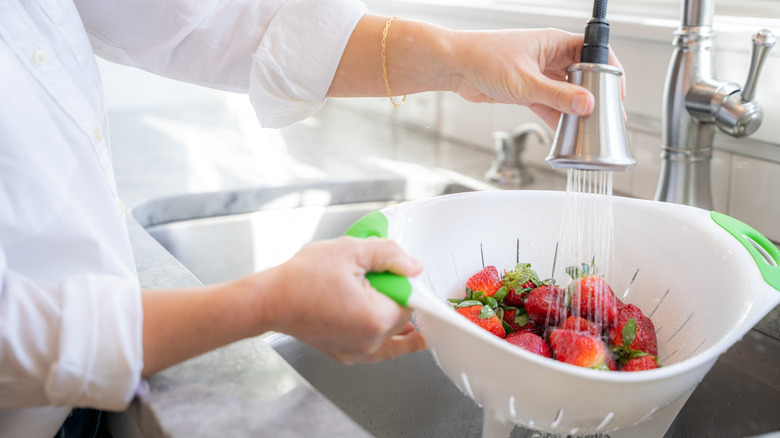
Now, moldy strawberries are unlikely to cause serious harm, but there's no need to risk a stomachache or an allergic reaction over it. In fact, if you happen to spot a moldy strawberry in the container, the U.S. Department of Agriculture recommends throwing it out, along with any others it may have touched. Only after you've removed all the spoiled strawberries from the container can you safely refrigerate the rest.
While we're on the topic of storage tips for longer-lasting strawberries, the no-wash rule still applies. Strawberries can last over a week in the fridge, and patting them dry before storage can significantly reduce the risk of mold growth. For the same reason, always line your storage container with a paper towel before adding the strawberries, and avoid sealing it completely to let air circulate and prevent moisture buildup.
You'll also want to store them in the fridge's crisper drawer for better airflow, but only after setting it to a low-humidity level. This will allow their natural ripening agent, ethylene, to escape and prevent potential spoilage. Then, once the cravings kick in, take as many strawberries and you want and rinse them thoroughly. Grab a pot, fill it with hot water heated to 130 degrees Fahrenheit, and throw them in. A minute-long soak is more than enough to get rid of most bacteria and mold spores without affecting the strawberries' texture or flavor. Once that's done, all that's left to do is put them into a bowl and dig right in.