

Johnnie Walker Green Label Whisky Vs Blue: What's The Difference?
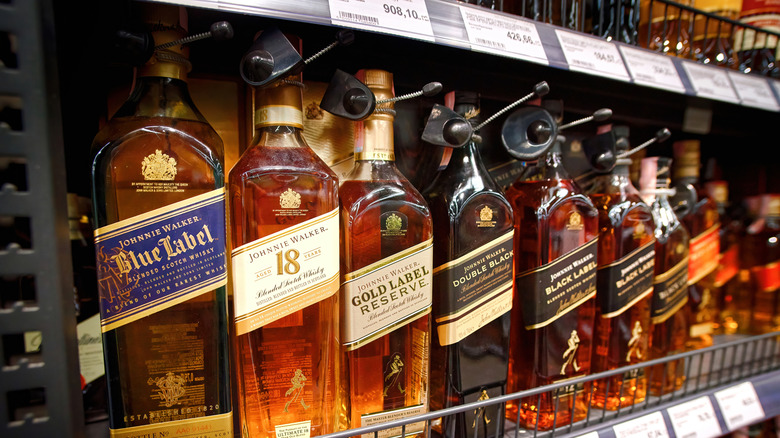
Among the many must-know whiskey brands for beginners, Johnnie Walker is one of the most popular. The brand has a wide range of blended whiskies, with a signature line differentiated by the colors of the labels (as well as the price tags). Two of its more highly-rated offerings, for instance, are priced around $180 apart — Johnnie Walker Green Label goes for around $70 while a bottle of Blue Label sets you back about $250. The distinction between the two, however, goes beyond the labels and prices.
The biggest difference between Johnnie Walker's Green and Blue Labels is in the types of whiskies that go into each blend. Green Label is made exclusively from single-malt whiskies, whereas Blue Label is blended from both malt and grain whiskies. These component whiskies have a tremendous effect on the smell, taste, and finish of the resulting Scotch. For instance, because grain whisky is typically lighter in character than malt whisky, Blue Label tends to rate as the smoother, more sophisticated drink in comparison reviews.
This isn't to say that one is objectively better than the other. What makes whisky such a fascinating drink is how unique each one can be from all the others. What makes one good is also partly up to preference rather than how premium it is; even Johnnie Walker's bottom-shelf Red Label was Winston Churchill's favorite Scotch. It's enough to know that Green Label and Blue Label differ enough to be enjoyed on their own merits.
Johnnie Walker Green Label has good value
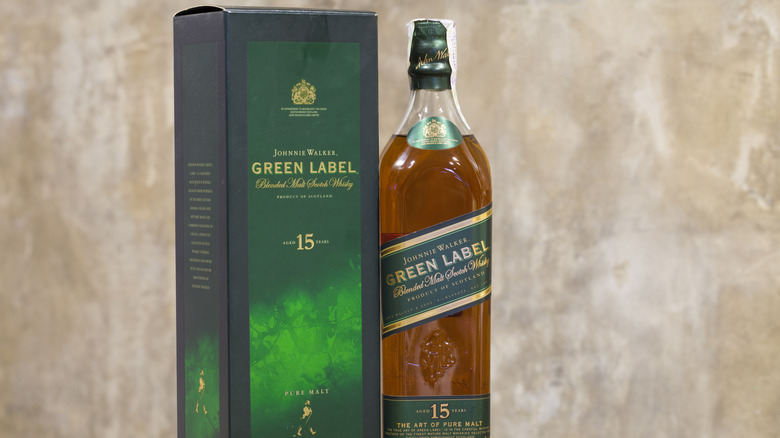
While Green Label's roughly $70 price tag doesn't exactly place it among the more premium whiskies, some people still prefer Green over Blue Label, saying it's more flavorful than the latter. Johnnie Walker Green Label owes its flavor profile to the specific blend of single-malt whiskies (here's what makes them so special) listed on its label: Cragganmore, Talisker, Linkwood, and Caol Ila, all of which were aged to a minimum of 15 years. Because they were made in their own respective distilleries, each one of them has a signature taste resulting from its unique geography and production methods. This, in turn, helps you identify where every element of Green Label's aroma and flavor profile comes from.
The specific casks and amounts of whisky used from these producers isn't known, but we can estimate from similar bottles. Linkwood contributes notes of fruitcake while Cragganmore adds floral and fruity notes, with both bearing a sweetness characteristic of their fellow Speyside whiskies. Caol Ila, in turn, brings in the sweet-smoky flavor of Islay whiskies. Talisker is added to round everything out with peat, pepper, and vanilla. Together, they create a balanced drink that's both robust and accessible, making the relatively lesser-known Green Label a gem among blended Scotch whiskies.
What makes Johnnie Walker Blue Label exceptional
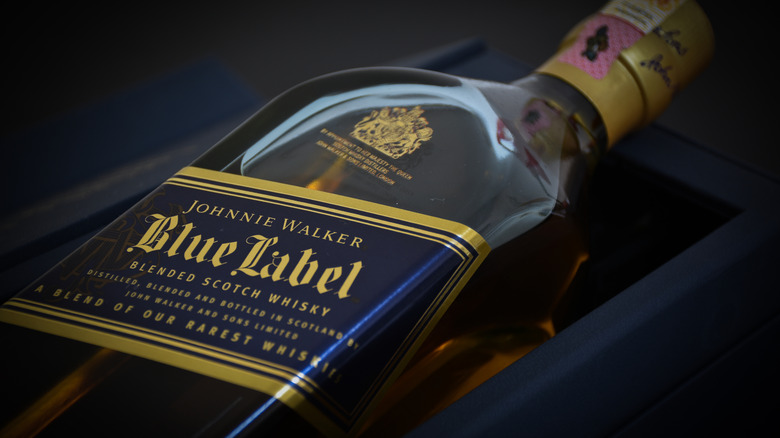
Blue Label, on the other hand, doesn't explicitly list what goes into its blend; there aren't even any whiskey age statements on the bottle to tell you its components ages. What we do know is that the blend can include rare "ghost whiskies," or whiskies that are no longer in production. In an interview with L'Officiel, Johnnie Walker's master blender, Emma Walker, mentions using Port Ellen, Brora, and Pittyvaich, among others. Pittyvaich, in particular, is one of those ghosts, having been discontinued in 1993 after only 18 years of operation.
It's precisely because of how precious its component whiskies are that Blue Label commands its price, but it goes even further than that. Only one out of every 10,000 casks contains a whisky of high enough quality to include in Blue Label, firmly setting the blend in its ultra-premium status. That sense of mystique, however, isn't what earned Blue Label its sterling reputation. Reviews agree that it's a remarkably smooth blend, with a bouquet that greets the nose with honey, florals, and smoke. On the palate, the flavors open up to reveal notes of citrus, toffee, and mild spices. Consider buying a bottle to mark a special occasion.