

5 Things Your Mom Had In Her Kitchen In The '70s
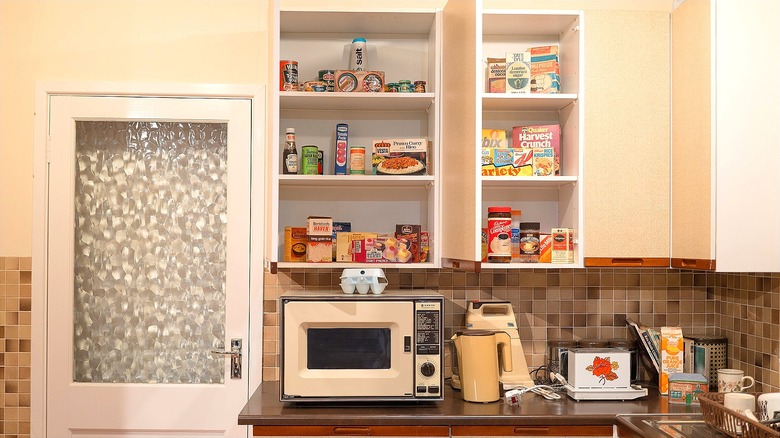
If only there was a way to time travel back to the 1970s. Besides snagging a few iconic outfits and seeing ABBA at the height of their career, you'd also get to see and touch all the fun, peculiar items your mom housed in the family kitchen. Besides the linoleum floors, wallpapered cabinets, and wood-paneled cupboards, most kitchens in the 1970s featured a range of eccentric items you no longer see in the 21st century.
The '70s was primarily defined by free-thinkers and a casual relaxed lifestyle, especially when it came to eating and socializing. At the same time, kitchens in the 1970s reflected a steady rise in technology; new appliances were often featured as countertop decor. Considering the remarkable abundance of vintage appetizers from the '70s no one makes anymore, such as gelatin salads and cheese fondue, there were specific gadgets and appliances used more in the 1970s than any other decade.
Next to the bulky wooden chairs that surrounded your family's breakfast nook, you may have failed to notice your mom's most-prized possessions central to that particular era. What did she use on a daily basis that you no longer have access to in your own kitchen today? Regardless of her personal aesthetic, one thing's for sure: Kitchens in the 1970s embraced a mixture of functional, obscure, and nostalgic design. For a nostalgic blast to the past, we rounded up a list of five signature items you might have found in your family kitchen 50 years ago.
Earth-toned appliances
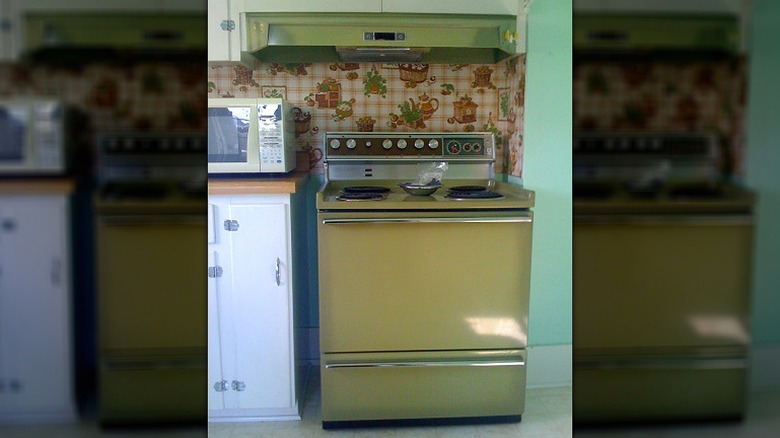
Given the fact that kitchens in the 1960s contained a range of colors via cabinetry, walls, and appliances, the freedom-centric individualism that grew in the '70s only spurred a desire for more colorful appliances and kitchen decor. Your childhood kitchen may have housed an avocado green refrigerator, a sandy brown stove, or harvest gold cabinets.
Individuals' partiality to dress their kitchens in more muted colors may have been spurred by the decade's growing awareness of environmentalism and the pop-art movement, which was full of bold color schemes. Nevertheless, filling your kitchen with colorful appliances remains one of many popular vintage kitchen trends we can't wait to see come back in the future.
Pyrex dishes
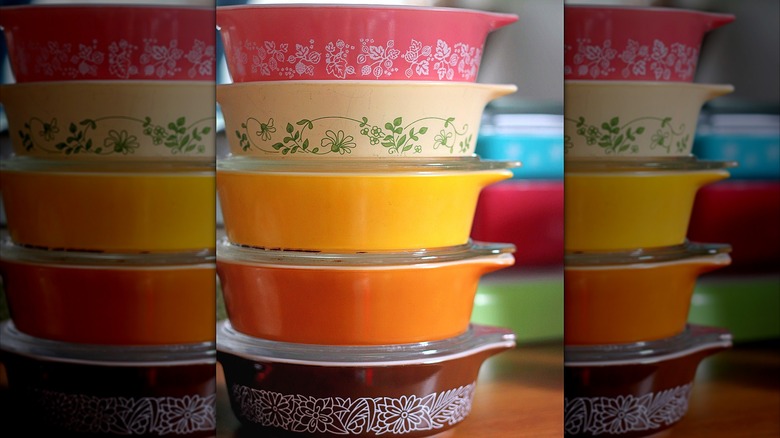
While Pyrex glassware was first introduced to the general public in 1915 by Corning Glass Works, new Pyrex products and many more colorful styles were released in the 1970s. Pyrex took note of consumers' preferences for whimsical designs and it was quite common to find more than one style in your average 1970s kitchen.
In addition to selling mixing bowls in muted colors with floral or wheatgrass patterns, Pyrex released more pronounced colors and designs reminiscent of the decade. The 1971 "Friendship" collection of white bowls cascaded in a simple pattern of bright red and yellow flowers and small birds drawn with curved lines. Luckily, Pyrex dishes are useful kitchen tools you'll continue to find at second-hand stores.
An upscale fondue set
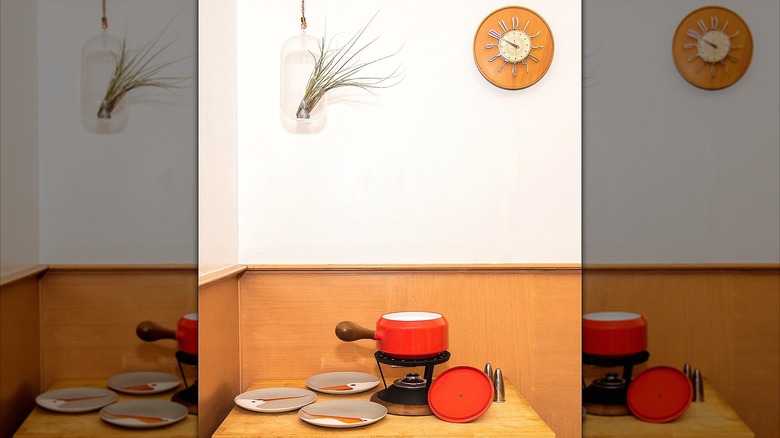
Since the general public embraced the idea of togetherness more fully in the 1970s, communal eating became more popular. Fondue was first introduced to Americans at the 1964 New York World's Fair and the Swiss staple quickly became a way for families and friends to enjoy fun, unconventional meals together.
During the '70s, many kitchens of the decade featured not only brightly colored fondue sets but fondue-specific cookbooks. While fondue sets continue to fluctuate in popularity, nowadays, most people make easy cheese fondue at home with a slow cooker.
Obscure Tupperware containers
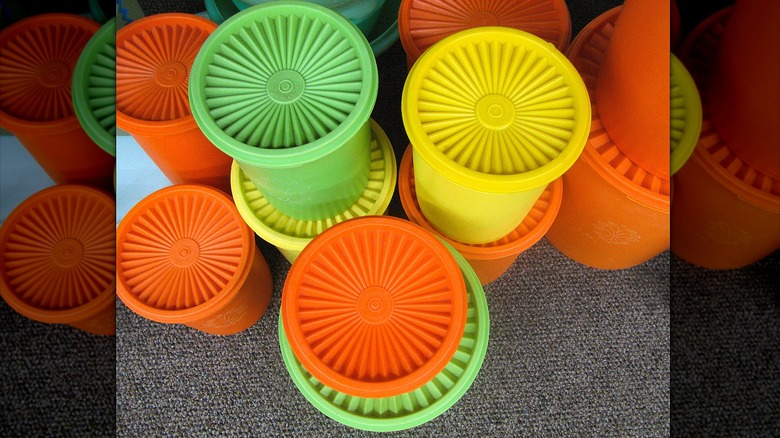
Even though the rise and fall of Tupperware is extensive, these durable plastic containers were found in most 1970s kitchens in a multitude of styles and colors. Tupperware hit the market in 1946, but the branded containers didn't become popular until Tupperware parties did. In the '50s and '60s, women began to host parties and sell specialty Tupperware sets. These continued through the 1970s as exclusive sets with vibrant colorways became more available.
In the '70s, women's roles in society continued to evolve and change, thus selling Tupperware gave women greater ability to earn an income and be independent outside the home. Therefore, the presence of scalloped Servalier bowls and earth-toned stacking canisters on kitchen counters was quite common in the 1970s.
A rotary phone with an extra long cord
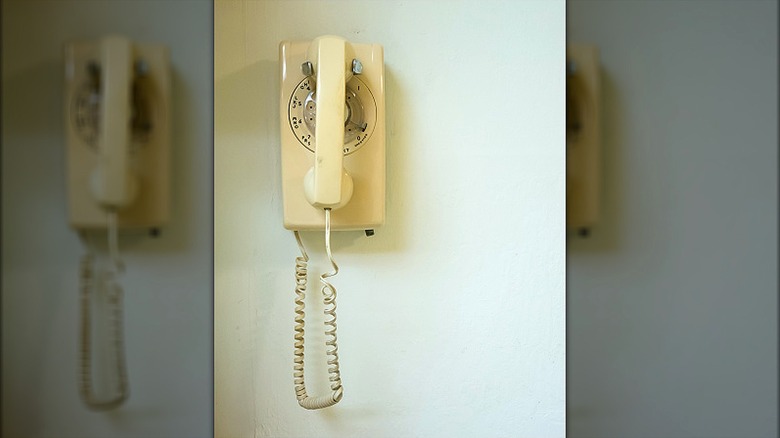
Vibrant wallpaper, laminate countertops, and wall-mounted rotary phones all happen to be questionable kitchen decor trends we're happy to leave in the past. However, before push-button phones and cell phones, rotary phones placed strategically in the kitchen served as another way for families to multitask and socialize.
In the 1970s, more and more people gathered around the kitchen to eat, chat, and perform other daily tasks. A rotary phone with an extra-long cord placed in a central area of the home was accessible to everyone, giving family members the ability to perform multiple jobs at once, such as cooking a meal and taking a message. These phones were often available in bold colorways for added visual appeal and typically served as a kitchen's focal point.