

Want A Fried Egg But Don't Want To Dirty Up A Pan? Turn To The Microwave
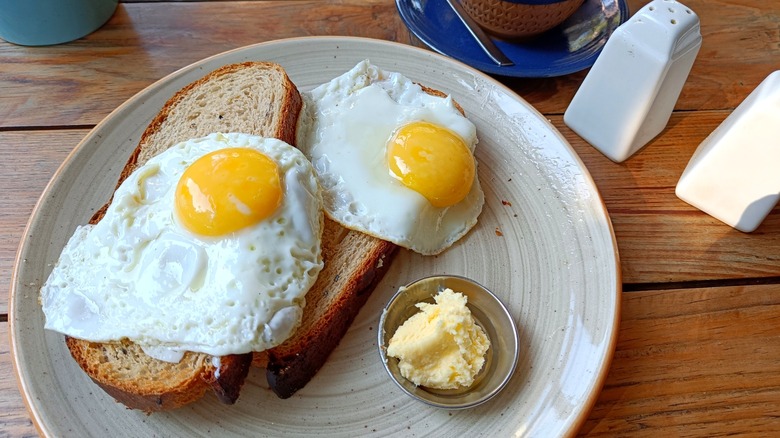
Sometimes, you just want a lazy meal. You've had a long day, and you need your food to take the path of least resistance; something that takes minimal cooking and next to zero cleanup counts as self-care. You could technically cook something and leave the dishes for the next day, but that's actually a mistake that could shorten the life of your cookware. Instead, it turns out that the microwave can give you exactly what you need — including a freshly fried egg without a messy pan to clean up after.
All it takes to fry an egg in the microwave is a little oil and two paper plates. Oil the surface of one plate, plop your raw egg on top, and then cover the whole thing with the other plate. Zap it in the microwave for about 50 seconds, and you should end up with fully cooked whites and a nice, runny yolk. If you like your yolks firmer, try cooking it for an additional 10 seconds.
Because you're using paper plates, there's nothing for you to wash after. It's the perfect way to add a fried egg to your leftovers on days you're feeling lazy; you can even use the second paper plate as your dish for the whole meal. The only catch is that this method can't give you any sort of crust on the whites. Because microwaves cook food by exciting the water molecules within, there isn't enough heat on the surface of the egg to crisp things up.
How to safely make fried eggs in the microwave
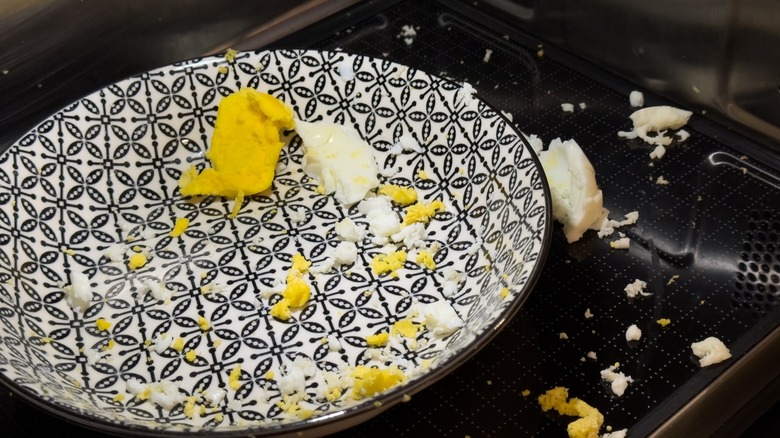
There are many ways to cook eggs in your microwave, but frying is one of the methods that comes with the risk of exploding yolks. An intact yolk has a significant amount of water, kept with everything else inside the yolk's membrane. When the heat of the microwave excites these molecules, they turn into steam. This increases the pressure inside the yolk membrane, and if it builds up quickly enough, the whole thing pops like an overinflated balloon. Suddenly, you have to spend a half hour cleaning things up all because you wanted to avoid doing any new dishes — and you probably aren't cleaning your microwave often enough in the first place.
To prevent making a mess, all you need to do is poke the yolk with a fork. This will break the membrane and allow the steam to escape during cooking. The second plate you use as a cover actually keeps that same steam contained and in contact with the egg, helping it cook faster while also serving as a splatter guard in case things go wrong.
You should also avoid using paper plates that have any sort of foiling or gloss on them. The metal present in foiled plates can spark up in the microwave and cause fires, while the gloss may contain plastics that break down and leach into your food. If you can't find paper plates that are explicitly labeled microwave-safe, the plain white sort should be safe enough to fry eggs in.