

Henry Ford Ate Weeds For Lunch — Yes, Seriously

Henry Ford believed in putting the best possible fuel into his automobiles, and he often applied the same principles to the way he took care of his body. He believed in the premise of "food is fuel," and was committed to a diet that most of us today would find unpalatable, to say the least.
Sidney Olson's biography "Young Henry Ford" details the fact that the auto industry magnate was a light eater who eventually turned to enjoying weeds from the side of the road, which he aptly called "roadside greens." He felt this diet would help him function at the highest level. According to Olson, "These were simply assorted weeds, variously prepared as salads, or lightly boiled, or even stewed — and often appearing in sandwiches."
Foraging — the process of going out into nature and finding wild plants to enjoy — is having a moment these days, but even the most enthusiastic foragers don't typically assume that they can get the nutrition they need from the weeds growing along the road. Ford's motivation and grit shone through in all that he did, and Olson's words reveal that his diet was no exception.
Ford was into food fads, and was committed to treating his body like a machine
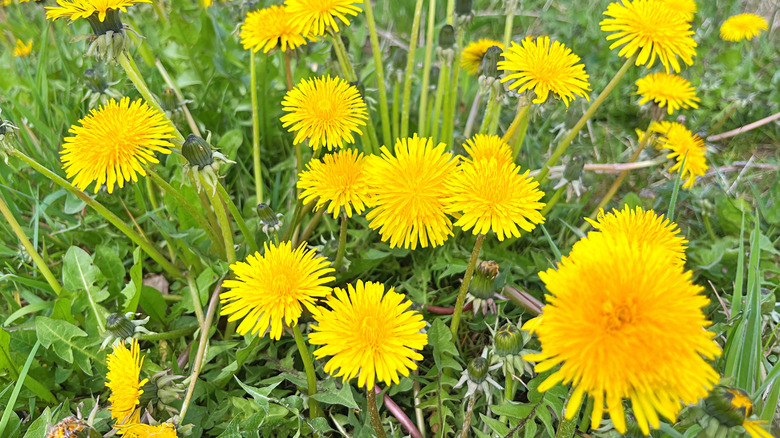
Ford was committed to giving his body what he believed to be the best diet available — even though his food choices were considered far from normal for the time. "There is nothing quite like a dish of stewed burdock, followed by a sandwich of soybean bread filled with milk-weeds, to set a man up for an afternoon's work. There must have been times when his guests prayed for honest spinach," wrote Sidney Olson.
While Olson doesn't talk specifically about the varieties of weeds that Ford enjoyed as a part of his roadside rotation, it's likely that he enjoyed (we're using this term loosely) some of the common edible weeds that grow in his home state Michigan, including lamb's quarters, redroot pigweed, wood sorrel, burdock root, milkweed, clover, and dandelion. An important note: The way edible plants are viewed over time changes. Much like kale is now a highly sought-after superfood after spending years as a lowly salad bar decoration, plants like dandelion weeds (try throwing them in the air fryer) are now found in various grocery stores. Many '90s grocery shoppers would have turned their noses up at Ford's fascinating Depression-era diet, but in today's more holistically, plant-focused world, it's likely that some may be interested in giving it a try. And if you're too scared to start with roadside greens, perhaps some edible flowers are a safe place to start.