

The Modern Cooktop Feature That's A Boon To Caregivers And Forgetful Cooks
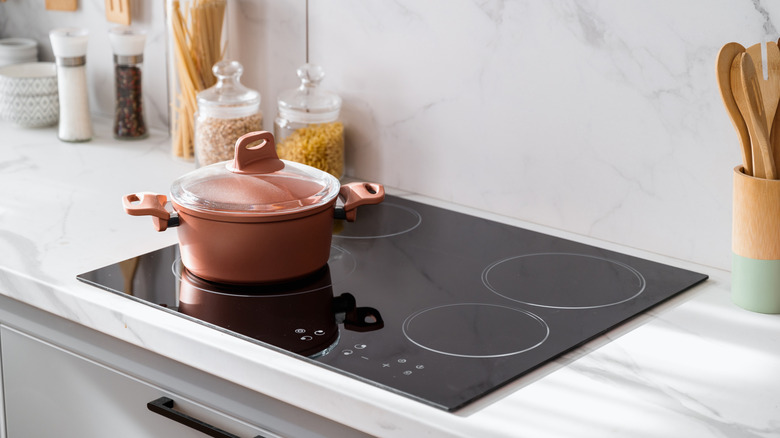
It makes sense why most chefs prefer the direct heat of a gas stove. Temperature adjustments are practically instantaneous, and the flame is compatible with any pot or pan in your toolkit. While these cooktops generally make for excellent cooking experiences, if you make a mistake when cooking with gas, or forget to turn it off, it can have huge repercussions for you and your home. For caregivers and forgetful cooks, it might be best to swap this cooktop out with a sleek induction stove instead.
Induction ranges and cooktops run on electromagnetic energy, which means the energy is transferred directly to the pot or pan on top. This cuts out the need for middlemen, such as coils or flames, and makes heat transfer instantaneous. It also means the only thing that gets hot is the cookware — never the cooktop. The stovetop itself only sends out the electromagnetic waves; the pot is what converts the energy into heat. This is great for people with curious kids tempted to poke and prod at the stove. No more burnt fingers!
How induction compares to electric and gas
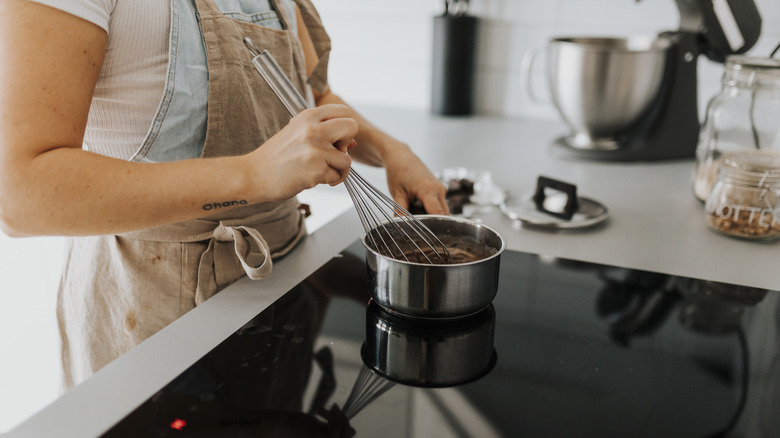
While gas ranges are often thought of as ideal, an induction cooktop provides the same main benefit of instantaneous heat. Plus, gas ranges are difficult to clean while it's easy to swipe a rag across the sleek surface of an induction cooktop. Lastly, gas stoves have been proven to increase indoor air pollution while induction stoves do not. Like electric ranges, induction stovetops are also more energy-efficient and, therefore, more environmentally friendly. Plus, since it's only the pot getting hot and not a coil underneath, induction tops cook food more evenly than electric stoves. Not only is an induction cooktop the safer choice — it might also be the best option overall. It's why professionals such as the Property Brothers buy this appliance instead of more popular options. Still, everything has its cons.
An induction stovetop is not compatible with all cookware. Since it's powered by electromagnetic energy, pans made from copper or aluminum do not work with this stove. You can use cast iron on an induction stovetop, though, as well as stainless steel. Because the stove heats cookware using energy, you also don't have the same visual cues as cooking with flame. Some chefs might not like that feeling. Lastly, because of the advanced technology, induction stoves can be expensive. If safety is your priority, an induction stove might be worth the cost. Either way, do some research before buying to see if it's the right choice for you.