

Is It Ever Okay To Use Brown Rice For Sushi?
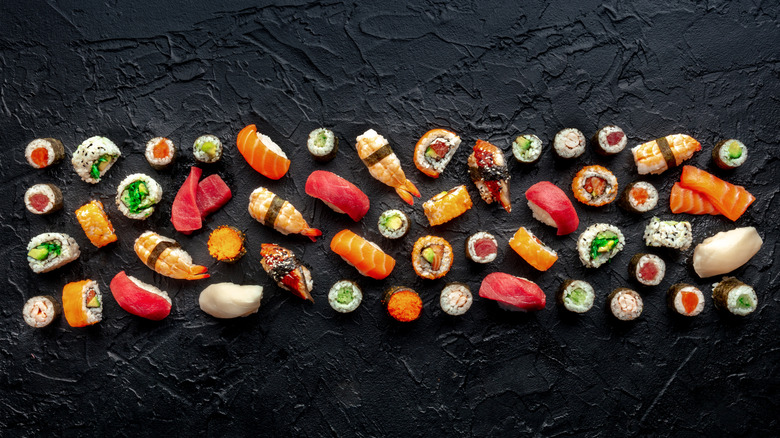
Making sushi at home is both a skill and an art. If you've mastered the craft of creating perfect bites of freshly sliced nigiri, or you've started to get creative with at-home maki rolls, you may be wondering about the different variations you can whip up in your kitchen. Depending on the creative license you've given yourself when it comes to being an at-home sushi chef, you may have already noticed yourself making some of the most common sushi-making mistakes. Rice can be particularly confusing: There are seemingly endless types, and many people wonder whether they can swap out one type of rice for another in sushi. Chowhound talked with Jae Choi, chef and owner of Yakitori Jinbei, to get the skinny on whether it's ever okay to use brown rice in place of white rice when crafting a sushi roll.
The bottom line: Choi doesn't recommend brown rice in sushi, generally. "Brown rice is typically not used for nigiri due to the flavor and texture differences in comparison to white short grain rice. The rice is the foundation of the nigiri. It should highlight the fish," he says. Brown rice typically has a slightly nutty flavor, which can distract tastebuds from fully enjoying the flavor of the fish in a piece of nigiri. It's also not as reliable as standard sushi rice — Choi says that it's easy for brown rice to turn out chewy or hard, even when you follow a great brown rice recipe.
Situations in which brown rice can work in sushi
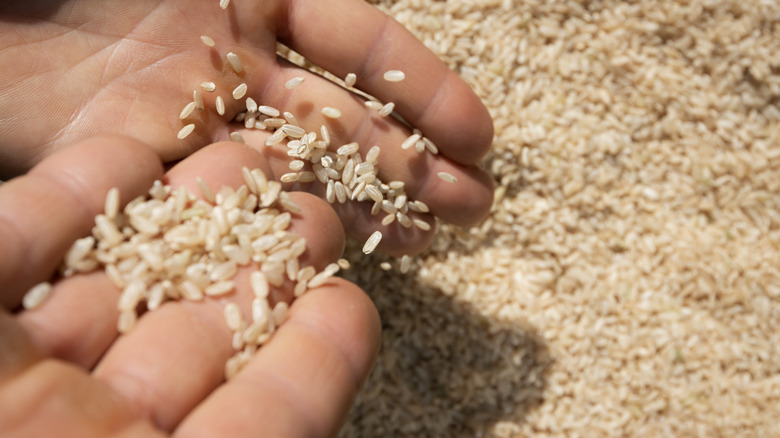
While brown rice isn't a good fit for highlighting the flavor of fish, it can work well when you've got several ingredients at play. "You can possibly use it for maki rolls, since it will be in addition to many different items in the roll," says Jae Choi. Brown rice can work well when you have many different flavors at play, and maki rolls give you the chance to experiment with new flavors. The multitude of tastes at play lessen the impact of the flavor of the rice, making both classic maki rolls and more inventive recipes a good fit for swapping brown rice in for standard sushi rice.
Texture is vital when it comes to getting your sushi rolls to stick together as a cohesive unit. If you're committed to using brown rice in your maki rolls, there are some steps you can take to get it a little bit closer to the traditional sticky rice used for sushi. Mixing a bit of rice vinegar, sugar, and salt into your brown rice, for example, can help create a slightly sticky consistency and a rich flavor that goes well with maki rolls containing crab, eel, and salmon.