

How To Order Food At A Sushi Restaurant So You Look Like A Pro
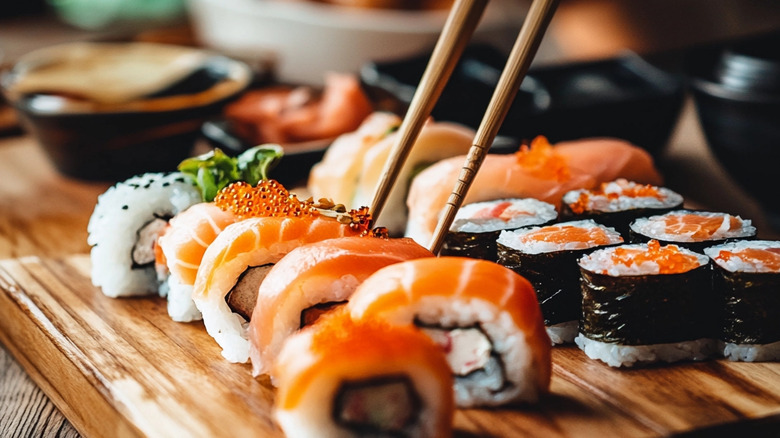
Ordering food at a restaurant, especially if you're trying a new cuisine for the first time, is the kind of thing that sounds simple in theory but can trip you up in the moment. How should you navigate a menu full of words you don't know or cultural expectations you're unaware of, and still avoid ordering the totally wrong dish for you? When it comes to sushi, maybe you're familiar with a few classic maki rolls, but have yet to dive any deeper and feel a bit lost at sea. Though learning to eat sushi like a pro requires some practice, a few morsels of insider knowledge can help demystify the ordering process and have you dining like an expert in no time.
That's why Chowhound spoke to Jae Choi, the chef and owner of Yakitori Jinbei in Smyrna, Georgia. "If you are new to a sushi restaurant, something to be aware of is the terminology," Choi says. Don't simply assume that all sushi equals rolls with rice and seaweed. "Sushi encompasses different genres of items, including maki, nigiri, or sashimi," Choi explains. "Maki is something like a California roll. Nigiri usually refers to raw fish with rice, and sashimi is usually just raw fish."
Other terminology Choi says to be aware of are temaki, meaning handroll (different from a cut roll), and shari, meaning vinegar rice. Understanding these words will help you read the menu at virtually any sushi restaurant, so you can identify which dishes sound most enticing.
More sushi-specific restaurant knowledge
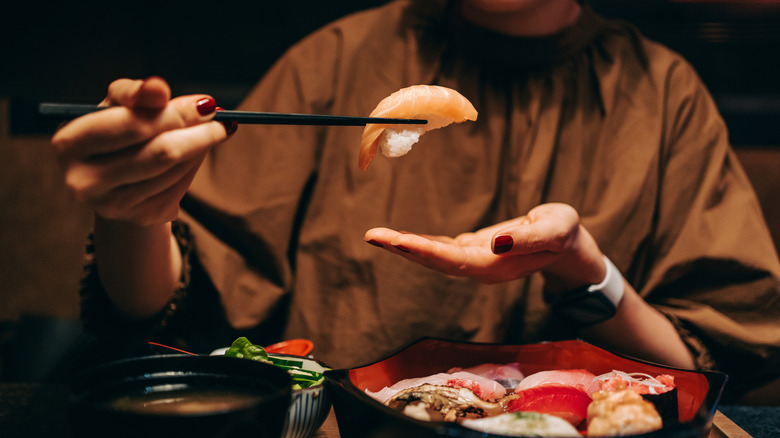
Knowing basic sushi terminology will certainly make your dining experience smoother, but there are further ordering tactics to be aware of — and easy-to-make mistakes to avoid at a sushi restaurant. According to chef Jae Choi, one aspect to look out for in particular is portion size. "Something that may be different from a traditional restaurant menu is that one order of nigiri or sashimi typically refers to two pieces of the item," he says. That means eating one order of sashimi probably won't be as filling as an order of pasta, or another standard Western entrée. "It usually is not a full, composed dish, and you may need to order multiple different items to satisfy your appetite," Choi says. If you do want to satisfy your hunger in one order, a roll is probably the way to go. "Usually a full order of maki will consist of eight pieces, which will be a larger item," Choi advises.
Beyond learning the knowledge you need for ordering, eating at a sushi restaurant also means doing your best to respect certain unwritten cultural norms. Sushi is considered an art form in addition to a delicious meal. "You should take your time in enjoying each item," Choi explains. "Try the different types of fish and see how the flavors are different with respect to each fish. Some fish are fermented or aged, while others can have a sear on them to bring out different flavors ... How the fish is cured and prepared by the chef should be appreciated." In other words, pay attention to every bite, just like the pros do.