

Why Wedding Cakes Are Traditionally White
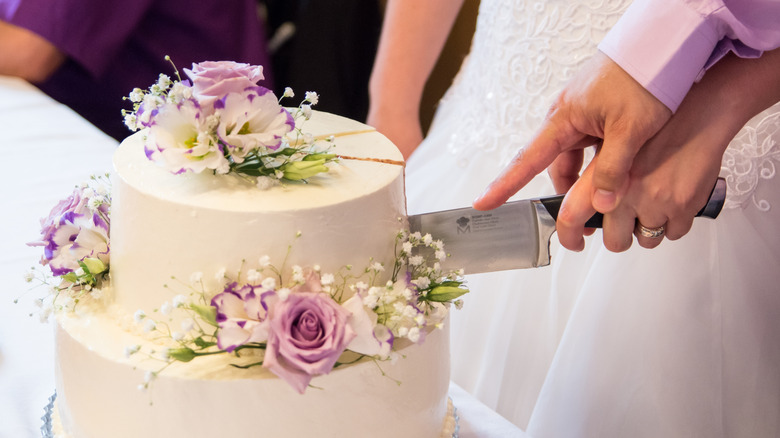
The world of weddings is rich with customs and color conventions. The white dress, the something blue tradition, and perhaps the most strict and observed of all customs: a white wedding cake. Whether it's a courthouse elopement, an elaborate affair, or something in between, some sort of white cake is almost always the crown jewel of a wedding food menu. You're far less likely to see a towering chocolate cake or any other dessert. But why?
The earliest bridal cakes covered in a pure white frosting emerged in 17th century English cookbooks. White wedding cakes — as we know them today — would rise to their full glory during the Victorian era, when white sugar and white icing came to be seen as a symbol of high social status. Pricier and harder to come by than less refined, more humble forms of sugar and sweetener, the white iced cake was a symbol of affluence. Of course, the color white is also seen as a symbol of purity and virginity today. This association may have also influenced the popularity of a white cake, which became mainstream (along with white dresses) when the iconic wedding of Queen Victoria solidified both trends.
Wedding cake trends have transformed over the years
One thing's for sure: The traditional wedding cake has undergone huge changes over time. While married couples have almost always feasted on some sort of celebratory treat, these were a far cry from a standard layer cake with white icing — or any sweet treat, for that matter. In 1600s Britain, wedding guests customarily dug into a pie filled with meat, spices, and shellfish. With the rise in availability of sugar in the western world came renditions closer in form to the modern day wedding cake, and we're thankful for it.
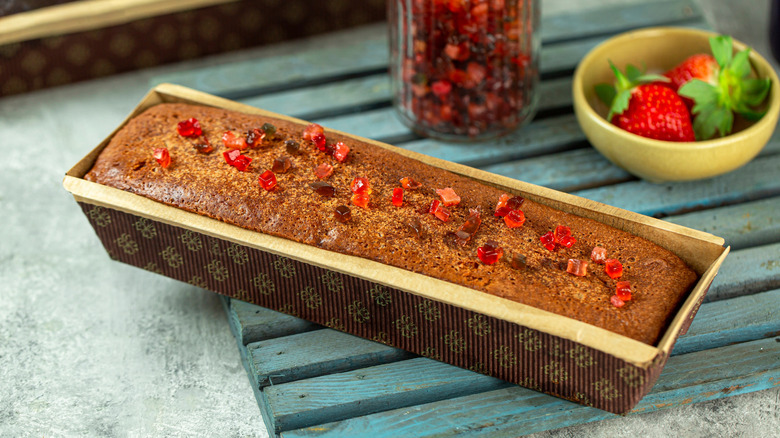
As steeped in tradition as the wedding industry is, there's no shortage of ways to make your special day unique to your taste and style. Lean on lesser known regional wedding customs, like the Southern ritual of burying a bottle of bourbon to bring good weather on your wedding day. And if you want to mix things up when it comes to your baked goods, resurrect the tradition of a groom's cake. This cake, once common to include, was typically a non-white, rustic, dense treat like a fruitcake or sheet cake (and sometimes it was even infused with alcohol). Because whether it's a relatively modern customary white cake or something else entirely, double the dessert is never a bad idea in our book.