

The Mistake Too Many People Make When Cooking With Peanut Butter
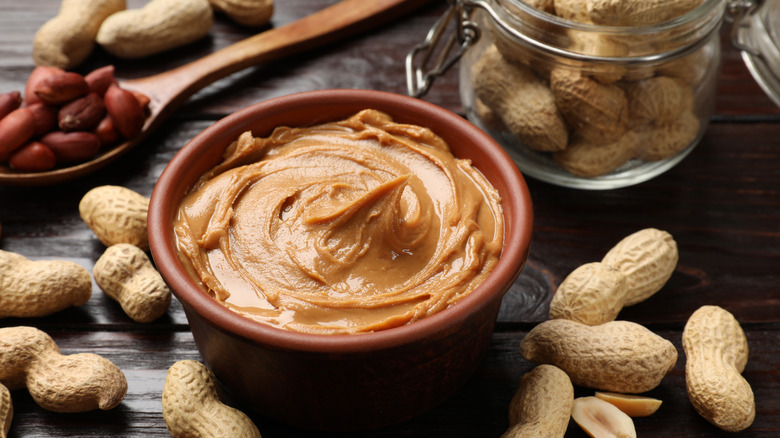
Whether smooth or chunky, peanut butter is one of those kitchen staples that shows up in 94% of pantries in the United States (via The Food Institute). You can spread it on a piece of toast, blend it into your morning banana smoothie, or use it to make a classic peanut butter and jelly sandwich when nostalgia kicks in. But, this popular spread or food paste, if you prefer, has many uses beyond just being scooped straight from the jar, as it also makes its way into countless cooked recipes.
Creamy curry chicken, delicious vegetable stir-fries, or soft and chewy peanut butter cookies are just a few delicious ways to work peanut butter into your cooking. However, cooking it at a high temperature is most probably one of the peanut butter mistakes you need to stop making. This is because peanut butter has a low smoke point — which is basically its heat resistance — and this essentially means it can't withstand high temperatures without breaking down or producing an unpleasant smell or taste.
For those wondering, this parameter represents the temperature at which an oil or fat stops shimmering and begins to burn. So, unlike peanut oil, which has a high smoke point of around 450 degrees Fahrenheit, peanut butter can burn around much lower temperatures — at approximately 225 degrees Fahrenheit, give or take, depending on factors like heat source and cooking duration. And this doesn't change regardless of which of the best and worst brands of natural peanut butter you pick.
What to keep in mind when using peanut butter in your recipes
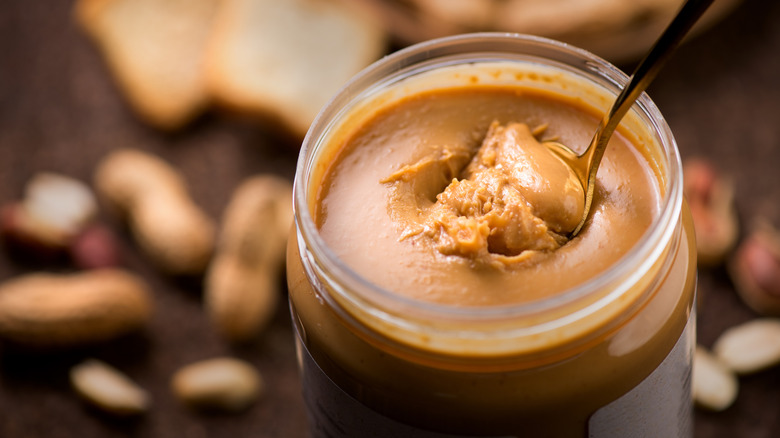
Peanut butter is incredibly versatile, and it goes well into a variety of dishes, making them creamier, more complex, and adding an entirely new depth of flavor. However, even though it's basically made up of more than 50% fat, it still packs in protein, carbohydrates, and water. It's these added components that keep it from matching peanut oil's high heat resistance when used in stove-cooked meals, even if you decide to pick the hands-down best natural peanut butter brand on store shelves.
When using it in your recipes, it's important to keep the heat at low to medium to prevent it from reaching its smoke point and preserve its original flavor. A handy tip is to stir it in at the very end to keep it from scorching. This is also why you need to give your dish your full attention while it cooks, as burned peanut butter gives off a rancid odor, and tastes bitter and far from appetizing. What's more, exceeding its smoke point can lead to the formation of toxic compounds and break down important nutrients, which will significantly affect the quality of the dish.
While it can be tricky on the stove, peanut butter is much easier to handle when used in baked or roasted recipes, where you can comfortably turn the heat up to 350 degrees Fahrenheit. This is because once blended with other ingredients, it doesn't overheat as easily. So enjoy your peanut butter dishes, but be careful to keep the heat in the safe zone for this tasty ingredient.