

The Only 3 Knives You Actually Need In The Kitchen, According To Ina Garten

If you know anything about the undoubtedly iconic chef Ina Garten, you'll know that part of why she's so popular is her ethos of calm simplicity. And while that makes her food both delicious and accessible, she applies the same ethos to the tools she uses, too. Chefs are notoriously fastidious about their knives, and often amass huge collections of specialized blades for all sorts of tasks — from shucking oysters to boning out poultry. But Garten swears by a smaller, more streamlined arsenal, similar to the concept of her 10-recipe rule: You only really need three knives for everyday cooking — a chef's knife, a paring knife, and a slicing knife.
The classic chef's knife is an absolute essential. Usually between 6 to 10 inches in length (Garten prefers an 8-inch knife) with a curved, versatile blade, the chef's knife is great at just about every task you set it to. It's got enough weight to handle tough pieces of protein and bone, but is still nimble and easy to handle. It can be used for many types of prep work, from crushing garlic and chopping herbs to butchering whole chickens. If you're only buying one knife, make it this one! Garten's knife of choice is made by Wüsthof, a famed German manufacturer that is also one of Gordon Ramsay's favorites for his own collection. If it's balance, control, versatility, and comfort you want, the chef's knife is the one for you.
The paring knife is a compact, nimble tool
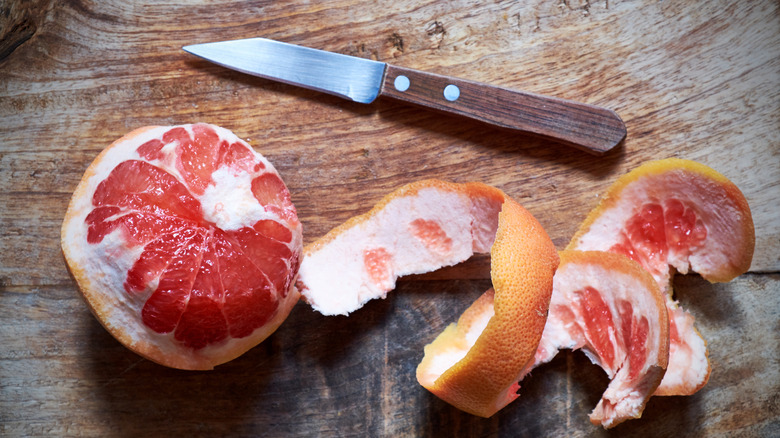
If the chef's knife is the most essential kitchen tool, a close second is the paring knife. Smaller (usually with a 3 to 4-inch blade), lighter, and more nimble than the chef's knife, the paring knife is your go-to for more precise tasks — think segmenting citrus, prepping shellfish, or turning potatoes. This is the knife to reach for when the chef's knife is just too big and cumbersome. Ina Garten recommends a stainless steel blade since it's easy to sharpen and naturally resistant to rust. Paring knives are also usually much more affordable than larger knives, so if your blade gets broken or bent, it's easier to replace.
The paring knife is perfect for any tasks that require control close to the fingers, including coring apples, hulling strawberries, or making shallow cuts when prepping smaller vegetables like shallots. It's a great tool to use when practicing your knife skills, a crucial element of French cooking — or just about any other cuisine, for that matter. This is especially true for slightly more niche techniques like turning, which is sculpting and peeling round ingredients for a more refined presentation.
The slicing knife is the secret to perfect carving
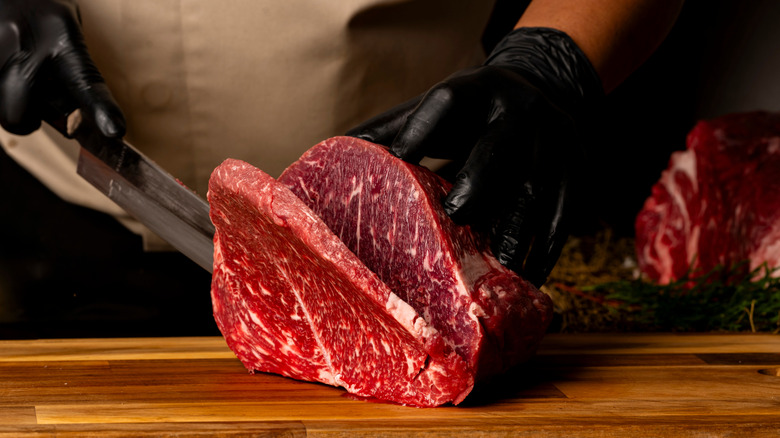
Rounding off Ina Garten's holy trinity of kitchen knives is the slicing knife. You might also know this as a carving knife or a yanagiba knife, if you're into Japanese cookware. It features a long, thin blade designed specifically for a fluid slicing motion, perfect for carving meat and fish. While chef's knives are heavy and long, the average slicing knife is around 9 to 12 inches in length, while also thinner and lighter. These knives are perfectly designed to scythe through protein without having to saw at it, easily breaking up delicate meats. Clean efficiency is the name of the game here, and it's what makes the aforementioned Japanese knife the standard choice for the best sushi chefs.
For the average home cook, Garten recommends using this knife during the holidays or at dinner parties, when presentation really matters. She recommends finding a blade with minimal flex for easy control, with a rounded tip or scalloped edge to reduce drag and allow the knife to move freely through whatever it is you're slicing. For even more control, especially if you're a frequent roaster, keep your knife sharp and invest in a slicing fork to work in tandem with it. This will keep your cuts stable and smooth, so you can be sure of a great result every time.