

13 Foods And Drinks That Are Staples Of Growing Up In The American Southwest
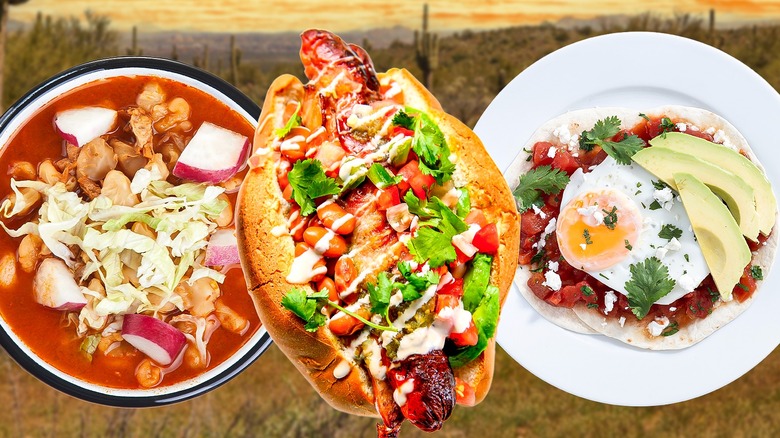
The American Southwest is a region unlike any other in the United States. Generally considered to include Arizona, New Mexico, and parts of Colorado, Utah, Nevada, and Texas, the Southwest is vast. Though each state is distinct, the Southwest is united by its unique and striking landscapes, vibrant culture, and delicious, flavorful food.
Thanks to its proximity to the Mexican border, Southwestern food has been deeply influenced by traditional Mexican, Spanish, and Indigenous American flavors. Over time, these culinary traditions have blended to create a bold, unique cuisine known for its heat and bold ingredients. From chile-loaded stews and Native American comfort foods to sweet, custardy desserts, the Southwest offers a food culture that's both deeply rooted in its own identity and endlessly delicious. Some may argue that the Southwest is one of the best places to eat. To help you decide, we rounded up 13 foods and drinks that are staples of growing up in the American Southwest.
1. Breakfast burrito
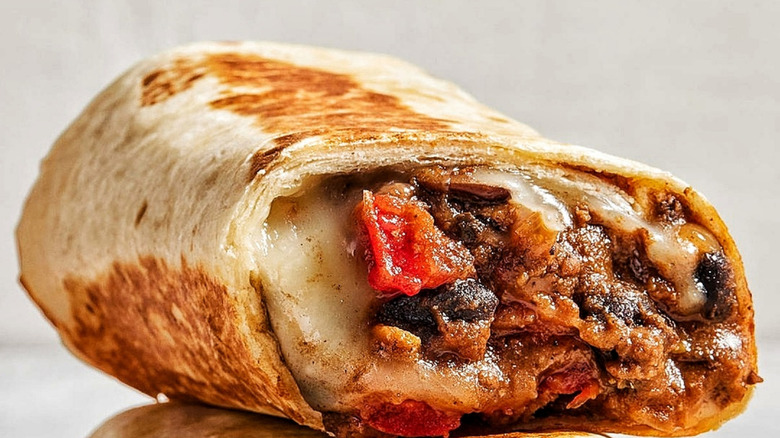
If you go out for breakfast at most diners or cafés in the Southwest, chances are you'll spot a breakfast burrito on the menu, and for good reason. A staple in Southwestern food culture, the breakfast burrito perfectly exemplifies the combination of Mexican and American cultures.
The first breakfast burrito is said to have appeared on a menu in New Mexico back in the 1970s. The classic breakfast burrito is a simple but beautiful thing. At its core, the burrito includes scrambled eggs, hash browns, bacon, and green chile salsa, all wrapped in a warm flour tortilla and swaddled in foil to keep it soft and steamy. The breakfast burrito comes in a variety of variations, with some versions specific to various regional areas. The Colorado breakfast burrito for example, substitutes in cubed potatoes for the fried hash browns and whole chilis (half-mild, half-hot) to replace the classic green chile salsa.
You don't need to follow a traditional recipe to make an amazing breakfast burrito at home though. Once you've got the basics: eggs, potatoes, and some protein, you can layer it with any sauce, and customize it however you'd like. Few breakfast options are as customizable, satisfying, or ready to grab-and-go, making it one of our favorite Southwestern classics.
2. Huevos rancheros
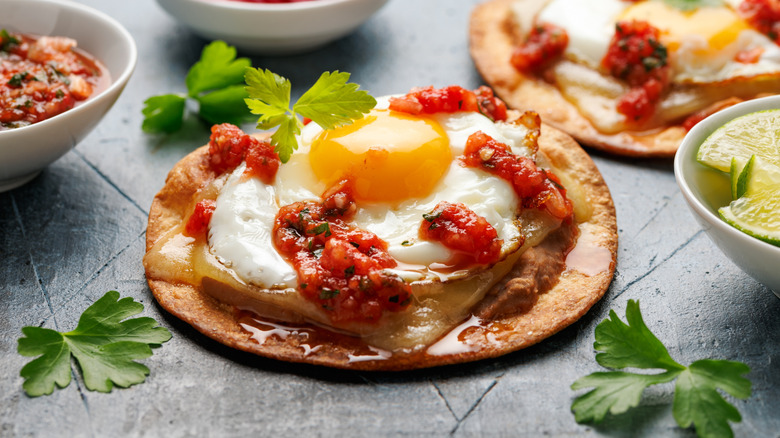
Huevos rancheros is a traditional Mexican breakfast and translates from Spanish to "ranch-style eggs." A fan favorite, some locals might even argue that huevos rancheros is the quintessential Southwestern breakfast. Not to be confused with chilaquiles, this hearty yet simple dish begins with two corn tortillas, sometimes fried into a crispy tostada, and is then layered with refried beans, fried eggs, and topped with salsa roja, crumbled cotija cheese, and the occasional garnish of avocado or cilantro.
The name, huevos rancheros, immediately conjures a Southwestern image, with wide open ranges and bustling, old-style ranches. While the dish is deeply tied to the Southwestern identity, its roots stretch back centuries to rural Mexico. As early as the 16th century, ranchers would enjoy this protein-packed breakfast after finishing their morning chores. In the U.S., the dish is believed to have gained popularity starting in San Antonio, Texas, just north of the border, before spreading across the Southwest and becoming a beloved staple at diners and cafés far beyond.
3. Pozole
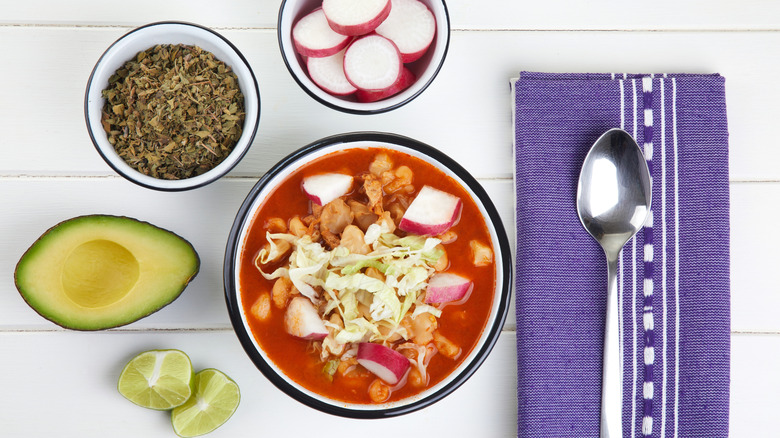
One of the most common soups many people grow up eating in the Southwest is pozole. This traditional Mexican stew is made with hominy, meat, pork or chicken, and a deeply flavorful chili-based broth. While delicious on its own, one of the best parts of pozole is the variety of fresh toppings you can add to customize your bowl: crunchy cabbage, sliced radishes, lime wedges, avocado, and crispy tostadas are all fair game.
Pozole dates back several centuries and is believed to have originated with the Aztecs, who ate a similar stew for ceremonial purposes. According to historical accounts, it was originally made with the meat of sacrificial captives as a way to honor the gods and mark major seasonal or spiritual events. Brought to the Southwestern United States through Mexican migration, pozole is now a staple in both restaurants and home kitchens across the region. While it is still eaten on celebrations and special occasions, these days the celebrations look very different.
4. Native American fry bread
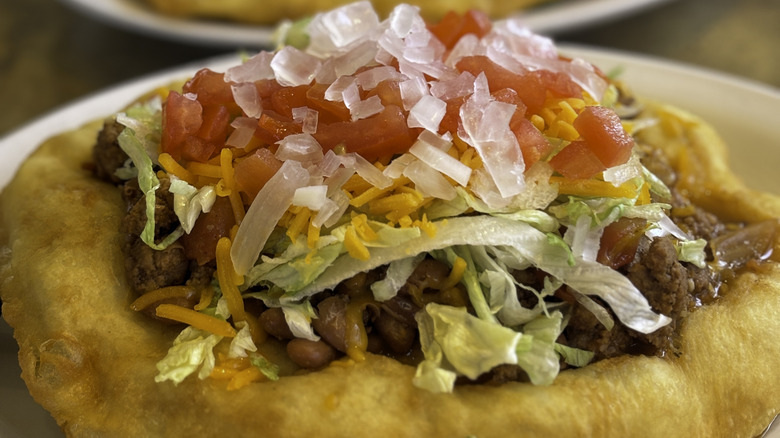
Is there anything truly more delicious than fried dough? Today, if you go around the Southwest, primarily in Arizona or New Mexico, you will find a delicious version commonly called Native American fry bread. Made from just a few simple ingredients: flour, baking powder, salt, water, and oil, fry bread is deep-fried until it's golden, crispy on the outside, and soft and slightly chewy inside. Once cooked, it can be dressed with toppings including anything from honey and powdered sugar to savory options like beans, chili, or corn salsa.
Native American fry bread is more than just a delicious comfort food. The origin of Native American fry bread is attributed to the Navajo people who were forced by the United States government to relocate from their lands in Arizona to New Mexico. Along the way, they were given limited government rations, mainly flour, lard, and salt, and forced to make do with what they had. Fry bread is said to have been born from this journey. While it's enjoyed at fairs and family gatherings, fry bread also serves as a powerful symbol of survival, resilience, and cultural identity for many Native communities across the Southwest.
5. Sonoran hot dog
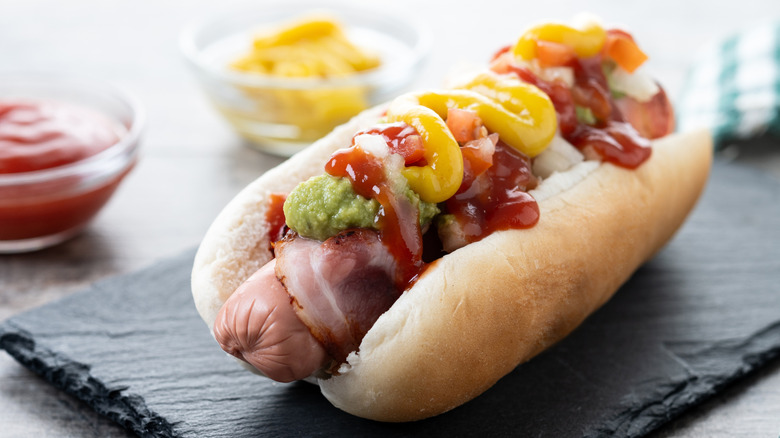
The Sonoran hot dog, named after the Sonoran desert where it originated, is a bold, delicious creation made by wrapping a hot dog in bacon, cooking it until crispy, and then topping it with grilled onion, pico de gallo, pinto beans, mayonnaise, mustard, ketchup, hot sauce, and a charred chili pepper. The dogs are served in a soft bolillo bun, which provides enough sturdiness to hold all of the dog with all of its toppings.
This over-the-top street food is a delicious symbol of the mixing of Mexican and American cultures. It's believed to have first appeared in Hermosillo, a bustling city near the U.S.–Mexico border. From there, it made its way north to Tucson, Arizona, where it quickly became a local favorite. Wrapping a hot dog in bacon might seem a bit much, but if you grew up in Arizona, you would know that this combination is unbeatable. Truly different from any other hot dog, today it is sold in Mexican restaurants, food trucks, and stands on the street in various cities around the Southwest.
6. New Mexico chili tamales
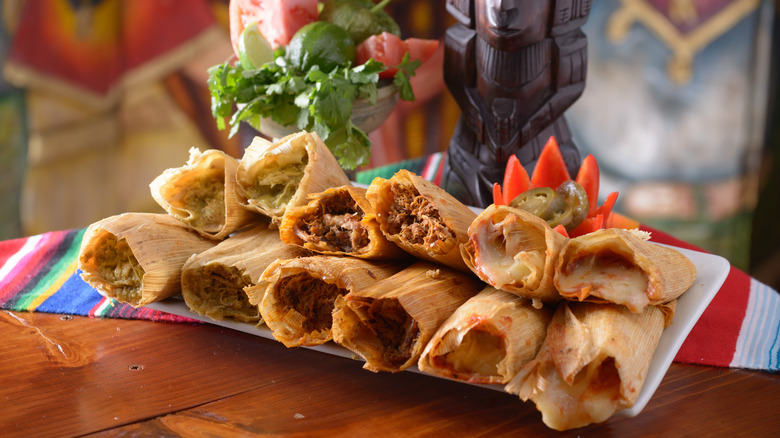
Tamales are a traditional Mexican dish, with regional variations that reflect the local ingredients and history of each area. After crossing the border into the United States, tamales adapted to American tastes, especially in New Mexico, where they've become a beloved staple with a distinct local twist.
New Mexican tamales are typically filled with pork and smothered in a rich red chili sauce made from Hatch chiles, giving them a signature flavor that's both smoky and spicy. If you grew up in the Southwest, chances are you've eaten plenty of these tamales, whether at restaurants, through deliveries from family friends, or at a tamalada (a tamale-making party), often held around Christmas or New Year's.
Making tamales at home is a full-day affair, but it's also a fun and cherished group activity. The process includes preparing a flavorful meat filling with chili sauce, mixing up soft masa dough, and soaking corn husks to wrap it all together. Once assembled and rolled, the tamales are steamed in a small amount of water until tender and ready to be shared. They are the perfect, Southwest classic.
7. Chili con carne
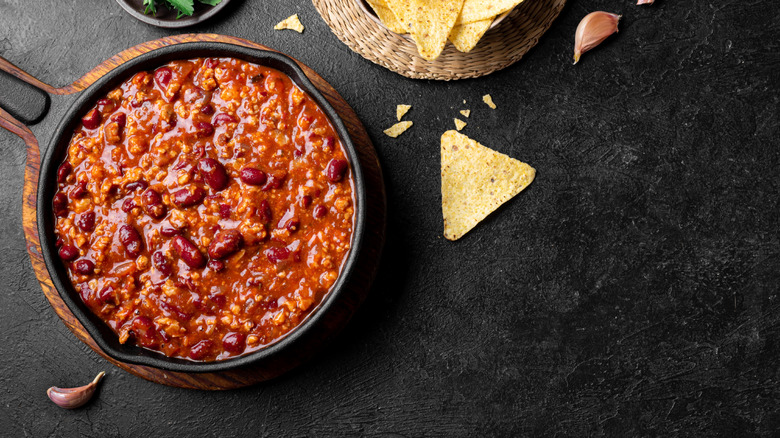
Chili con carne, which translates directly to "chili with meat", is often simply called "chili" in the U.S. This hearty Southwestern staple originated in Texas but has spread across the country, and for good reason. A spicy, comforting stew, chili con carne typically combines beef, tomatoes, beans, chile peppers, and a bold blend of spices.
One of the earliest recorded accounts of the dish comes from San Antonio in the 1820s, describing a stew made with "nearly as many peppers as there are pieces of meat." Even then, chili was recognized as a cross-cultural creation, so much so that one writer suggested it be renamed "Chili a la Americano," highlighting its fusion of Mexican flavors and American tastes. Today, chili exists in countless variations far beyond the Southwest. Still, it remains a Tex-Mex classic and a nostalgic comfort food for many who grew up in the region, often served at cook-offs, family gatherings, or just on a rare chilly night.
8. Green chile cheeseburger
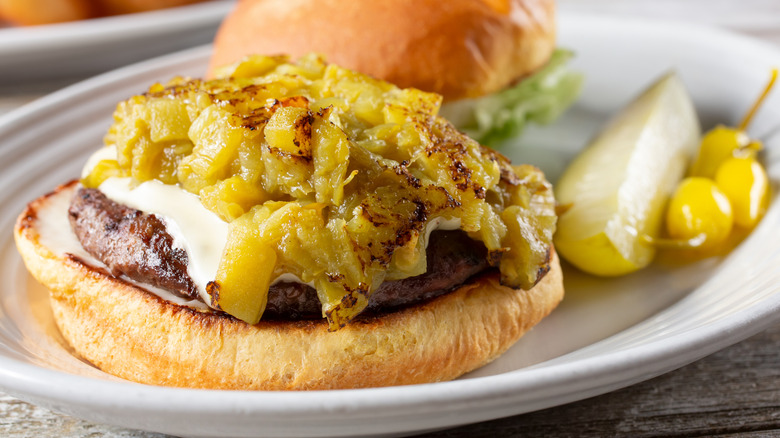
No roundup of Southwestern food would be complete without the iconic New Mexico green chile cheeseburger. If you grew up living in New Mexico, you couldn't avoid eating this and if you didn't, you probably wish you did. This Southwestern classic fuses the all-American hamburger with the bold, smoky heat of green chile, a flavor deeply rooted in Mexican and New Mexican cuisine.
The burger's origins trace back to Hatch, New Mexico, just 70 miles north of the Mexican border. Often referred to as the "chile capital of the world," Hatch is famous for its namesake peppers, which owe their distinct flavor to the region's unique soil and climate. Earthy and incredibly versatile, Hatch green chiles are a point of pride across the Southwest, and this burger is one of the most delicious ways they're used.
The green chile cheeseburger starts with your typical beef patty, is topped with a slice of melted American cheese, and then a generous helping of roasted green chile. From there, it's finished with classic burger toppings, mayonnaise, mustard, lettuce, tomato, and onion, all stacked inside a soft bun. It's simple, bold, and an unforgettable Southwestern classic.
9. Carne asada
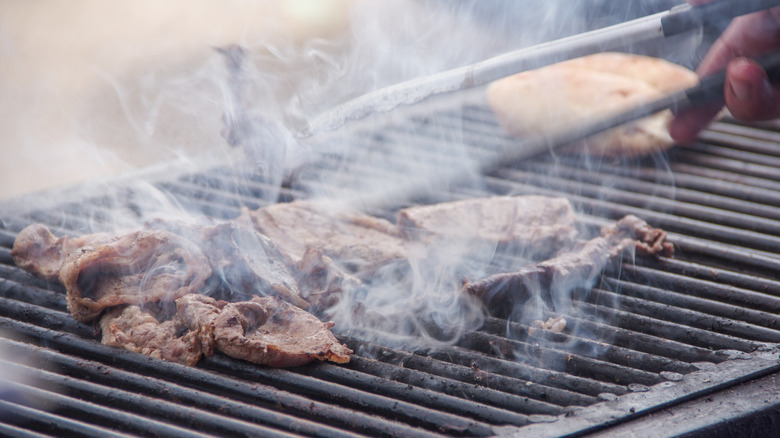
Carne asada translates to "roast meat" in English and started as just that. A cornerstone of Northern Mexican cuisine, especially in the Sonora region where ranching and cattle raising are central industries, traditional carne asada was a simple yet flavorful dish featuring thin cuts of beef seasoned with salt and grilled over mesquite wood for a distinct smoky taste.
As Mexican immigrants made their way to the United States, they brought this beloved dish with them. Over time, carne asada evolved to suit American taste and available ingredients. Today, there are many chef-approved ways to make the perfect carne asada, but it's typically made with skirt or flank steak, marinated in citrus juice, garlic, spices, and sometimes even beer or tequila before hitting the grill. In the Southwest, carne asada is everywhere. It's a staple on Mexican restaurant menus, folded into tacos, piled onto nachos, wrapped in burritos, or served on its own. More than just a delicious meal, it's also a symbol of cultural connection, representing the deep ties between Mexico and the Southwestern United States.
10. Margarita
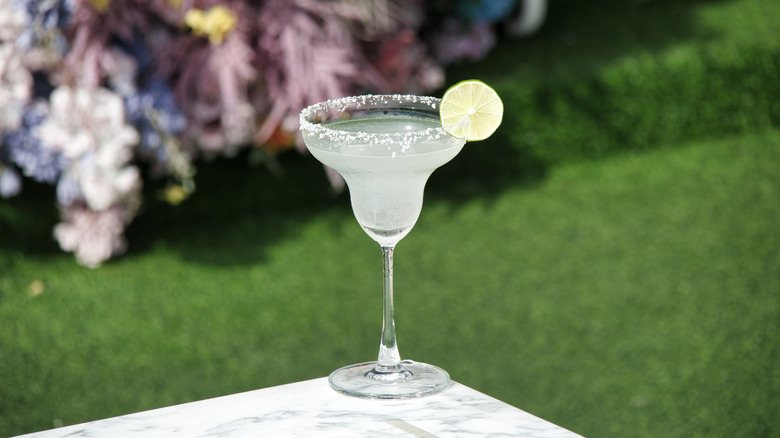
It's hard to avoid margaritas no matter where you are in the United States, but if you grew up in the Southwest, you truly can't escape it. The perfect margarita combines tequila, orange liqueur, lime juice, some sort of sweetener, and is always finished with a salt rim and a lime wedge. The history of the margarita (like most cocktails) is a little bit fuzzy, convoluted by unreliable narrators and records, but it is most likely created between the 1930s and 1950s around the United States and Mexican border.
The margarita is quintessentially Southwestern, though, because of tequila. Tequila is a product of agave plants, which are native to Mexico and the Southwestern United States. Even back in the time of the Aztecs, tequila was fermented into traditional drinks. Tequila itself began getting smuggled into the United States during the Prohibition era, but the agave plant grows well in states like Arizona that host a warm, dry climate. Today, margaritas are featured on almost every Taco Tuesday menu, as a traditional favorite in Mexican restaurants, and as a specialty in Southwestern bars.
11. Horchata
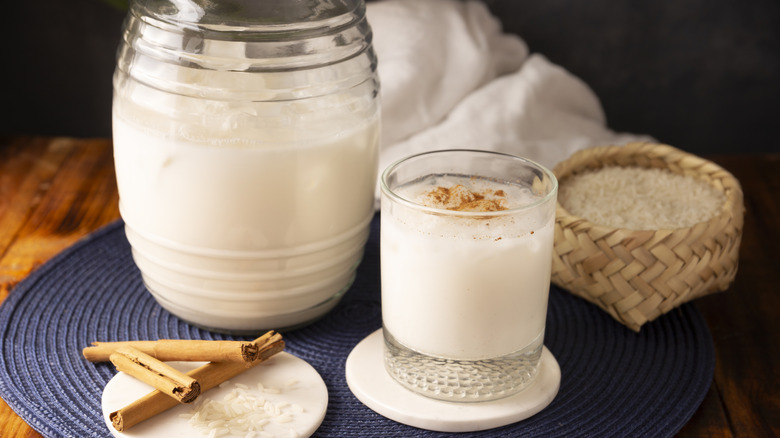
Horchata is a sweet, creamy, and refreshing beverage you'll find at many Southwestern restaurants and taquerias. While many people in the Southwest think of it as a quintessentially Mexican drink, horchata actually traces its roots back to Valencia, Spain.
Traditional Spanish horchata is made from tiger nuts and has a thicker, more earthy flavor. When the drink made its way to Mexico, it was adapted using more readily available ingredients, most commonly rice. Mexican horchata is typically lighter in texture, but sweeter and infused with cinnamon and vanilla, giving it its signature flavor.
Mexican immigrants brought horchata to the Southwestern United States, where it became a beloved staple. If you grew up in the region, chances are you've had a glass of horchata on a hot day as the perfect cool, milky, and sweet drink. And while it's a childhood favorite for many, horchata can also be mixed with rum, tequila, or coffee liqueur for a grown-up twist on a nostalgic classic.
12. Flan
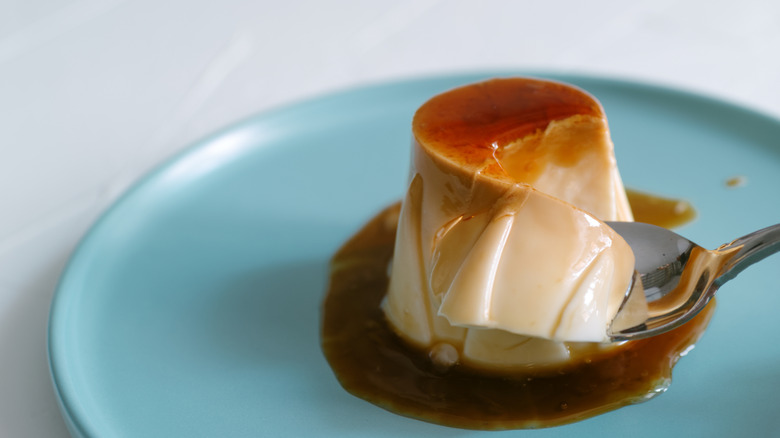
Another beloved dessert that has traveled from Spain to Mexico to the Southwestern United States is flan. A staple if you grew up in the Southwest, flan is a silky, baked custard topped with a layer of caramel. Decadent yet refreshing, it's the perfect dessert for a hot desert day.
One of the best things about flan is that it's easy to enjoy both at your favorite Mexican restaurant or made fresh at home. To make traditional Mexican flan, simply blend eggs, vanilla, sweetened condensed milk, and evaporated milk until completely smooth. Then, make a quick caramel by melting sugar with a little water until golden and slightly thickened. Pour the caramel into a baking dish, followed by the custard mixture. Bake the dish in a water bath for about an hour, let it cool, and you'll be left with a creamy, elegant dessert that melts in your mouth.
13. Raspado
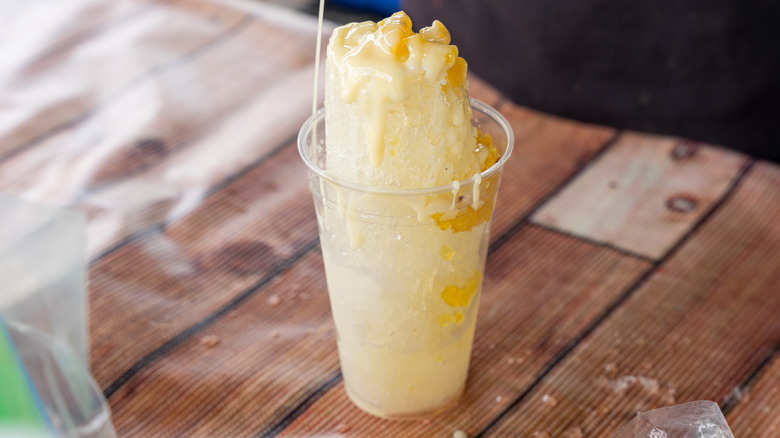
If you walk down a busy Southwestern street on a hot day, you might feel like you're being bombarded by shaved ice and snow cones. But these icy treats aren't your average snow cones, they're Mexican raspados. A traditional street dessert, raspados are made from finely shaved ice topped with natural fruit syrups, creating a refreshingly sweet and textured treat. Unlike the neon-colored, artificial versions common elsewhere in the U.S., raspados use real fruit and bold, natural flavors. They often include chunks of fruit and toppings like chili-lime seasoning or chamoy, a sweet, tangy, and slightly spicy sauce.
In the Southwestern U.S., raspados have evolved into something uniquely regional. Local versions might include layers of ice cream, drizzles of condensed milk, or inventive sundae-style combinations. No matter the variation, raspados are the ultimate summer dessert. Just like Southwestern cuisine itself, they're bold, creative, and shaped by the fusion of cultures that define the region.