

This Versatile Korean Cookware Also Happens To Be One Of The Most Durable
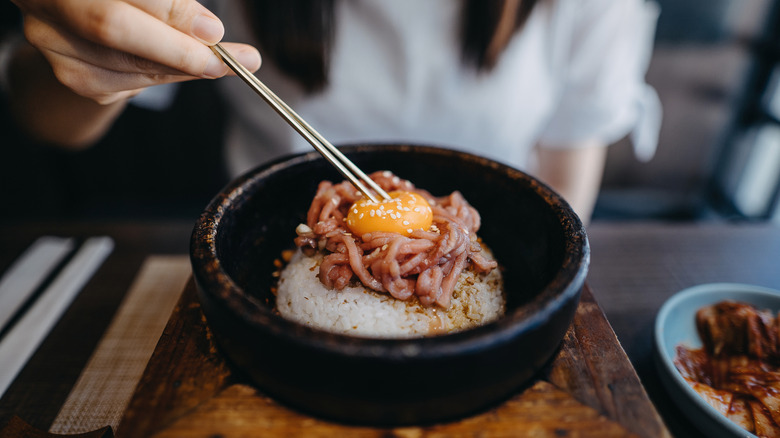
If you're unfamiliar with Korean culture and cuisine, you probably have no idea what gilgeori toast (a Korean breakfast sandwich) is or what Korean candies to try, let alone "dolsot" cookware. A dolsot is a traditional Korean stone bowl used to prepare and serve mixed rice dishes, such as bibimbap, and stews. Typically made of hardwearing granite, the bowls can be warmed via an oven or stovetop and retain heat so dishes can be kept warm for longer.
Dolsot was first used to cook rice over charcoal during the Three Kingdom period, about 57 B.C. to A.D. 668. The stone cookware became a kitchen staple in Korean households for centuries — up until Japanese occupation before and during both World Wars. During this period, the dolsot method of cooking bibimbap nearly became extinct with the introduction of a metal, Japanese-style pot called "naembi," which translates to "casserole." Dolsot bibimbap eventually started popping up again in restaurants in the 1960s. While some may still use a dolsot at home, it's not as common.
The pros and cons of dolsot
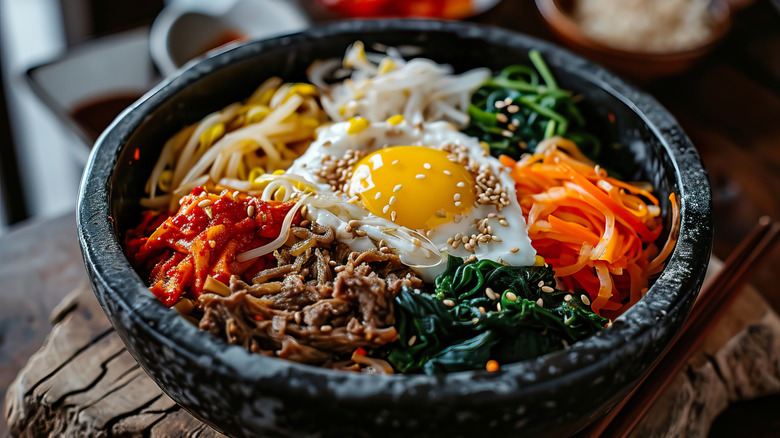
Since dolsot conducts heat well, it cooks food at a faster rate and can keep food warm for quite awhile. You can actually cook a perfect fried egg in it like you would with cast iron. The stone material is also able to absorb water, so it makes your rice moist and easier to reheat. At restaurants, dolsot bibimbap is typically served while still sizzling and continues to cook even as you eat it. People enjoy that the piping hot stone makes the rice at the bottom of the pot crispy, adding a delightful crunchy texture to the dish. Koreans call this toasted rice "nurungji."
However, it's important to take extra care not to damage your kitchen surfaces or burn yourself when handling one. If not placed on a trivet before setting down, you could damage your table. Or, worse, you could end up with a nasty burn if you touch the pot without thinking. The fact that the dolsot keeps the food so hot for so long also means you could end up with a burnt tongue if you try eating too soon. The stone pots are also heavy, so much so that if you drop one, it could break your toes.