

The Post-Picnic Decision That Can Potentially Cause Health Risks
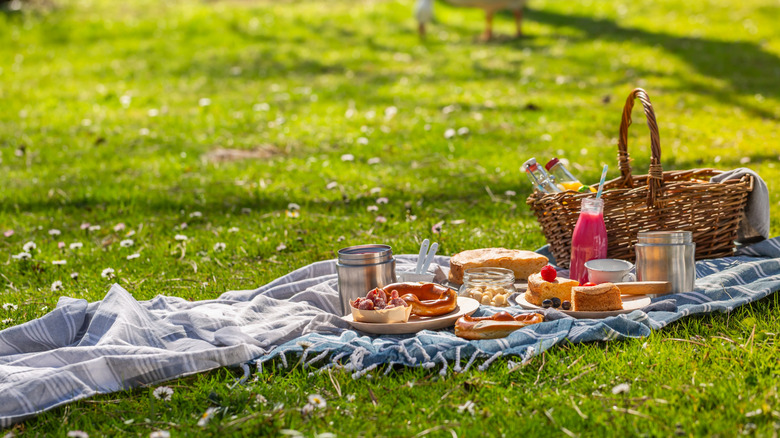
We've all been there: Enjoying an absolutely delicious meal at a picnic, going back for one plate after another, hoping there will be enough left for you to have a third (or fourth) plate. At the end of the picnic, you see that there's still plenty of your favorite dish remaining, and you're tempted to take it home to enjoy later. While stowing away your grandma's famous potato salad or your own trademark key lime pie might seem like a great idea in the moment, it's important to be aware of food safety rules so that you don't end up regretting your decision. A bad choice at an outdoor picnic can quickly transform a beautiful day with loved ones into an unforgettable evening of seriously severe stomach troubles (be sure to steer clear of other outdoor picnic mistakes, as well).
When food sits out at room temperature for too long, bacteria can grow to dangerous levels. The "Danger Zone" for uber-rapid bacterial growth sits between 40 and 140 degrees Fahrenheit, according to the U.S. Department of Agriculture. In as little as 20 minutes within this temperature range, levels of dangerous bacteria (including E. coli, Salmonella, and Staphylococcus) can double. Remember, this isn't just about the time you're enjoying food at the picnic. Your favorite dishes are also gaining or losing heat from the moment you take it off the stove or grill, or out of the fridge to head to your picnic spot.
Tips for keeping food safe outdoors
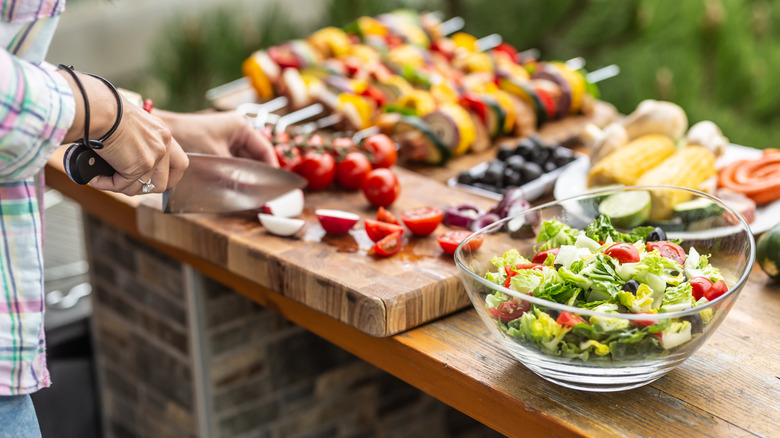
The best way to keep your picnic safe is to keep hot foods at or above 140 degrees Fahrenheit, and cold foods cold at or below 40 degrees Fahrenheit. If you can't keep foods at safe temperature, you'll have to toss them after everyone is finished eating. While it may feel like a waste, it's better to be safe than sorry. However, with a little bit of extra effort, preserving the meal is often doable — especially if you're enjoying it at a picnic facility that has electricity.
Using a cooler packed with ice can be a great way to keep cold foods — like pasta salad (which can be made super flavorful with one extra step), sandwich meat, and items that you're going to throw on the grill at your picnic spot — at a temperature that won't turn your food into a hotspot for bacteria. Hot foods can be a little more difficult to keep safe. If you're somewhere with access to electric power, plugging in a crock pot can help you keep your protein-filled spinach artichoke dip (and other slow cooker favorites) safe to enjoy throughout the duration of your picnic. Just be sure to give it a stir every now and then so you don't end up with burnt bits at the bottom, and be sure to refrigerate all safe-to-eat leftovers promptly when you get home.