

Here's Why Hershey's Got Rid Of The Iconic Foil Wrappers On Its Chocolate Bars
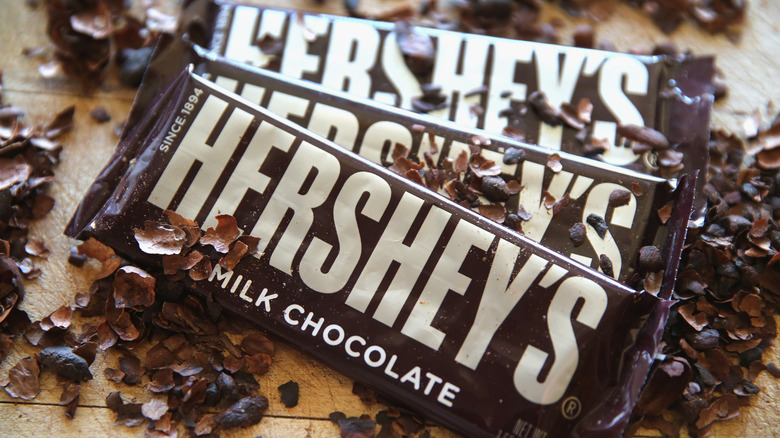
Milton Hershey was a successful caramel company owner who decided in the 1890s to venture into the depths of the chocolate industry. Unbeknownst to him, he would become the founder of one of the most recognizable chocolate brands in the world. Hershey is known to have been one of the first people to popularize the commercial production of milk chocolate, which he developed with a machine he got at the Columbian Exposition in 1893. In 1900, he debuted his chocolate bars along with other sweet treats. Over the years, the chocolate company experimented with branding — as you'd expect. Though it tried different variations of a neutral brown color palette, the iconic typeface seemingly became cemented by 1950.
Early Hershey's chocolates were wrapped in foil with a branded paper label overtop — until 2003, when the brand ditched the design altogether in the name of cheaper, longer-lasting alternatives. This followed the evolution of the candy industry, where we witnessed the peeling back (pun intended) of original packaging methods. When it comes to emblematic brands, the classic candies of the '70s highlight a noteworthy period of confectionary graphic design. Production-based changes in candy branding standards became more focused on attention-grabbing exteriors, sustainability, cheaper packaging, and efforts to keep sweet treats fresher for longer. All of a sudden the familiar candies as we knew them had begun to vanish — much like the original Hershey's chocolate bar wrapper.
The original wrapper was redesigned in a new form
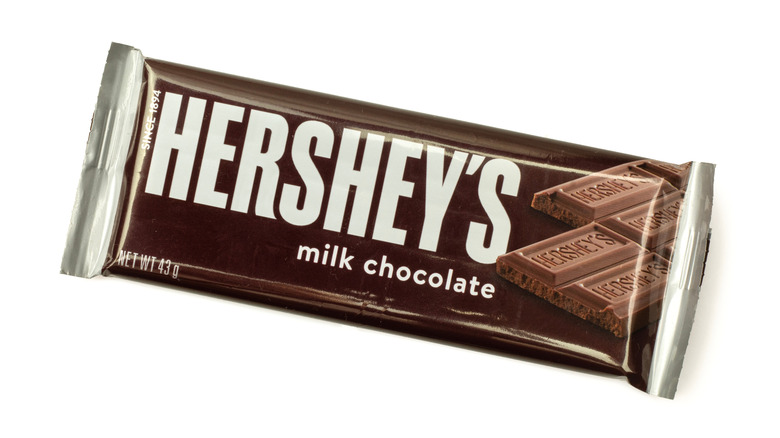
Plastic-based packaging designs engulfed the market around the middle of the 20th century, particularly as they were affordable to produce and ensured longer-lasting products. Hopping on board with this trend, Hershey's opted for a more waste-conscious update, switching to a singular plastic package (though it's worth noting that they did maintain the silver edges to mimic the original foil design). The updated Hershey's wrapper is presented in a fin-seal design, which essentially creates a tube-like shape where the inside of the packaging is fastened internally to extend shelf life.
Wrappers are only one part of the puzzle. Other factors like the quality of chocolate, additional ingredients, texture, and creaminess also help determine the most popular chocolate bars on the market. In Hershey's case, the confectionery producer remains one of the most noteworthy actors in the candy market. With many wrapping materials, considerations, and adjustments in design to accommodate a changing candy landscape, you may find yourself wondering what the correct way to store chocolate is. Regardless, the decision to change to a thinner, less wasteful plastic wrapper has stuck, and we're unlikely to see any shift in the Hershey's world anytime soon.