

Here's How To Avoid Buying 'Woody' Chicken
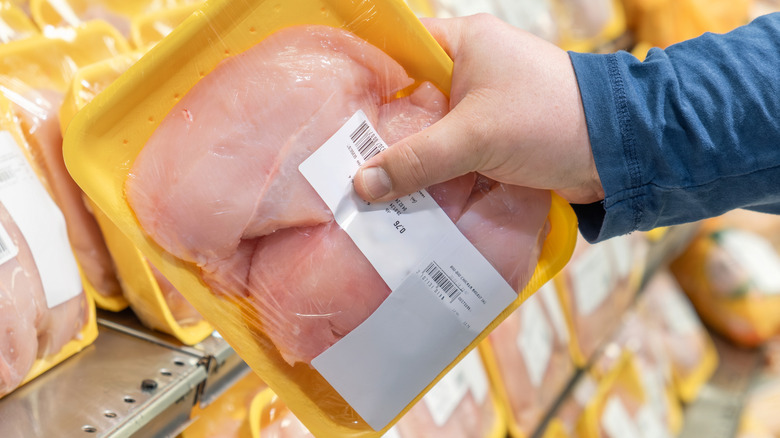
Home chefs have all been there. You painstakingly prepare a chicken breast, going through all the tried-and-true steps necessary to create a tender, juicy, flavorful bite. Maybe you've gone through the steps of breaking down a whole bird on your own to set yourself up for fried chicken success. But despite your best efforts, the meat ends up having a not-so-great "woody" texture. Chowhound talked exclusively with chefs and television personalities Andrew Zimmern and Robert Irvine to get the skinny on what woody chicken is and how you can avoid it at the grocery store.
"Woody is a very firm texture," Irvine told us. "This tends to happen with a lower quality bird and muscle development. These chickens were raised faster with their feed. Rapid growth only hits the size target; the tradeoff is that the meat doesn't stay tender." Zimmern shared similar thoughts (Ina Garten agrees with Irvine and Zimmern as well), saying that commercial poultry companies breed chickens to grow so quickly that their muscle tissue can't develop properly, resulting in fibrosis and poor blood supply.
Zimmern also said that you can often tell when a piece of chicken is woody while you're shopping in the produce aisle. "The chicken breast will be tough, pale, stringy, or rubbery, and sometimes visibly hard or lumpy," he told us. Irvine recommends also looking at color. "A whiter opaque color means the chicken was raised on pellets to speed up growth," he said. "This is found in lower quality chicken being rushed to sale."
How to choose tender chicken at the grocery store
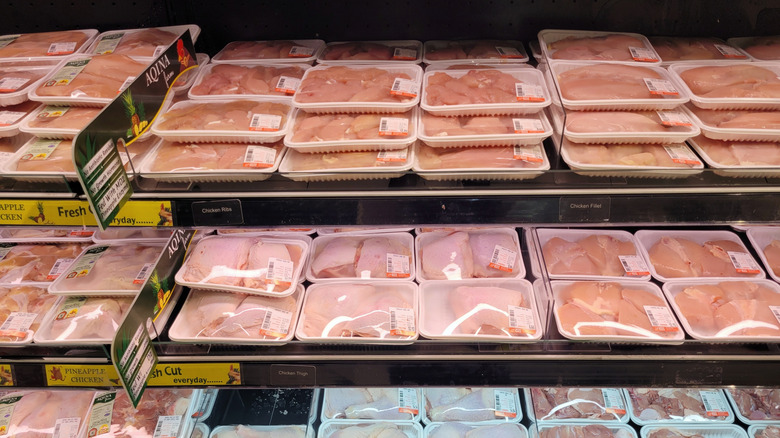
You know what to keep an eye out for to avoid woody chicken — but you'll also want to look for signs of a healthy, sustainably raised chicken breast for both animal welfare and great flavor. Andrew Zimmern recommends looking for chicken with skin that actually looks like skin — not plastic wrap (Costo multipack chicken breasts are known for having a plastic-like coating). He also recommends pushing on the meat through the plastic. "It should be firm and spring back — not mushy or rubbery," he says. "Mushy meat can be a sign of rapid growth, poor diet, or even frozen-and-thawed product."
Zimmern also recommends looking closely at the package to learn more about where the chicken came from. Look for labels that say "pasture-raised" or "regeneratively raised." These terms go beyond the requirements for free-range and can increase the likelihood that you'll get a high-quality product you can feel good about. Another smart move: Buy your chicken from a butcher or, at the very least, from a grocery store that has a butcher (this means avoiding buying chicken at Aldi). Ask questions like what the chicken ate, whether it was pastured or confined, and how old it was at slaughter (older chickens tend to have better flavor). The more the butcher can tell you about the chicken, the more likely that it's a high-quality product.