

States Other Than Kentucky That Should Be On Your Radar For Quality Bourbons
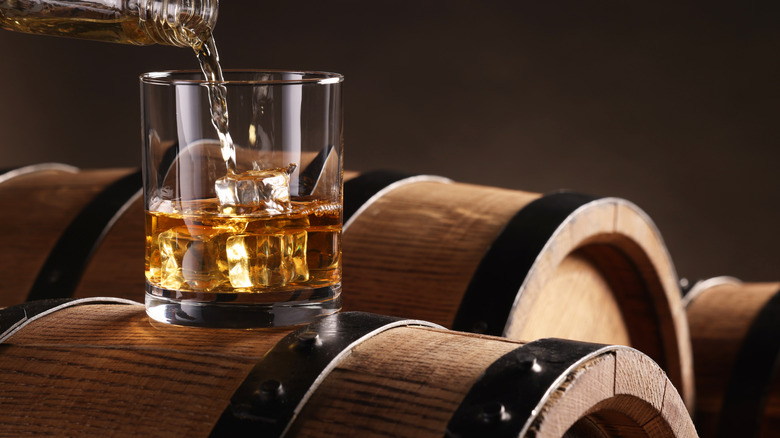
Kentucky is the undisputed champion of bourbon production, and there's a reason 95% of all bourbon is made there. Besides its long history related to the spirit dating back more than 200 years, the state was blessed with two of this whiskey's key ingredients: corn and high-quality water. Kentucky's limestone water, often called branch water, is perfect for bourbon production since it's free of iron and contains minerals that help in its distillation. It's also the go-to water for making a bourbon and branch drink. While bourbon must be made from at least 51% corn and aged in new charred oak barrels, unlike Tennessee whiskey, which must be made in that state, bourbon can be produced anywhere in the United States.
There are plenty of other states that grow lots of corn, have good water, and distillers with the know-how to produce a great bourbon (or all three). Indiana and Illinois produce more corn than Kentucky. Colorado has Rocky Mountain water. Pennsylvania began producing whiskey (mostly rye) before the Bluegrass State, and New York's whiskey distilling history is nearly as old. What that means is that while Kentucky is the bourbon capital of the world, there are several other states that should be on your radar for quality bourbons.
Indiana's got the corn and the bourbon
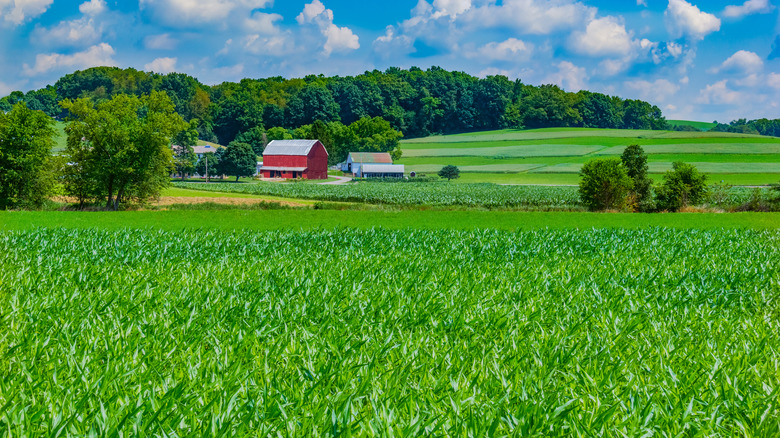
Perhaps somewhat surprisingly, one of the country's largest whiskey producers is located in the Hoosier state. It's called Midwest Grain Producers (MGP), located in Lawrenceburg. The company distills bourbon for various brands and also puts out some award-winning bourbons of its own through its labels Ross & Squibb, producer of the outstanding Remus Gatsby Reserve, and Penelope Bourbon (which it acquired in 2023).
Indiana also has some outstanding smaller craft operations like the farm-to-bottle Starlight Distillery in Borden, which produces exceptional bourbons, including a single barrel and a bottled-in-bond bourbon, which took home Double Gold and Gold, respectively, at the 2025 San Francisco World Spirits Competition. Two other distilleries worth mentioning include Old 55 in Newtown, which produces a unique 100% sweet corn bourbon using corn from its own farm, and West Fork Whiskey Co. in Westfield. The latter distillery's Wheated Bottled in Bond bourbon has racked up numerous awards and accolades. This is just scratching the surface of the bourbon-making scene in this state.
Colorado's craft distilleries shine
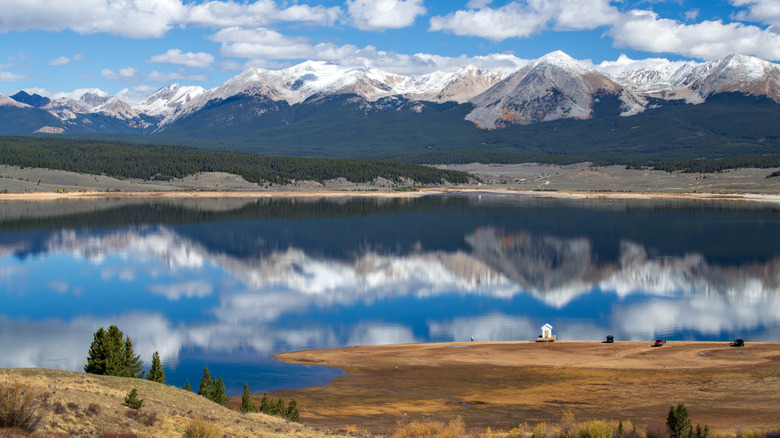
Colorado was at the forefront of the craft distillery revolution, and while it may be better known for American single malts, there are plenty of distilleries producing extraordinary bourbons. Colorado even has its own distillery trail, not unlike the Kentucky Bourbon Trail, which is a must-see for whiskey enthusiasts.
Among the standout bourbon makers in the Centennial State are Boulder Spirits, which has been around since 2015, and managed to take down both Kentucky and Tennessee to be named the Best Small Batch Bourbon by the World Whiskey Awards in 2025 for its unique 2024 Cask Strength Bourbon. It includes a high amount of malted barley, a common ingredient in the mash bills of Irish whiskey and Scottish whisky, but unusual for a bourbon.
Another intriguing Colorado distillery is Locke & Co., which adds hand-charred Aspen wood disks to its bourbons as they mature to boost the flavor profile, making for a unique drinking experience. Branch & Barrel is an award-winning Colorado distillery that sources its ingredients in-state and uses Rocky Mountain water, which, like Kentucky's water, is infused with minerals that aid in the bourbon-making process. These are just a few of the outstanding whiskey distilleries making top-notch bourbon here.
Illinois was once home to Whiskey City
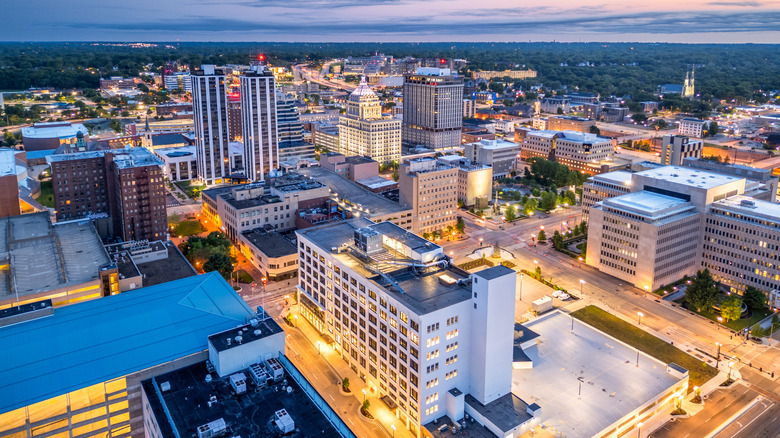
Illinois has deep roots in whiskey making that rival Kentucky's. In fact, Peoria used to be known as Whiskey City, producing even more alcohol than its southern neighbor during the 1800s. The state has limestone filtered water and an abundance of corn, wheat, and other grains used in bourbon making, but strict alcohol-related regulations enacted after the end of Prohibition in the Prairie State stifled the industry over the decades. Thankfully, with the craft distillery renaissance, Illinois has regained a foothold in the bourbon world.
Among the state's best-known bourbon brands is FEW Spirits, a trailblazer in the state's craft scene that began in 2011 in Evanston. The distillery makes a grain-to-glass straight bourbon that's bold and complex. Other standout Illinois bourbon makers include the farm distillery Whiskey Acres, in DeKalb, that grows all its own grain and produces an excellent bottled-in-bond expression, among others. Oppidan Spirits, in Wheeling, combines art and science to produce innovative bourbons like its Smoke + Sea, which is finished in peated Isley whisky barrels for a touch of smoke. Illinois' bourbon makers are worthy descendants of the state's distilling heritage.
Pennsylvania is the birthplace of American whiskey
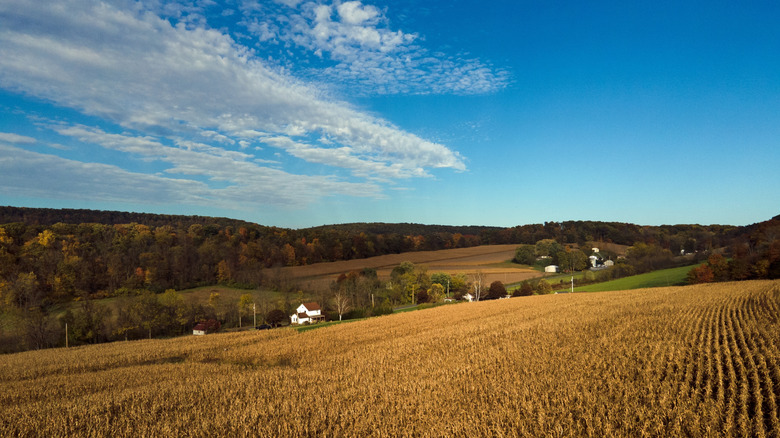
Pennsylvania is considered the birthplace of the American whiskey industry, with a history stretching back to the 18th century, although it was rye that was the go-to spirit back then. That hasn't stopped modern distilleries in the Keystone State from producing some excellent bourbons. Stoll & Wolfe is a distillery founded in Lititz in 2016 by master distiller Dick Stoll, who learned his craft from C. Everett Beam, the grandnephew of Jim Beam himself, and was at the original Michter's Distillery before it shuttered in 1990. Stoll passed away in 2020 at 86, but his partner Erik Wolfe continues the distillery's legacy. While better known for its rye (it is Pennsylvania after all), Stoll & Wolfe crafts some excellent bourbons as well.
Other Pennsylvania bourbon makers of note include Liberty Pole Spirits, a family-run distillery in Washington that also opened in 2016. Among its offerings is a wheated bourbon made with local bloody butcher corn and wheat, and a peated bourbon that adds a distinctive smokiness from Scottish peated malted barley to the bourbon's traditional caramel and vanilla notes. Eight Oaks, a farm distillery in New Tripoli, also deserved a mention for its line of small-batch bourbons. Among these is a distinctive Double Cask Pinot Bourbon that gets a second aging in former pinot noir wine casks, adding notes of berry and chocolate to the finished bourbon. In Pennsylvania, rye may rule, but bourbon abides.
New York's thriving bourbon scene
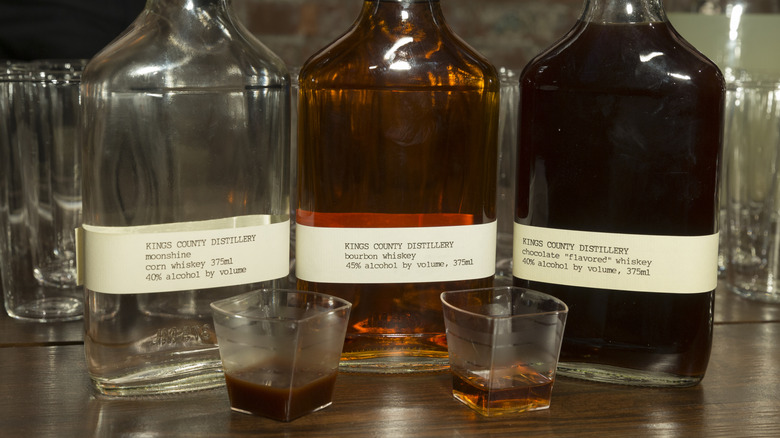
In the early 1800s, New York State saw an explosion of farm distilleries producing whiskey, and although Prohibition killed the distilling industry there, today the Empire State is home to hundreds of small distilleries. The Hudson Valley and Brooklyn are two areas where they've thrived. In the Hudson Valley, Hillrock Estate Distillery in Ancram, founded in 2010 by Jeffrey Baker and Cathy Franklin, produces an outstanding bourbon with an average age of six years, using all of its own grains and a traditional malting floor. Cooper's Daughter, located in nearby Claverack, is a woman-owned and family-operated distillery with its own cooperage that produces a striking black walnut bourbon.
Further south in Brooklyn, two distilleries have garnered well-deserved reputations for their bourbons — Kings County Distillery and Widow Jane. The award-winning Kings County Distillery, located in the Brooklyn Navy Yard, got started in 2010 and has since risen to become one of the premier small distilleries in the country. It produces an exceptional straight bourbon whiskey, a peated bourbon, and limited releases like its barrel strength expression. Widow Jane, founded in the Brooklyn neighborhood of Red Hook in 2012, produces singular bourbons such as Lucky 13, which is aged for a minimum of 13 years. So, while Kentucky reigns supreme when it comes to this truly American spirit, there are several other states that can rightfully claim to produce some mighty fine bourbons, too.