

The Oven Temperature Tip That Will Ensure Your Pastelitos Bake Evenly
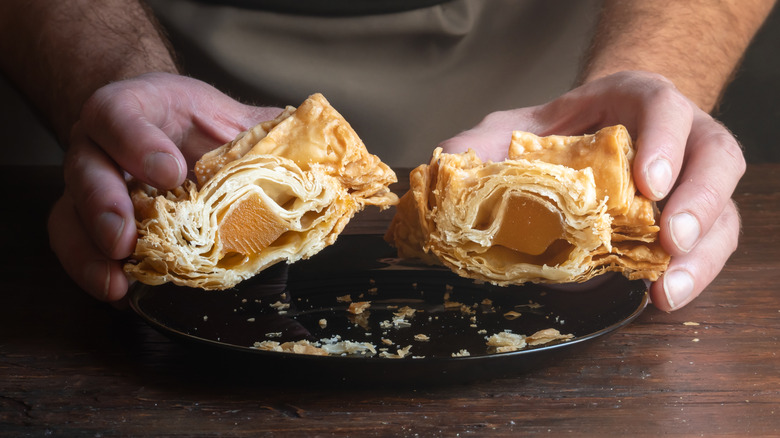
Cuban food is a delight, plain and simple. From typical Cuban breakfasts, such as harina Cubana, to the legendary sandwich that bears the country's name, Cuba's cuisine is as diverse, colorful, and vibrant as the country's culture. While Cuban bread is famous the world over, bakers on the island are responsible for a variety of delicious goods, including the pastelito: A wonderfully flaky, tender-on-the-inside, crispy-on-the-outside puff pastry parcel stuffed with sweet or savory ingredients. They aren't necessarily the easiest to get your hands on if you don't live near a Central or South American shop or bakery. For many of us, the best way to get a taste is to make them at home. They follow a similar process to other puff pastry goodies, but there are a few essential tips and tricks to keep in mind.
To find out more, we spoke to Jorge Mas, corporate chef and partner at Kuba Cabana in Miami, Florida, for his exclusive guidance. For him, the key is keeping a tight control over temperature. "Ensure the oven is well-calibrated to the proper temperature," Mas told us. Though it goes without saying that professional kitchens and bakeries keep their oven temperatures on lock, at home, people rarely know what temperature their oven really is. Calibrating it with the use of an oven thermometer is the best way to make sure you don't overbake, underbake, or, heaven forbid, burn your pastelitos (or anything else you happen to be baking).
How to ensure your pastelitos bake evenly
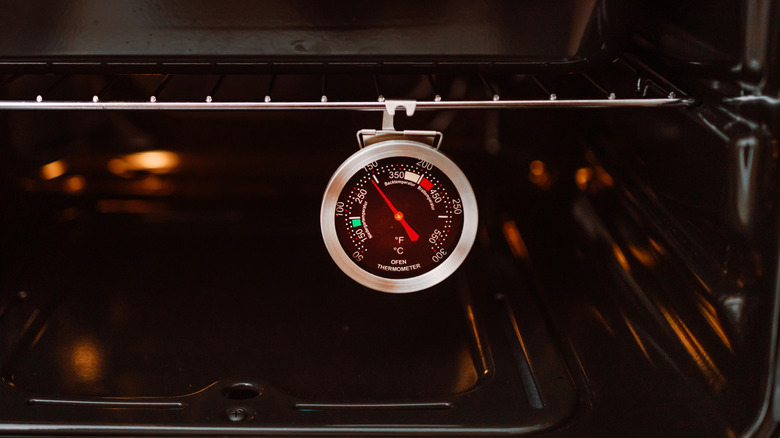
Once you've got your oven properly calibrated, it's a case of using the correct setting. The key here is getting enough heat into your dough to provide it with enough oomph to properly rise. "Convection is the preferred setting for baking puff pastry as it imparts heat more efficiently to the baked goods," Jorge Mas explained. To help the oven most effectively do its thing, make sure you also give your pastries room to grow and don't make too many pastelitos at a time. "Do not overcrowd the oven with baking pans," he adds. If you do, you risk reducing your oven's capacity to properly deliver heat, and your pastries can't rise properly.
Temperature of the dough is especially crucial, too. "It is important to keep it cold to prevent the butter from melting. Keeping the butter as cold as possible will produce a flaky pastry." The cold butter ensures the layers of puff pastry remain distinct so you get the brilliant layered effect you're after. "Fillings should always be used cold to prevent the pastry from breaking when it's being baked." Finally, for that golden brown color, "always use an eggwash on your pastries prior to baking."
How to know when your pastelitos are done baking
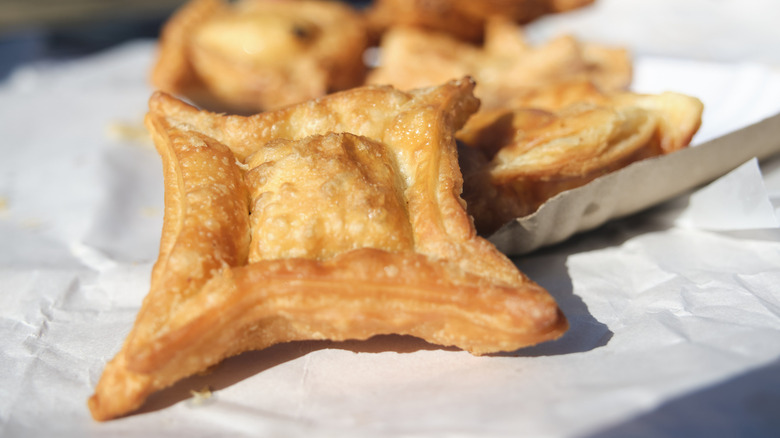
Experienced bakers have something of a sixth sense when it comes to knowing when things are ready to come out of the oven. They need it; with more sensitive bakes, such as soufflés, opening the oven too early — and letting all that important hot air and steam out — can be disastrous for your bake. If you're a little less experienced, though, knowing when you're pastries are done baking can become something of a guessing game. Pastelitos are no exception. We asked Jorge Mas if he had any useful tips on how to ensure we get it right.
"Normally, a ratio of time/temperature is very standard," he said. "On a conventional oven at 350 degrees Fahrenheit, we are looking for a baking time of 12 to 15 minutes (depending on the size of your pastries)." Bigger ones, naturally, need a little more time, though it's important to keep an eye on them to ensure they don't burn. You don't need to worry about baking them for long enough to cook the fillings, either: "Mostly, [for] Cuban pastelitos, the fillings are already pre-cooked. So, what we are looking for here is a perfect golden brown pastelito." Keep a close eye on temperature and time, and you're all set. Happy baking!