

Try This Simple Tip For Carting Home Store-Bought Rotisserie Chicken Without The Plastic
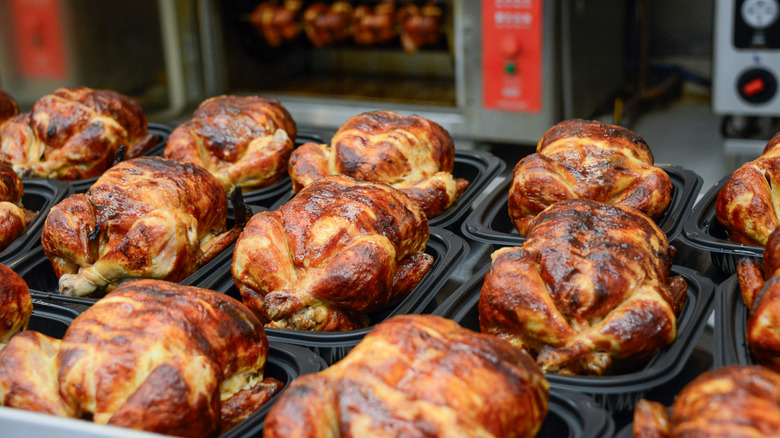
Rotisserie chickens are an easy weeknight dinner idea. They can be consumed on their own, or there are plenty of genius ways to use up the leftovers. But with rising concerns around microplastics (tiny, commonly-found plastic particles that may be associated with various health conditions), rotisserie chickens come with one big problem: They're often packaged in plastic, then placed under heat lamps, where that plastic heats right on top of the food. Because this may be cause for concern to some, we are offering a new solution. Instead of taking the chicken home in the plastic, you can ask the employees behind the counter to make you a fresh one. Then, you can stick the chicken in one of the recycled cardboard to-go boxes that are usually by the hot food or salad bar sections.
If you don't want to ask the employees to cook you up a fresh one, then you can simply wait until a new batch of rotisserie chickens is put out. Then, grab one as soon as it's under the heat lamp, as this means it won't have spent much time in a plastic bag, and transfer it to the cardboard container. Besides reducing the chicken's contact with plastic, transferring it from the bag also helps reduce bacterial growth.
Why you may want to avoid that plastic container
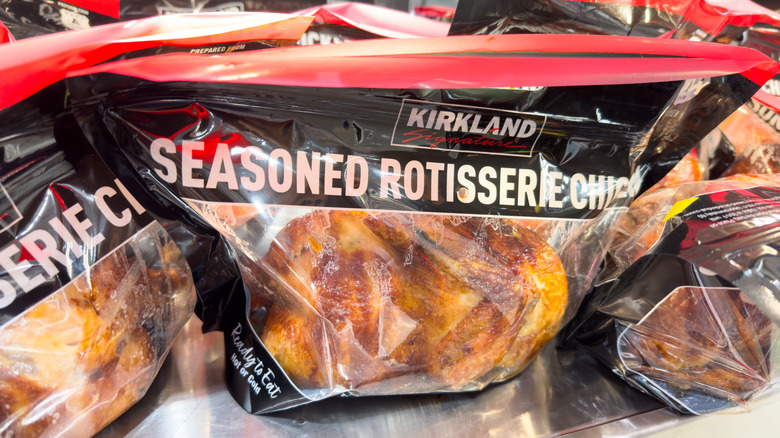
The main concern with plastic bags is that they can potentially leach plastic into food over time. While many plastic bags are made with nontoxic materials, some studies, such as a 2025 study published in NPJ Science of Food, suggest that when given enough time, plastic food containers do contaminate our food with potentially dangerous microplastics. If your local grocery store doesn't carry those cardboard containers, you also might consider bringing a small foldable cooler to the store as another way of transporting the chicken.
There is additional concern regarding plastics that come in contact with hot food, such as rotisserie chickens sitting under a heat lamp. Plastic can potentially melt when it makes direct contact with hot food, allowing even more chemicals and microplastics to seep into the food. While it's best to transfer the rotisserie chicken for storage, you definitely want to transfer it if you reheat it. Plastic containers should not be heated in the microwave unless they're deemed microwave safe, and in most cases, soft plastic containers such as rotisserie chicken bags are not.