

The Country That Produces The Most Tea In The World By A Long Shot

If there's one thing we can take from the current obsession with matcha and caffeine-free mushroom coffee, it's clear that people are down to expand their hot beverage horizons. Gone are the days of defaulting to a cup of basic drip coffee at a local cafe. Tea is having a major moment, and naturally, many consumers are interested in learning more about where the world's second most consumed beverage (after water of course) comes from.
The short answer is China, where more than 3 million tons of tea leaves are produced each year, accounting for almost half of the global tea production. China grows predominantly green tea varieties, along with white, oolong, and some black teas. The culture and production of tea in China is centuries deep and heavily infused into the country.
While China produces and exports the most tea overall, a lot of the world's black tea actually comes from India and Kenya. Assam, a black tea that's grown in India, is traditionally featured in English breakfast tea. Its bold flavor, malty notes, and high caffeine content make it a perfect drink for the start of the day. Kenya exports much of the world's black tea that ends up in tea bags produced by major companies like Tetley and Lipton; Sri Lanka produces the bold, tannin heavy Ceylon black tea.
How did China become the global hub for tea?
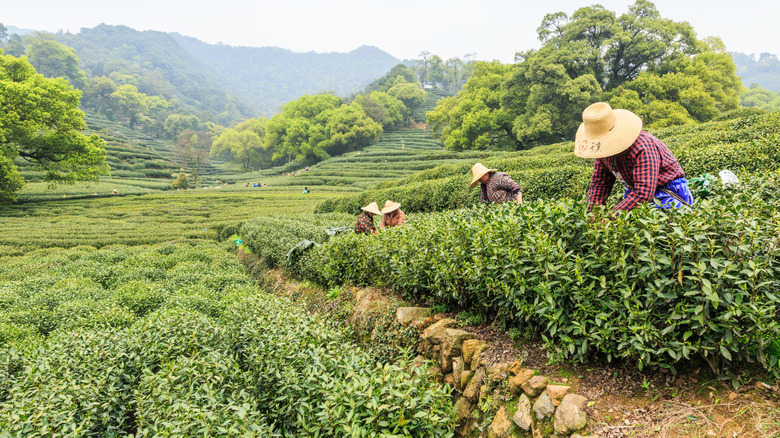
The first recorded use of tea was in ancient China when it was consumed for medicinal purposes only. Eventually tea would become a part of the fabric of Chinese culture, not only used for its health benefits but for social interactions and cultural ceremonies. The climate in China is ideal for tea cultivation due to its diverse landscape that allows farmers to create many different varieties of tea with distinct terroirs.
As tea continues to be beloved around the world, exports from China have increased in recent years — and it's not just green tea that is in high global demand. A growing trend in tea drinking is taking off as more people lean onto healthier lifestyles and try to limit coffee and alcohol intake. Experimenting with loose leaf tea instead of tea bags has become akin to finding the perfect wine, and like wine tastings, tea tastings where customers can try and savor the complex notes of a wide range of brews are taking off.
Those looking to limit their caffeine intake are turning to tea, which packs quite a bit less caffeine than a shot of espresso. China's lesser known specialty teas are also starting to garner attention, keeping the level of production and export going strong. Some examples include black teas like the fermented pu-erh, which comes from the mountains of Yunnan, and lapsang souchong, the smoked tea that comes from the lush terraces of Fujian.