

Is It Vital To Rinse Your Shredded Potatoes For Homemade Hash Browns? Or Is That A Mistake?
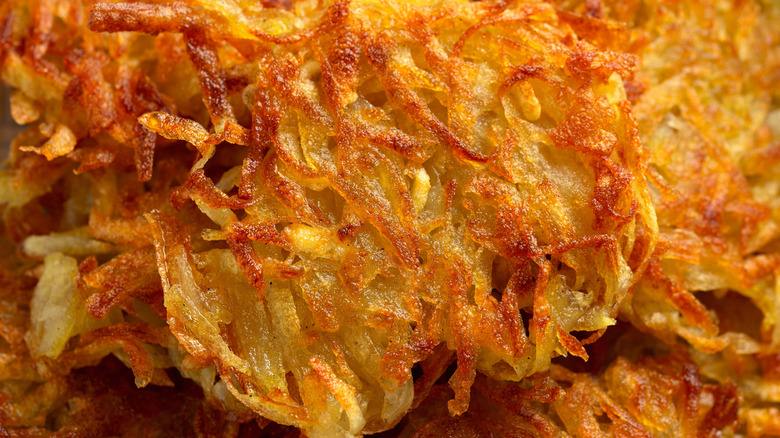
From soft, starchy cubes tossed with grilled peppers and onions to crispy pucks paired with a sweet ketchup sauce, every chef has a unique take on a classic plate of hash browns. One of the most universally beloved ways to enjoy this savory side is to shred it fine and fry it. Perfectly crisp and buttery, those overlapping potato ribbons make for irresistibly textured bites.
While most recipes for hash browns are unique, some techniques appear on virtually every page. One such step is rinsing the potatoes before cooking. This action rinses the excess starch off the potatoes so the end product is perfectly golden and crisp. Holding on to that starch can lead to an overly soft — or even gummy — end product (it's one reason many chefs also rinse rice before cooking). Still, is it really vital to rinse your shredded potatoes for homemade hash browns? Or is it actually a mistake? It all depends on your recipe and the texture you're looking for.
Rinsing the right way
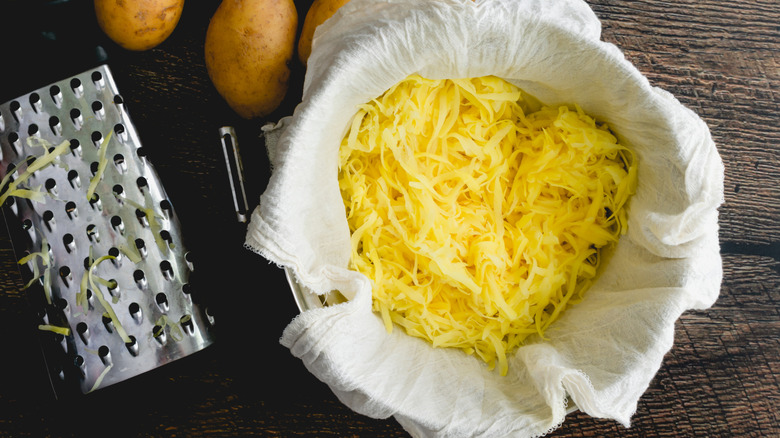
If your heart says rinse, start by shredding your potatoes. Next, rinse the shreds in a mesh strainer with some cold water until the liquid runs clear. It doesn't have to be perfect, but make sure to move the shreds around with your hand so they rinse evenly. Drain the water, then squeeze out any excess liquid held in the potatoes with a towel or cheesecloth. Finally, pat them dry to get rid of excess moisture. That's all there is to it.
While this is a common way to ensure hash browns come out crisp, there is one important tip to keep in mind: Don't overdo it with the rinsing. Some starch in the potatoes is necessary to help the shreds stick together as they cook. Binding agents (such as egg and flour) help, but if you rinse out more starch than needed, you have trouble achieving a cohesive hash brown. Instead, individual shreds fly off your spatula mid-flip. If you're someone with a penchant for rinsing, try using waxy potatoes, such as red or Yukon, to make this dish. They take longer to crisp up compared to starchier choices, such as russets. For some really special homemade hash browns, you can also try this easy potato swap.
To rinse or not to rinse?
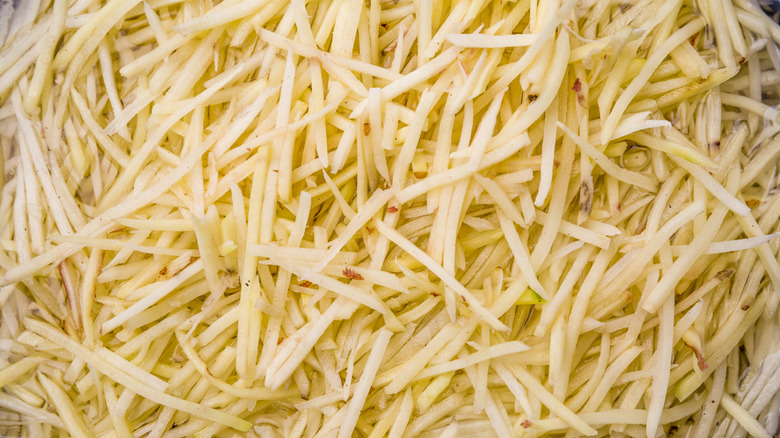
For those who want some peace of mind in achieving a cohesive patty, foregoing the rinsing step might be a better choice. After you've shredded your potatoes, jump straight to squeezing out the excess liquid. Potatoes are primarily water and starch, and holding on to that excess moisture could still prevent the shreds from sticking together. Pat your potatoes dry, then cook as usual.
While most hash brown recipes seem simple, the line between overly crisp and mushy is thin. To find out if rinsing is a mistake to avoid when making homemade hash browns or their saving grace, don't be afraid to get into the kitchen and experiment. Some recipes call for binders that help the potatoes stick together, so rinsing your potatoes likely isn't an issue. Still, you need that excess starch to keep the shreds together for recipes that require no more than potatoes and oil. The choice to omit this step or not is up to you. If all else fails, you can always grab one of the best fast food hash browns instead.