

Most Vodka Doesn't Come From Potatoes, So What Is It Made From?

While it may be just one of many bottles on a bar shelf, vodka is a little different from most spirits, and not just because it significantly predates the likes of rum, whiskey, tequila, and gin. Thought to have been formulated over a thousand years ago around Eastern Europe and Russia, this clear alcoholic spirit channels versatility in every sense. It is colorless, and as close as a drinkable spirit can be to odorless and flavorless. This makes it even more surprising when one discovers that vodka can be made out of literally any ingredient that can undergo fermentation.
While potatoes are often considered to be the most popular ingredient used in its creation, estimates say less than 5% of the world's vodka actually comes from spuds. Grains like wheat, rye, corn, and sorghum are often used to make the spirit, as are fruits and sugarbeets. Vodka can also be a blend of base ingredients. There is a loose distinction between Old and New World vodkas, with the former using more of the original Eastern European ingredients like potato, wheat, or fruit, while New World vodkas, generally associated with American spirits, are often made with corn.
Vodka's versatile list of base ingredients is partly due to the spirit's relatively simple manufacturing process. While it has been significantly modernized, the steps remain largely the same as those from centuries ago. The base ingredient, which must contain starch, is fermented to make ethyl alcohol, then distilled to concentrate the alcohol, filtered to remove impurities, and finally diluted with water to about 40% ABV. Therefore, vodka is essentially made from just ethyl alcohol and water, and the sources of both these ingredients play a crucial role in how the spirit feels on the palate.
Consider the base ingredient when selecting your vodka
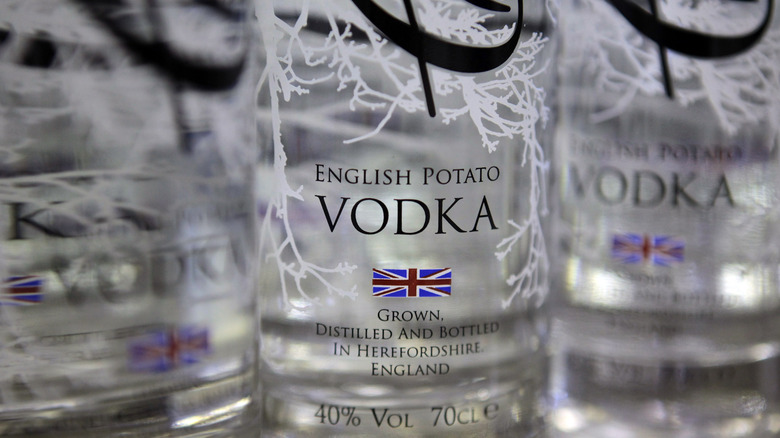
Despite its primary feature of being relatively tasteless and odorless, which is what makes vodka a cocktail superstar, the spirit does have certain characteristic flavors, aromas, and mouthfeel. To a large extent, this depends on the base ingredient used to make it. Potato vodka is often considered the best to drink neat because of its delicate, slightly creamy mouthfeel and relatively complex flavor. This is also why, despite its dwindling popularity as a base ingredient, many craft vodka makers are now looking to potato again for creating versions of the spirit with more layered tasting notes. Similarly, fruit vodkas, though less common, also tend to be delicate and complex. Neat vodka is best sipped chilled to experience its full range of flavor.
Grain vodka — made from base ingredients like wheat, corn, barley, and rye — generally has a sharper flavor and lingers less on the palate. However, here too, there are significant differences. Wheat and corn impart slightly sweeter notes and milder flavors, making them a good option when choosing a vodka to make Jell-O shots. Rye, on the other hand, imparts a peppery taste much like it does with whiskey. This makes rye vodka perfect for alcohol-forward cocktails that have a bit of bite.
Finally, there are vodkas made from more offbeat base ingredients since anything that contains starch can technically be used to make vodka. Therefore, instead of combining vodka with questionable mixers, try one that's made from maple syrup or honey, or even fruits like apples and grapes if you like a slight sweetness in the spirit. With spirit manufacturers getting increasingly creative with base ingredients, more adventurous connoisseurs can also look for vodka made from quinoa or even hemp.