

Homemade Bread Is A Breeze With This KitchenAid Mixer Attachment
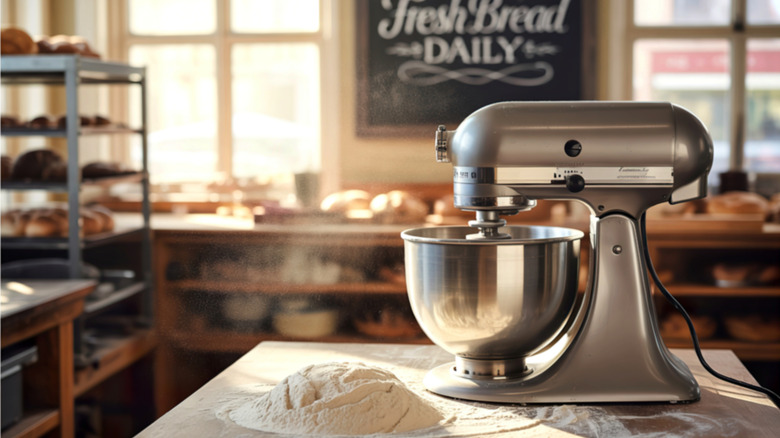
There's nothing quite like the process of making bread; few foods require the amount of effort that goes into creating your own bagels, sandwich bread, or pizza dough. Standing at the counter kneading bread dough over and over again as you fold it into itself to activate the gluten in the flour can become meditative. That being said, sometimes you're short on time or making an amount of bread and other baked goods that your arms simply can't handle. Enter the KitchenAid stand mixer spiral dough hook.
KitchenAid's spiral dough hooks are designed for use with the brand's large-capacity (5.5 to 8 quarts) bowl-lift stand mixers. Using a dough hook instead of your hands and your kitchen counter can save you from making kneading mistakes that stop your bread from rising, and can make it easier to focus on other tasks in the kitchen. KitchenAid's standard dough hooks are C-shaped and knead dough by pressing it against the sides of the bowl. A spiral dough hook, on the other hand, works by pressing the dough into the bottom of the bowl, similarly to the way you'd press dough into the countertop when kneading by hand. This makes the spiral hook a great fit for kneading pasta dough, bread dough, pizza dough, and more.
Why chefs prefer spiral dough hooks — and how to put them to work in your kitchen
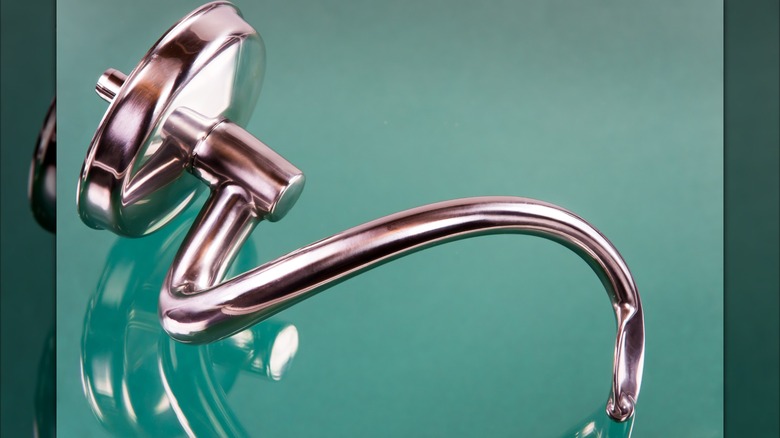
Spiral dough hooks work with KitchenAid's large-capacity bowl-lift mixers. These are different from standard-size tilt-head mixers found in most home kitchens. While pricey, large-scale mixers are totally worth the hype if you bake on a large scale regularly. A spiral dough hook lets you make large quantities of dough at once, perfect for prepping for your annual Christmas cookie exchange. Unlike C-shaped dough hooks, spiral hooks have a tendency to keep dough cooler during the mixing process. C-shaped hooks can introduce too much heat, which can negatively impact gluten development.
When using your spiral dough hook at home, it's important to consider speed. Generally, a slower speed is used for incorporating the ingredients while minimizing splash and faster speeds are used for actually kneading the dough. Rather than setting a timer for your kneading process, rely on the feel of the dough — for bread, it should be springy, elastic, and slightly tacky (but not super-sticky). Be sure to keep an eye on the total capacity of your mixer, and remember that it limits your total ingredients (including yeast, water, and others). Overloading your stand mixer can reduce the efficiency of the kneading process. One more important note: If you're considering a spiral dough hook for your KitchenAid bowl-lift mixer, check the company's website to ensure the hook is compatible with your model.