

Ditch The Foil If You Want A Better Baked Potato
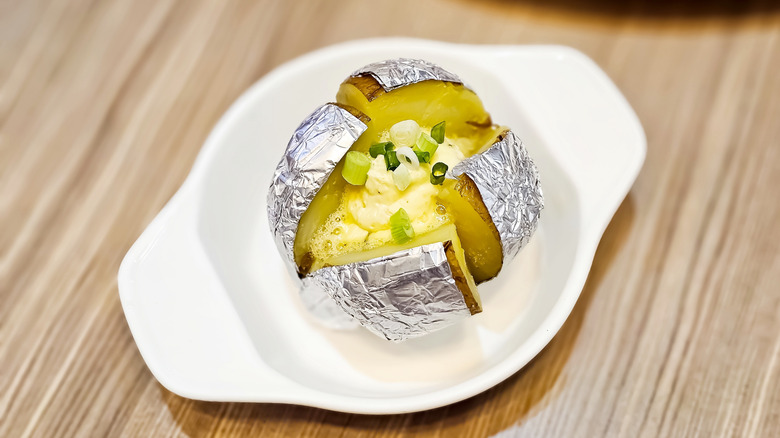
It is one of the most common habits in home kitchens: wrapping your baked potato in foil before it hits the oven. It feels right, like a cozy, culinary security blanket for your spud. But the hard truth is that if you are after a baked potato with that iconic crispy skin and fluffy interior, foil is actually holding you back.
Let's break it down. Most people wrap their potatoes in foil thinking it helps them cook faster or more evenly. Some folks just do it out of habit — maybe that's how grandma did it, or it's what you saw in a steakhouse buffet line. But in reality, wrapping a potato in foil traps moisture as it bakes, steaming the skin instead of letting it crisp up. What you end up with is a potato that's soft all over — inside and out — which might be fine if you are scooping it into mashed potatoes. However, it's pretty disappointing if you were hoping for that satisfying snap of skin when you dig in. The better way? Bake it naked! Skip the foil entirely and let your potato embrace the dry heat of the oven.
Let your potato breathe
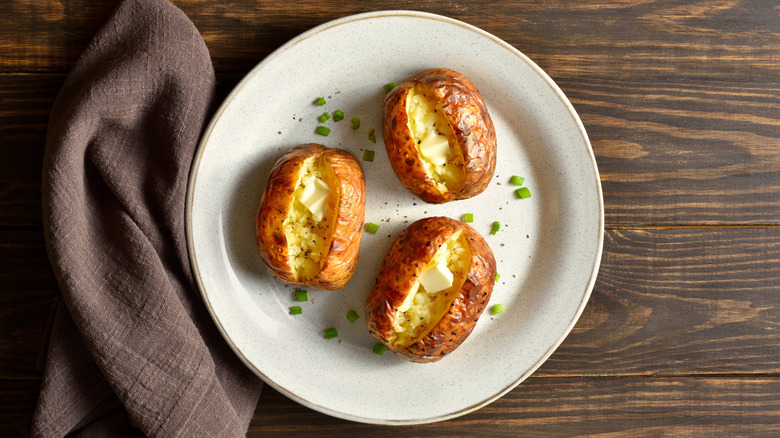
Start by scrubbing the potato clean and patting it dry. Then prick it with a fork a few times to let steam escape (which helps avoid the rare but possible potato explosion), rub it lightly with oil, and sprinkle with coarse salt if you're feeling fancy. Pop it directly onto the oven rack or a baking sheet, and you'll know it's done when the skin feels crisp and a knife slides in like butter.
Why does this method work so well? It all comes down to airflow and evaporation. Similar to avoiding aluminum when dealing with acidic foods, the foil should also not be used for potatoes as its skin should be exposed to dry heat, which dehydrates the outer layer just enough to give you that golden, crackly crust. Inside, the starches break down and fluff up, giving you that pillowy, steamy center we all crave. It is texture magic — crispy shell, soft heart.
Now, if you are a fan of keeping potatoes warm for a crowd or you are meal-prepping ahead of time, you can still use foil after baking. Wrapping them post-bake helps retain heat without ruining the skin you worked so hard for. The next time you are prepping dinner and make the mistake of reaching out for aluminum foil, pause. Your potato deserves better. Let it breathe, roast, and crisp up like a champ. Because when it comes to baked potatoes, less (foil) really is more.