

The Super Easy Tip To Get The Crispiest Roasted Vegetables Ever
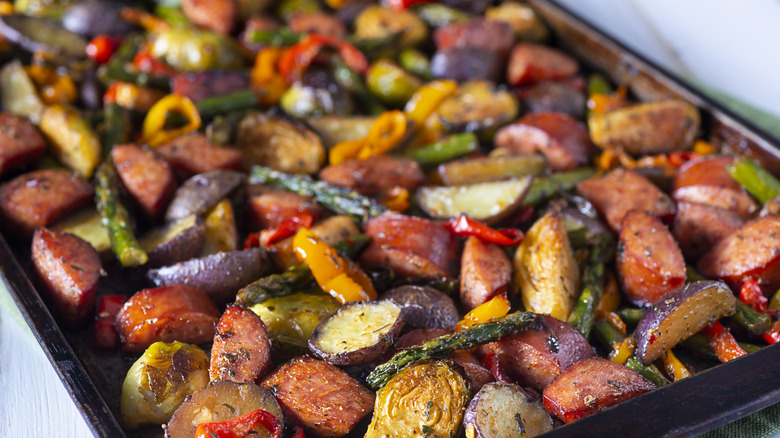
Beautifully roasted vegetable dishes like cauliflower kissed with tahini and carrots drizzled with a minty yogurt sauce can be the star of any meal. The key to veggies being the most talked-about item on the plate comes down to the texture. Any hint of mushiness is just not going to cut it. You're going for peak crunch in order to take center stage. Happily, one simple pantry ingredient will help you achieve restaurant-worthy results. Enter cornstarch.
Cornstarch is a fine, powdered starch that comes from the kernels of corn. It is naturally gluten-free and serves two purposes in the kitchen, making things crispier and acting as a thickening agent, often for sauces and gravy. Amylose, one of the two starch molecules found in cornstarch, compacts when it hits moisture and forms a crust of sorts that almost mimics the outer texture you might achieve from frying. And, incorporating cornstarch into your roasting routine could not be more straightforward.
Cut, season, sprinkle, roast
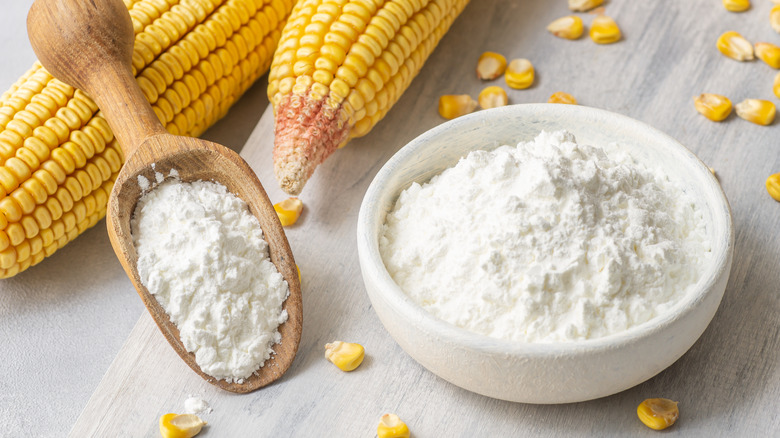
Hearty candidates such as root and cruciferous veggies are ideal for roasting treatment and include broccoli, cauliflower, Brussels sprouts, carrots, and onions. Make sure to cut the vegetables into similar, bite-sized pieces for even browning, and coat the pieces in vegetable oil in a bowl. Then, season a bit of cornstarch and incorporate. Less is more with the cornstarch; you don't want to see a crusty white coating that can yield unpleasant tasting results. You just want enough for the cornstarch to work its starchy magic. The seasoned starch mixture will cling to the oiled vegetables as you mix them thoroughly in the bowl, and then onto the prepared baking sheet they go. Don't fall victim to common roasted vegetable mistakes; only put your vegetables in the oven to roast once it is nice and hot — at least 400 degrees — and don't be timid with the seasoning.
The flavor profiles for roasted vegetables are endless, and you can take cues from various cuisines around the world. If you are catering to less enthusiastic vegetable eaters, you can't go wrong with a combination of soy sauce, garlic, and butter (you can add a little water to the cornstarch with this combo to create a bit of a slurry, and you don't have to oil the vegetables first). For an Indian bent, consider spices like cumin and turmeric. For a French vibe, there's the classic spice blend herbes de provence. Or go Middle Eastern with za'atar or even just one of za'atar's key ingredients, tangy sumac. Leave the door open for draping an herb-forward vinaigrette or yogurt-based sauce over the top of the freshly roasted vegetables, and don't forget the finishing touch of some fresh herbs. The results are bound to be drool-worthy.