

Make A Whole Batch Of Steaks Taste Better Than Outback — Follow This Overnight Rule
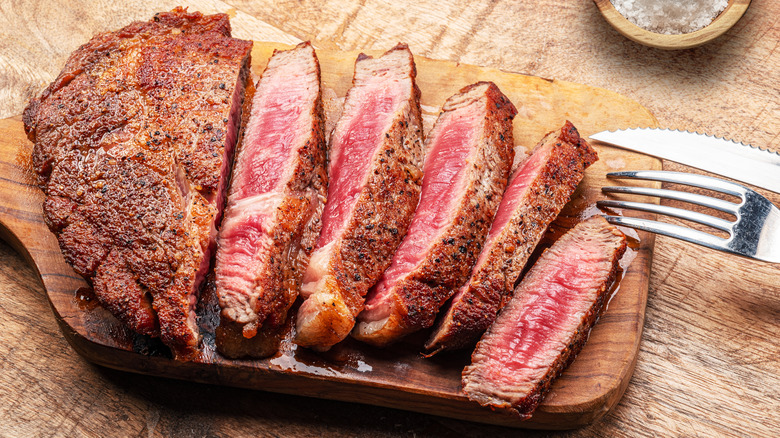
A perfectly cooked steak, whether prepared on the stovetop or over a charcoal grill, is practically synonymous with indulgence and satisfaction. In my household, a medium-rare steak with a delectable charred crust, served alongside all the steakhouse side-dish staples, was a Sunday night tradition.
Australian-American chain Outback Steakhouse is known for its delicious, juicy steaks, and one of the secrets to its perfectly cooked steaks at a mass production is through the wet aging process. Wet aging is in which a protein is vacuum-sealed and left in a controlled environment for a few weeks. This method is a common practice used in restaurant kitchens, as they have industrial equipment including chamber vacuum sealers and sous vide machines.
Instead of wet aging, dry brining overnight is another fantastic way to achieve a juicy, flavorful steak, especially when cooking for a crowd. No need for any high-tech restaurant equipment: All you need is your favorite cut of beef, some good salt (and quite a bit of it), and your refrigerator. No muss, no fuss, and you have yourself a steak that's even better than Outback Steakhouse.
How to put your dry brine to work
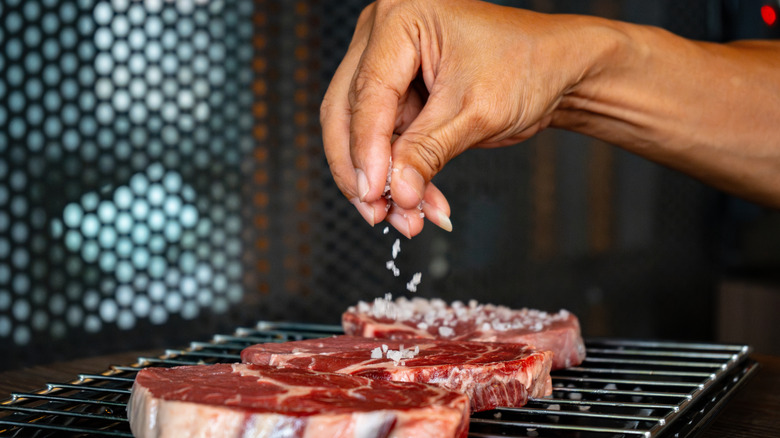
Here's how it works: Salt initially draws moisture to the surface of the meat, a phenomenon you've likely witnessed when salting everything from eggplant and zucchini to a steak. Given enough time, the salt dissolves in that moisture, forming a concentrated brine that is gradually reabsorbed into the meat. The result is a steak that's well-seasoned throughout and better able to retain its juices as it cooks. Dry brining makes a difference when it comes to steak, where a deeply browned crust and a juicy interior are the ultimate goals.
This technique is easy to pull off at home. To dry brine your steaks, evenly coat all sides with a thin layer of kosher salt — not table salt, a lackluster choice for seasoning steaks — then place them on a wire rack set over a tray and refrigerate uncovered for at least several hours, ideally overnight, or for up to 24 hours. When you're ready to cook, take the steaks out of the refrigerator and let them sit, allowing them to come to room temperature. Then cook to your desired doneness.
A few tips for first-time dry briners: Season the entire surface of each steak, including the edges, to ensure even coverage. And don't rinse the meat before cooking; doing so can introduce unnecessary moisture and make browning more difficult. Steak thickness also matters, with thicker cuts generally benefiting from a longer brining period. Short on time? Even an hour of dry brining can help, although the salt needs sufficient time to penetrate the meat for the most even seasoning. For the best results, plan ahead and let the refrigerator do the work for you.