

Turn Hamburger Helper Into An Extra-Hearty Meal By Giving It The Casserole Treatment
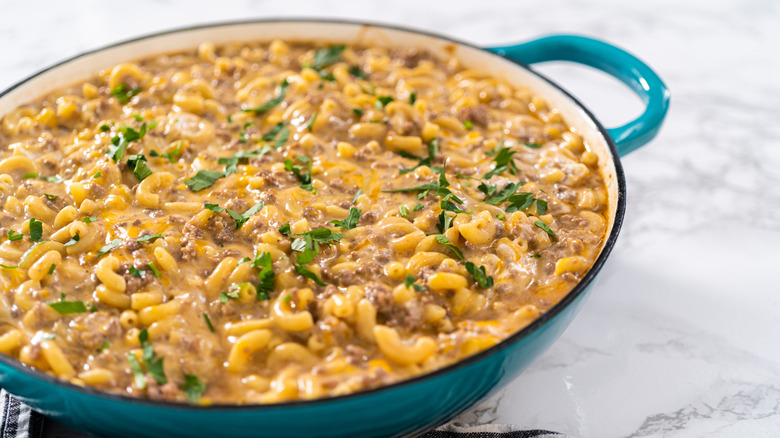
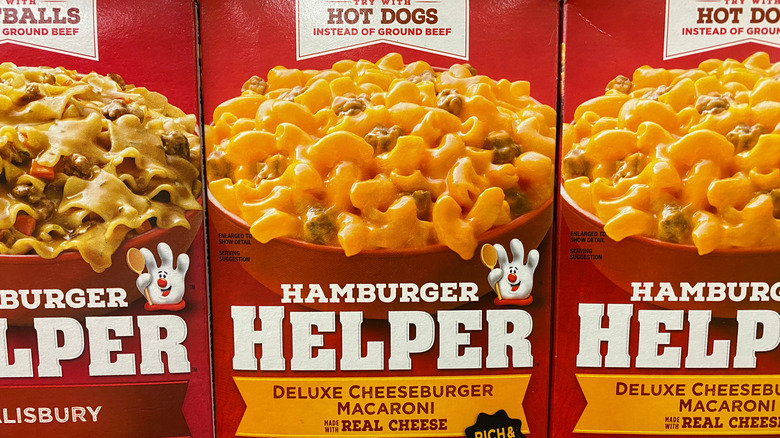
Many of us still make Hamburger Helper the same way. The directions are right on the back of the box and only call for one skillet. It's a no brainer. But even though the dish has been much beloved since its 1970s release, we don't have to be beholden to package cooking instructions. You can take that Hamburger Helper and for just a couple more dishes and ingredients, turn it into a comforting casserole that's perfect for cooler weather. It's worth it, we promise!
If you want to go rogue, begin as normal by cooking and draining the beef. Then, cook your noodles. Nothing too crazy here. Except, stop them just short of done, because we're adding the beef and pasta mixture, plus a splash of extra liquid like milk or water, to a well greased casserole dish. Pile it in and load the top up with shredded cheese. When that oven door opens you'll be greeted by something that resembles a crispy, perfectly browned noodle casserole. The spoonfuls are so hearty, they'll hold together on the plate like ice cream scoops.
While baked pasta isn't new, we love how Hamburger Helper fulfills its promise of helping and gives you a head start with the noodles and sauce. You can feed a crowd with it, that's for sure. Plus, it's easy enough to be made ahead of time, further decreasing your dinner time effort.
Making it worth the extra dish
If we don't yet have you convinced a little extra cleaning is worth it, consider adding mix-ins or toppings. Raid your pantry for canned ingredients. Things like sautéed onions or mushrooms; drained canned tomatoes; or a handful of frozen peas or corn adding nutrients and color. Just keep it to ingredients that are pre-cooked, or cook fast. That raw pepper crunch in the middle of the casserole can really ruin the whole comfort food experience. Buttered panko or those canned friend onions can be sprinkled directly on top. They're great for crunch and won't change the flavor profile too much.
You can't walk away from this ground beef dish when it's in the oven. Set around 375 to 400 degrees Fahrenheit. You need to watch it for doneness. If the top starts browning before the middle is fully warmed, cover it with some foil and check it every few minutes.
The casserole is pretty filling on its own, though we can put our seal of approval on a simple salad or garlic bread as a side. One last tip. When you pull it out of the oven, let it have about a ten minute rest before serving. (And follow these layering rules to begin with.) This helps keep that first scoop from collapsing the rest of the mixture into a sad looking puddle. Leftovers hold up well, too... dare we say even better than the skillet version because the whole thing sets up as it cools.