

Boomers Always Kept This Baking Staple On Hand — But You Hardly See It In Recipes Today
Picture a pantry when boomers were young (say, the '50s and '60s) and chances are that there would have been a can of powdered milk next to the flour and sugar. The ingredient became popular around the World War II era, when the U.S. military started relying on dehydrated milk to feed troops overseas. This also meant that the production capacity for powdered milk was beefed up. Fresh dairy was hard to ship and keep cold near the frontlines, so mess halls relied on powdered or evaporated milk instead of the fresh option. After the war's end, that production capacity, along with the development of better-quality, easy-to-mix "instant" formulas resulted in powdered milk finding its way into home kitchens from around the late 1940s onwards.
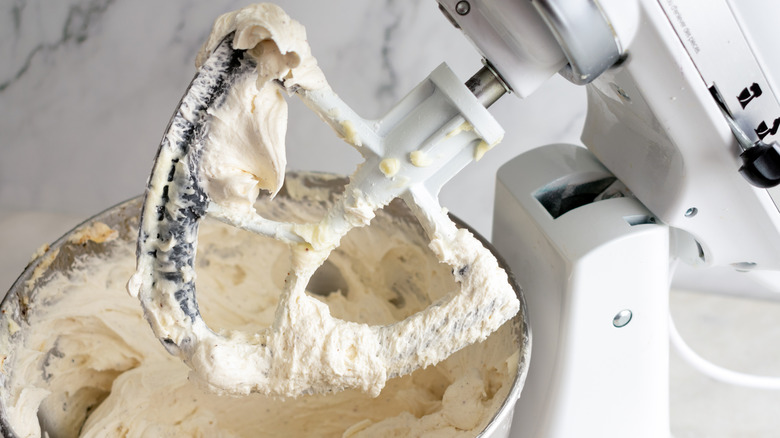
Obviously, home kitchens had easier access to fresh milk than frontline military kitchens, so why did civilians gravitate towards it? Convenience seems to be a factor: Powdered milk would keep for months or even years, and refrigeration, while common at the time, was still a work in progress. Powdered milk also had a particular perk: It added richness to recipes without the extra liquid that batters get from fresh milk (or evaporated milk, which enhances creaminess but still contains some liquid). This had already been discovered by commercial bakeries, which had been using dried milk in yeast breads, cakes, and pie fillings since the early 1900s to help doughs hold their structure. This mix of factors made powdered milk a baking-aisle staple.
So why isn't it standardly stocked in pantries today?
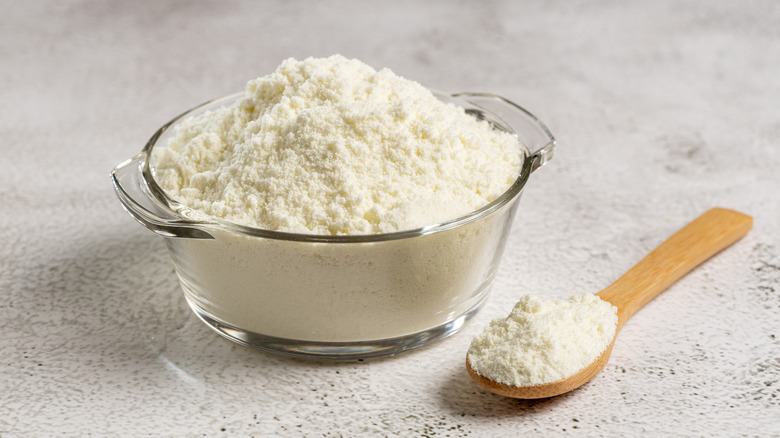
Powdered milk's decline in popularity is tied to a few factors. Firstly, milk consumption in general has declined since the WWII era, having peaked around 45 gallons per person per year in 1945, per the USDA, in part due to competition from soda, bottled water, and plant-based milks — although this doesn't explain why powdered milk specifically dropped off. A more likely explanation is flavor: Powdered milk has never exactly been beloved, with complaints that it tastes bland when reconstituted (mixing it with milk instead of water can help improve this). Some also say it tastes chalky, while others lament that it just doesn't taste like much (skim milk powder in particular is more likely to be tasteless, as it has the fat removed), or that it comes out lumpy when mixed with liquid.
Saying that it's outright vanished may be an overstatement, though. Powdered milk is still used in commercial bakeries. It's a money-saver insofar as it's lighter to ship and doesn't need refrigeration, while helping bakers deliver consistent results. King Arthur Baking sells a version of powdered milk (although it's called "dry milk") geared towards bread, which apparently helps loaves to rise more and also stay fresh for longer. Some cooks recommend using it in bread dough since it leads to a softer crumb. It's also not too hard to find home bakers or recipes arguing on behalf of powdered milk, claiming that it yields richer cakes or adds extra fat to help a dough brown more in the oven. So, powdered milk still has a place in the kitchen, it's just more in the baking realm rather than alongside everyday dairy.