

Add A Spoonful Of This To Your Pasta Sauce For Ultra Savory Depth And Richness
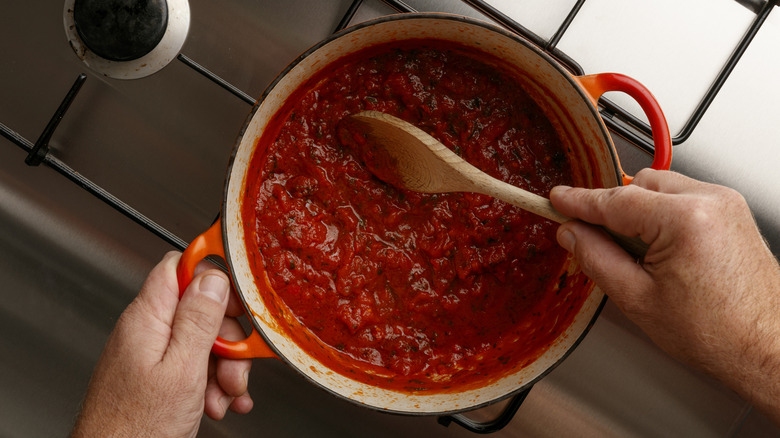
Every great pasta recipe starts with a great sauce. Whether a creamy, garlicky Alfredo, a hearty yet simple weeknight bolognese, or even a classic marinara, the sauce can make or break the entire dish. Very often, the secret to the ultimate sauce lies in thinking outside the box — a bit of red wine vinegar or some chopped olives and capers can make a huge difference in the outcome. However, if you're after a deeper, richer, and more satisfying umami flavor, there is one overlooked ingredient you should add to your pasta sauce: miso.
Miso paste is a traditional Japanese seasoning made from fermented soybean paste, and at first glance it may seem like a rather unexpected addition to pasta sauce. But don't knock it till you try it: there's a good reason why it deserves a place in pasta sauce. To get more insight into this tip, we spoke to chef Maricel Gentile, the chef and owner of Maricel's Kitchen, a restaurant and culinary studio in New Jersey. "Miso rounds out the depth of the sauce. Today we all call it umami, and it adds a gentle, natural sweetness, with a bit of saltiness and savory all in one," Gentile told Chowhound in an exclusive talk.
Another great thing about miso is that it can save you from spending hours in the kitchen as you try to slow-cook your pasta sauce to perfection. Its beautiful flavor profile can give the sauce instant depth and complexity. "If you ever simmered a sauce for hours, you get some of that," Gentile pointed out. "Miso is like a natural cheat code that makes the sauce taste like it simmered for hours."
Pick the right miso and know when to add it
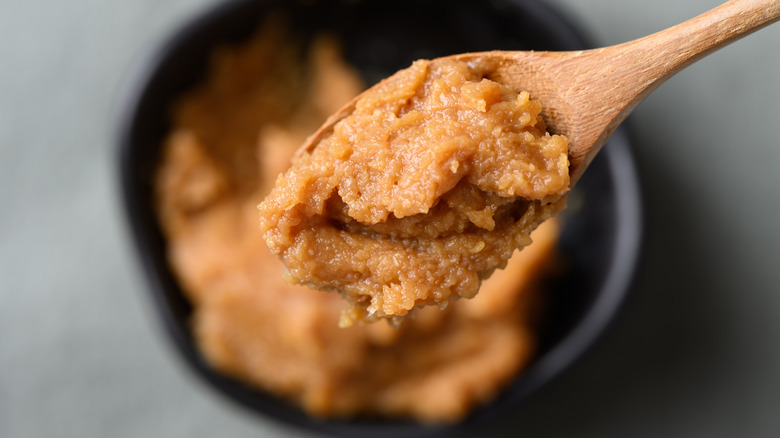
Choosing the right type of miso is crucial. If you've never used miso before, you might want to begin with the white kind (or shiro miso). Since it's fermented for a relatively short period, it's less intense, mild, sweet, and will wonderfully complement any sauce without overpowering it. According to Maricel Gentile, white miso is the best type to begin with, and it works particularly well in butter- and cream-based sauces. It also goes well with garlic, mushrooms, olive oil, black pepper, and lemon.
In turn, yellow miso, also called shinshu miso, is fermented for a little longer, which is why it is stronger, earthier, and richer. However, its sweet and salty notes are delightfully balanced, meaning that it can be a great addition to plenty of sauces. Red miso, or aka miso, on the other hand, belongs in hearty sauces, Gentile advised. Its deep, salty flavor comes from a long fermentation process that can last for years.
When it comes to the amount of miso you need to add to your sauce, Gentile emphasized that a small teaspoon is enough, especially if you're hoping to mellow out the acidity of a basic all-purpose tomato sauce. With that in mind, timing is everything. Make sure to only add miso to the sauce when it's nearly done. The reason? Too much heat can mute its delicate taste and aroma, so never let the miso boil. You'll also want to temper the miso by mixing it with warm pasta water until it becomes smooth. Then stir it into the pasta sauce and watch the miso work its magic.