

Make A Jar Of Turkey Gravy Taste Homemade With One Simple Trick
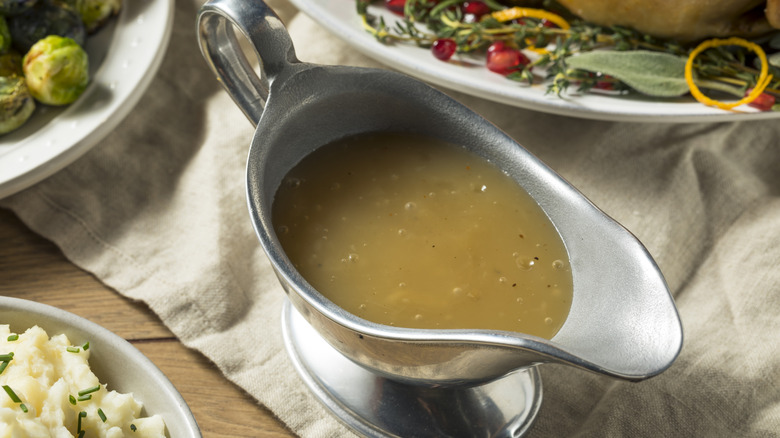
Sometimes on Thanksgiving, when the oven is blasting heat and you're keeping track of multiple side dishes in various stages, gravy can become a bit of an afterthought. Many home cooks opt to heat it up and serve straight from the jar, which is understandable. Who wants to be stuck at the stove whisking a gravy when you have other tasks to accomplish? But, just because it's from the jar doesn't mean it has to taste like it. Once your turkey is finished in the oven, pour your drippings into a pot of jarred gravy and heat on the stove.
Drippings are actually the base of any homemade gravy recipe. Chefs will put the drippings in a jar and wait for the fat to rise to the top, so they can skim it off with a spoon. Then, they combine the fat with flour to make a roux (a sticky base used for many sauce recipes). The turkey fat roux is combined with the liquid drippings, broth, and seasoning, then simmered over heat until it thickens, making gravy! Some home cooks don't have time for all these steps on a busy day like Thanksgiving, so they opt for a quick version instead. But that doesn't mean the drippings have to go to waste.
Make sure your gravy is hot and almost ready to serve. Separate the fat from the drippings (as explained above) and then slowly pour the mixture into your gravy and stir. Voila! A store-bought gravy that tastes homemade.
What are drippings and how else can I use them?
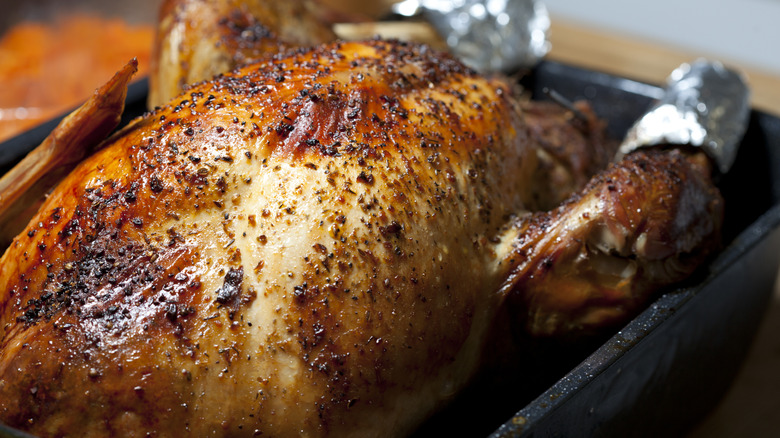
Turkey drippings are essentially everything left in the pan after you cook your turkey, known as "liquid gold" by many home cooks for the intensely savory flavor they provide. Drippings refer to the turkey's juices, rendered fat, and fond. Fond is everything in the pan that has caramelized at the bottom, including seasonings and small bits of meat. It might seem intuitive to discard the drippings, but they're an excellent flavor booster for your Thanksgiving meal.
Similar to bacon grease, beef tallow, and lard, the separated turkey fat is an excellent fat for sautéing or roasting vegetables (or anything else, really), providing a huge burst of umami flavor. Save it in a jar in your refrigerator, then use a spoonful in place of oil or butter. Brussels sprouts, green beans, and carrots are great options for this, but really, any veggie works. Just be sure they don't end up on a vegetarian's plate!
As for the liquid, it's similar to a concentrated broth and can be used in place of it. You can mix it with water and use it to cook carbs like cous-cous, rice, or quinoa, for a meaty and savory flavor. It also works well within soup bases. If you're not sure how to utilize it quite yet, pour it into ice cube molds and freeze for later use. You'll have flavor bombs that pack a punch in any broth-based meal.