

Not Butter, Not Oil — Scrambled Eggs Get 11-Out-Of-10 Flavor When You Cook Them In This
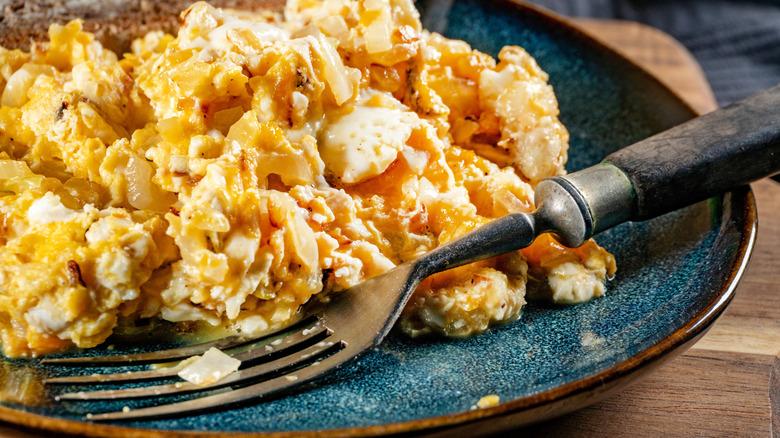
Scrambled eggs are a comforting and quick breakfast food for many people. With so many ways to prepare them, you're probably familiar with one or two secrets to making the best scrambled eggs. However, there's one trick that you may not have heard of before. The fat you cook your scrambled eggs in can have a profound effect on the flavor, so try swapping out your usual oil or butter for ghee.
This unique fat is a form of clarified butter, which is a butter Martha Stewart champions for making scrambled eggs. If you've eaten Indian or Middle Eastern cuisine, you've likely enjoyed ghee before. It adds a nutty, rich, and caramelly taste that's similar to browned butter, providing a more distinctive dish than you achieve when cooking eggs with conventional butter or oil. Its rich, concentrated depth pairs perfectly with the light and fluffy texture of scrambled eggs. The dish will be such an upgrade to your usual eggs that anyone tasting it would swear it took a lot more effort than it did — but all you did was use a new fat. While cooking scrambled eggs in ghee is fairly simple, it's not a basic 1:1 swap for regular butter or oil. It helps to know what exactly differentiates ghee from butter and why it's so effective for cooking.
What ghee is and why it's so effective for cooking
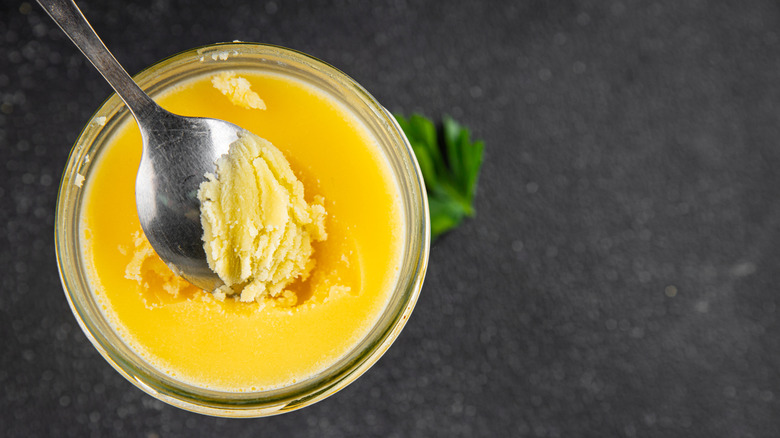
Though they are similar, ghee and clarified butter aren't the same thing. Ghee takes the process of making clarified butter to the next level. To make clarified butter, you heat the butter slowly to separate the milk solids and water from the butterfat. Ghee goes a bit farther by continuing the heating process until the remaining water evaporates and the milk solids brown before being strained out. This leaves ghee with a grainier yet firmer texture and a butterfat content of nearly 100%. With all the water evaporated and the milk solids removed, it's also virtually free of lactose, making it suitable for lactose-intolerant individuals.
When you substitute ghee for regular butter, it's helpful to remember that ghee is concentrated, so it's richer and more flavorful. To prepare scrambled eggs, you would need roughly 1 teaspoon of ghee for every three eggs. In other cooking applications, for 1 tablespoon of butter, use between 2 ½ teaspoons and 1 tablespoon of ghee. When using ghee to sauté, you can typically get away with a 1:1 substitution.
Besides flavor, one of ghee's other great advantages is its high smoke point of 465 degrees Fahrenheit versus butter's 302 degrees, which means ghee is great for high-heat cooking. So, you can easily stir-fry with ghee, or even sear meat with it, which wouldn't work with regular butter alone. Ghee also adds a nutty richness to baked goods, though you may need to be careful about how much ghee you use, depending on the recipe. Overall, it's very much a worthwhile ingredient to have around, even if you only scramble eggs in it.