

Not Mayo, Not Greek Yogurt: Give Chicken Salad A Tangy Flavor Upgrade With This Creamy Ingredient
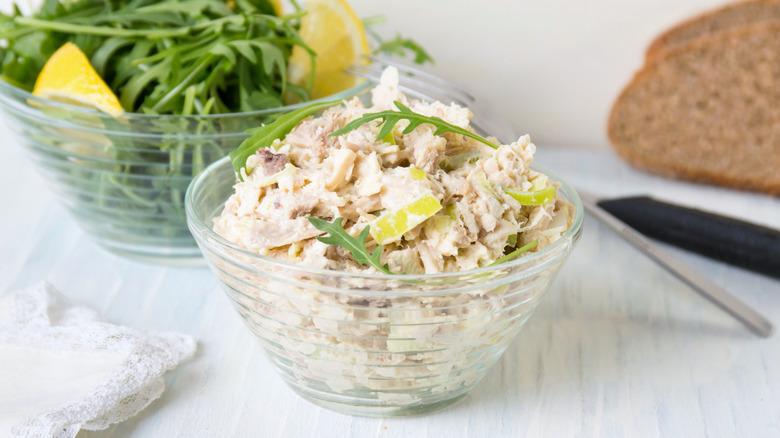
Savory, creamy, and with just the right hint of tang, chicken salad is one of those dishes that never disappoints. You could enjoy it alongside a steaming bowl of soup, pair it with grilled veggies, such as zucchini or broccoli, serve it next to some crispy oven-baked potatoes, or tuck a generous amount between two slices of bread and turn it into a ridiculously delicious sandwich. There's no way to go wrong serving it, but as any chicken salad lover knows, the secret to a truly delicious bite lies in the ingredients, and there's one addition that takes your favorite recipe to a whole new level: labneh.
Labneh is a traditional Middle Eastern dairy product made by straining yogurt until it becomes thick and creamy. Typically made with goat's or sheep's milk, labneh has a pleasantly salty taste that's balanced by its sharp tanginess. Its smooth, rich texture makes it a delicious alternative to sour cream and Greek yogurt. It's also the mayo-free swap you need for a rich, creamy tuna salad. Moreover, it's an outstanding source of protein, which makes it a great choice if you're looking to add a little more of this nutrient to your meals. It makes your chicken salad incredibly refreshing, and gives it an extra boost of flavor.
How to prepare chicken salad with labneh
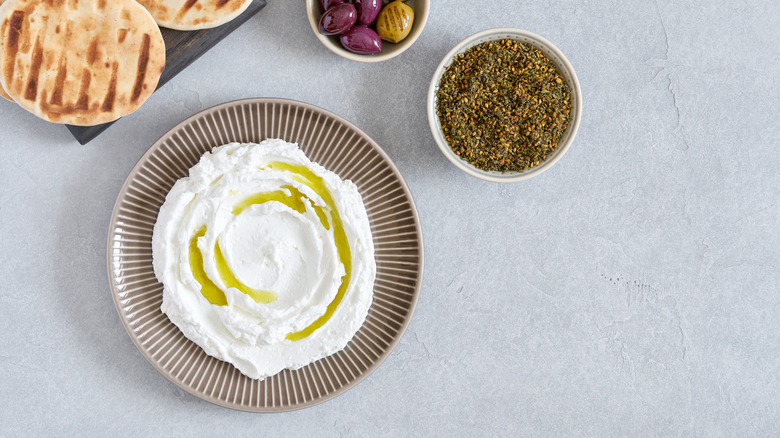
Labneh is a fantastic way to make chicken salad more flavorful. Besides, incorporating it into chicken salad couldn't be easier, even if you're not too keen on spending time in the kitchen. In general, you need about 1 cup of labneh for every 2 pounds of cooked chicken; feel free to use grilled, roasted, or poached chicken, depending on your preference. Chop the chicken into small, bite-sized pieces or use a mixer to shred it and save some time, then mix it with the labneh.
You can find ready-made labneh at many grocery stores. If you can't get your hands on any, homemade labneh is always an option, but you need to prepare it a day in advance. Mix Greek yogurt with a little salt, spoon it into a cheesecloth-lined strainer, place it over a bowl, and leave it in the fridge to get rid of the extra liquid. The longer you leave it, the thicker and creamier it becomes. Once it reaches your desired thickness, mix it with the chicken and any remaining ingredients, such as celery, onions, chopped red bell pepper, and walnuts or almonds for extra crunch. Moreover, don't hesitate to experiment with other ingredients. A little Dijon mustard, the condiment you should add when breading fried chicken, brings a spicier, sharper kick, then finish it with a squeeze of lemon juice and fresh parsley for extra brightness.