

Move Over Granite: The Long-Lasting Solution For Seamless, Sturdy Countertops
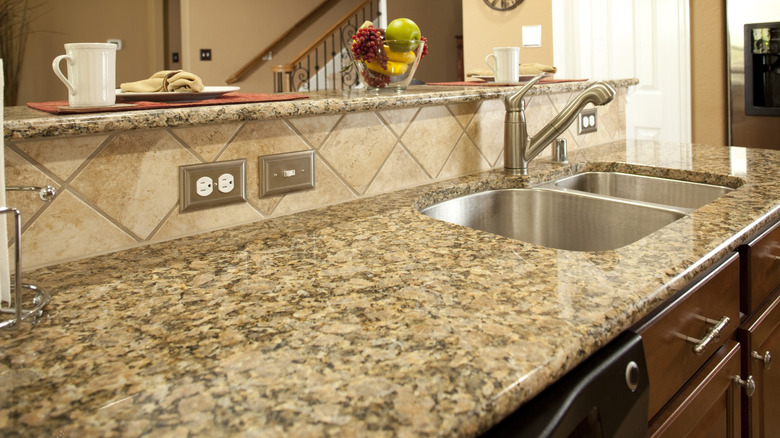
The kitchen may be the heart of the home, but most of us are no longer in love with our granite countertops. Ubiquitous in high-end kitchens throughout the 1990s and early 2000s, the natural stone offers heat- and scratch-resistance that everyone from casual cooks to hardcore chefs can appreciate. However, nothing screams "dated" quite like granite (except for those leftovers in the back of your fridge that are also extremely speckled). While granite is still the best countertop material for adding resale value when remodeling your kitchen, it may not be the right choice for homeowners who want a kitchen that feels more current. Though it's an admittedly controversial choice, concrete countertops offer a seamless aesthetic, virtually unlimited customization options, and impressive durability, making them an intriguing alternative for anyone rethinking their kitchen surfaces.
One of concrete's major advantages is that it can be used to create a completely continuous work surface. Unlike granite, which is cut from individual slabs and joined at the seams using epoxy, concrete can be seamlessly cast in place to fit the exact dimensions and layout of your space. If your dream kitchen has a massive prep area, an integrated backsplash, and an under-mounted sink that makes it easy to sweep vegetable peels right into the garbage disposal, concrete countertops are an excellent solution. You can also customize practically everything about them, from the color and texture to the finish and thickness. However, there are some important considerations you should weigh carefully before swapping concrete countertops for traditional granite.
What you need to know about concrete countertops
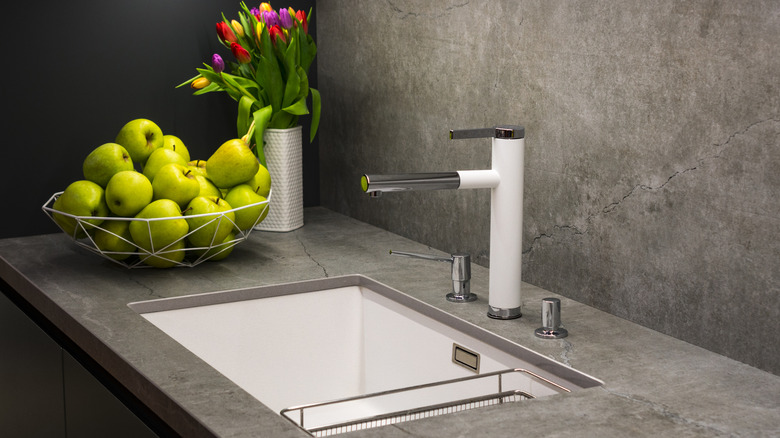
Concrete countertops are a significant investment that, like granite, can cost thousands of dollars. According to Angi, homeowners can generally expect to pay between $50 and $150 per square foot to have concrete installed. The size of your kitchen, the complexity of your installation, and the level of customization you're after can all drastically increase the price. Because concrete countertops are custom-made whether you opt for cast in place or precast molds, labor is a major factor. It's possible to save money by DIYing your own, but it's a complicated, messy, and physically demanding process.
With proper installation and maintenance, the sturdy surface can last for decades. That said, concrete is naturally porous, just like granite, so your new countertops still need to be sealed to protect them from stains and moisture. Even with a carefully applied sealant, many homeowners report losing the staining battle against everyday kitchen messes, such as grease splatters and spilled sauces. You also still need to whip out your favorite cutting board when it's time to prep, since sharp knives scratch the finish and are quickly dulled if you use them directly on the concrete. Lastly, many people love the natural patina that develops on concrete countertops over time. However, if random spots, hairline cracks, or tiny chips irritate you more than realizing you're fresh out of that secret ingredient you need to finish dinner, opt instead for non-staining acrylic, another modern countertop material that can help you get a seamless look.