

Where Does Kirkland Signature Sweet Cream Butter Come From?
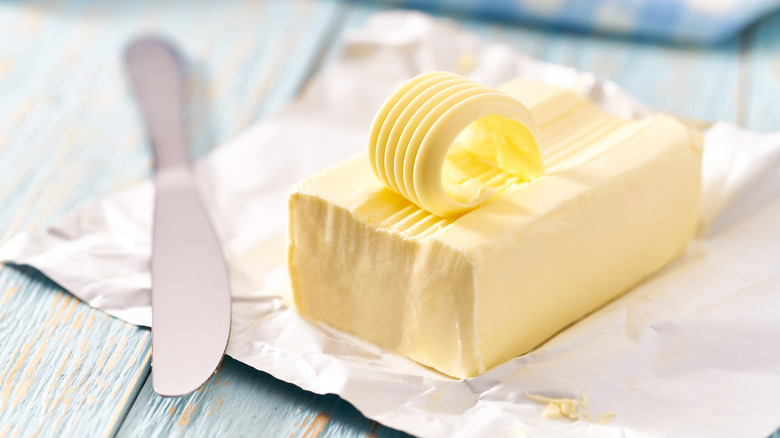
Last year, we covered the origins of Costco's beloved grass-fed butter, which is made in collaboration with a dairy company based out of New Zealand called Westland Milk Products. However, the provenance of its sweet cream butter (available in both salted and unsalted varieties) is a different story.
Unlike the grass-fed version (which has been called a reasonable dupe for Kerrygold), the sweet cream butter available at Costco is produced through third-party dairy co-packers and regional dairy processors rather than by a single Costco-owned creamery. Like many of the products available at U.S. big box retailers, dairy logistics depend on regional distribution networks, meaning the exact location and supplier of your Kirkland Signature sweet cream butter depend on the specific product and where you purchase it.
For instance, the butter has a documented connection to Continental Dairy Facilities Southwest LLC in Littlefield, Texas. It was named in a recall back in 2024 that included both the salted and unsalted versions. It's also possible to find out where exactly the milk in your butter comes from by searching for a code on the label.
Check the carton for clues about your butter's origin
Fun fact: You can discover exactly where the milk in a product comes from over at Where Is My Milk From? by entering the two-part dairy plant code (usually near the expiration date on a wrapper or carton). The USDA dairy directory uses state-assigned plant numbers, with a separate two-digit number identifying each state. For instance, the code for the plant named in the recall, Continental Dairy Facilities Southwest is under Texas, which is state number 48 (plant number 2016 in this case). Punch 48-2016 into the website and, voila, it points you to the plant in Littlefield.
Why bother investigating where your dairy comes from? Tracing it to the source connects what's in your fridge directly back to a farm or processor, and can yield quick answers on food safety alerts and freshness. It can also give you direct insights into how the animals producing your milk were raised.
You can also get more meta insights if you dig a layer deeper. For instance, is the milk in cheap store-brand butters actually from the same creamery as the expensive name-brand versions? How many of the top butter brands share similar origins? You can also discover how a cow's diet affects the taste and nutritional quality of your food. Punching in that short code can turn a grocery run into a quick sanity check for quality, freshness, and peace of mind.