

Forget Expensive Liners: Keep Kitchen Cabinets Clean With This Cheap Baking Staple
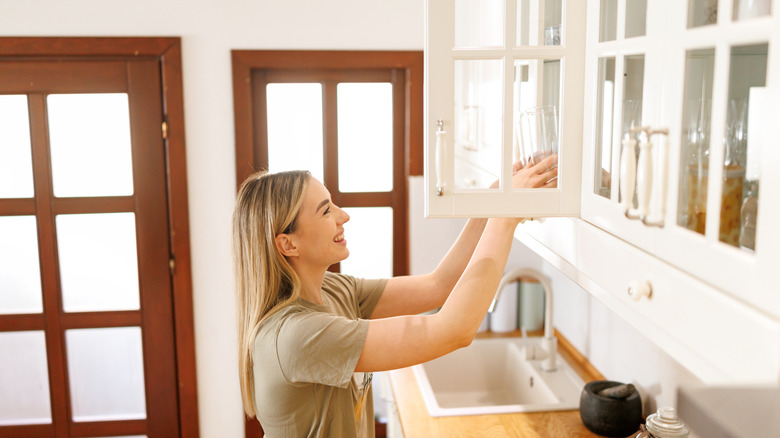
Cooking can be a delightfully messy endeavor, and no part of your kitchen is exempt. The shelves in your spice cabinet might see residue from spilled bottles or seasoning left on the outside of containers. Even crumbs and grease can make their way onto your shelves, and dust is inescapable. You can make these messes easier to clean by ditching the fancy, but expensive, cabinet liners and putting down parchment paper. Either bleached or unbleached parchment paper works; both types protect your shelving effectively.
Whether you put it on your shelves or use it on the cabinet tops to ward off grime, parchment paper is easy to swap out when it gets dirty. You don't need to spend as much time scrubbing your cabinets or doing laundry like you would if you used towels or rags, letting you avoid difficult but common food stains. Some cabinet liners have an adhesive backing, which creates more of a mess to clean when it's time to remove them; others have grooves that make it hard to shake out small crumbs or wipe up spills. In contrast, parchment paper leaves no residue, and you can simply cut a sheet off the roll or use precut sheets to change them out.
Multiple brands charge anywhere from $10 to $35 for cabinet liner rolls that are 1 foot by 10 feet or 1 foot by 20 feet. Parchment paper in precut sheets or rolls costs anywhere from $4 to $20. While excellent for cooking hacks, parchment paper also saves you money and makes a tidy kitchen simple to achieve.
Which type of parchment paper to use for lining your cabinets
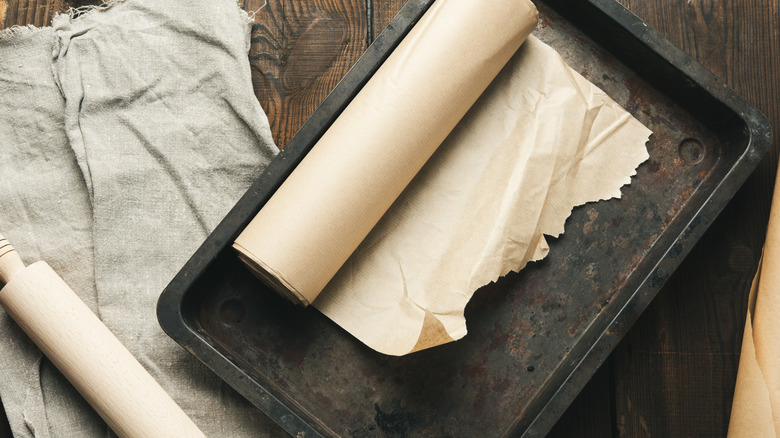
The main difference between unbleached and bleached paper is the use of chlorine or other bleaching chemicals, which produce that white color. Chlorine yields chemicals, such as dioxins, which can affect the immune and reproductive systems, but there are currently no known health risks from using bleached parchment paper. Unbleached paper is considered more environmentally friendly since processing it doesn't require as many chemicals as bleached paper, which can also factor in your decision.
Silicone gives parchment paper its nonstick properties, but a substance called Quilon is also used for the same purpose. Quilon contains the naturally occurring metal trivalent chromium, which doesn't pose extreme health risks like the toxic hexavalent chromium. However, if you want to avoid metals or higher chemical levels in your parchment paper, rest assured you're less likely to come across Quilon-coated paper while shopping for your home kitchen. Quilon is primarily added to parchment paper sold for commercial applications.
When using the paper on top of cabinets, place small pieces of tape to keep it adhered. Breezes from a window or wind created from lots of movement could send it floating down, and you don't want a shower of dust on your cookware or food. Combining this parchment paper tip with affordable plastic drawers that contain clutter ensures your cabinets stay clean and organized for stress-free cooking.