

This Classic Cookie Is So Popular, Its Yearly Production Could Circle The Earth 5 Times
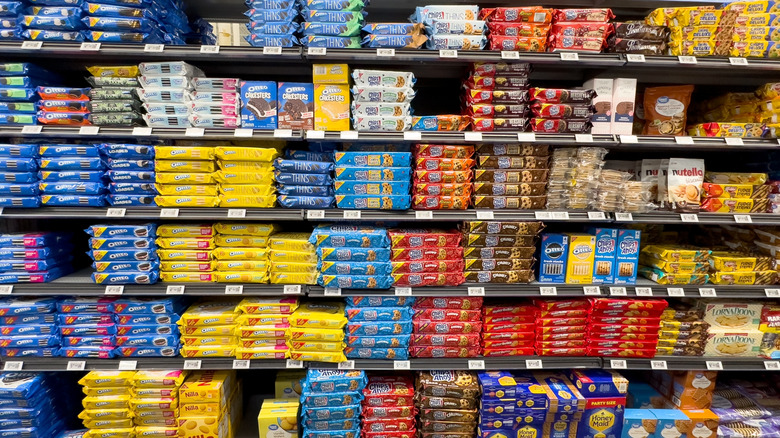
Twisting an Oreo, licking its filling, and eating the chocolate cookies individually is one of the most universal things in the snack world. So universal that, according to Oreo's parent company, Mondelez, the annual production of Oreo cookies placed side by side, would wrap around the Earth five times. That's one mighty statement. You don't reach these heights by taste alone. Instead, you need to put yourself out there at every opportunity. And Oreo did, first through traditional marketing during the 20th century. Today, its website is filled with user photos and links to videos. The brand's social media channels create constant content for its millions of followers, and many of those same fans delight in licking Oreos, reviewing flavors, and sharing recipes that include the cookie in different ways.
The Oreo cookie, or Oreo Biscuit as it was originally known, was first made in 1912 by the National Biscuit Company (you know it as Nabisco). These beloved cookies were a bit of a spiteful knockoff of a similar one from Sunshine Biscuit, which was started in 1902 by former Nabisco board member, Joseph Loose. In 1908, Sunshine released the Hydrox Biscuit, which consisted of two round chocolate cookies sandwiching a white creamy filling. Hydrox grew in popularity until the Oreo hit the market and Nabisco marketed the biscuit heavily. By the 1950s, in a case of perception becoming reality, Oreo was the leading brand and Hydrox was considered the imitation brand. At this point, Oreo was already on its way to wrapping its annual production around the Earth, though not yet five times around.
How Oreo goes beyond the cookie aisle
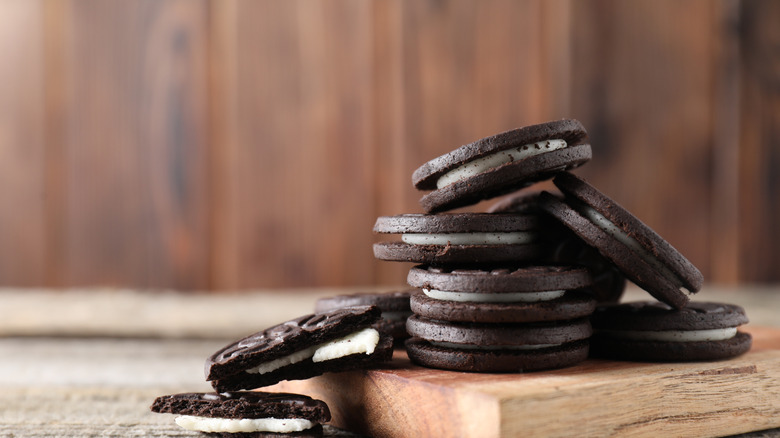
Not satisfied with one Oreo flavor, the company began offering new flavors in 1974. There's an official Oreo Flavor Lab somewhere inside the Mondelez building that works in secrecy, requiring permitted entry and non-disclosure agreements. There are plenty of Oreo flavors out there, and some, like mint Oreos, were popular enough to become permanent additions while others are seasonal offerings like the Pumpkin Spice Oreo. There are also those products that use Oreo cookies as an ingredient, like cookies 'n cream ice cream. While its origin story can't be 100% confirmed, South Dakota State University has one claim on the flavor's start. Reportedly, the school sold an Oreo ice cream in 1979 and later changed the name to what we know now, to prevent any copyright problems.
Oreos are so prevalent, they're featured in media, like in the film "Rounders," where splitting the cookie is used to build tension in a pivotal scene. Another pop culture Oreo moment happens on the show "Futurama," when Fry unwraps each component of a "styro-pak cookie" and uses a press to make the sandwich, only to twist off the cookies and lick the filling. Oreo has always leaned into the habit of twisting its cookies apart as well as the classic cookies-and-milk pairing, from its first advertisement showing someone splitting up the cookie back in 1923, to today with its "twist, lick, dunk" campaign. This combination of delicious product and high-visibility pop culture prominence is what now sells 40 billion cookies per year, enough to envelop Earth's equator five times around.