

The Five-And-Dime Store Lunch Counters Boomers Still Remember Fondly
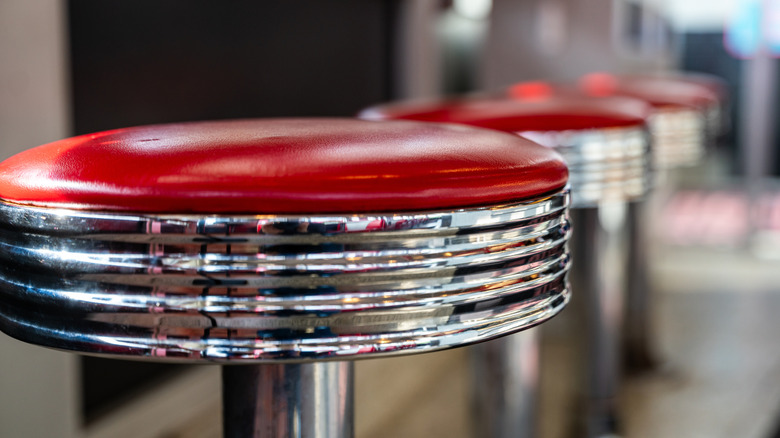
We are now several generations removed from the days of the free lunch, but one low-price option still fondly remembered by many is the lunch counter, or luncheonette, at five-and-dime stores pioneered by F.W. Woolworth. The counters usually consisted of fixed stools where people sat alongside strangers to have a tuna melt, burger, or a coffee. In some cases, luncheonettes allowed mothers to shop peacefully while their kids enjoyed a treat, as was the case for one Redditor, who said, "The Woolworth's counter was my 'babysitter' while my mom shopped. She would buy me a milkshake and it would take me a half hour to finish it."
For the first half of the 20th century, downtown was the shopping hub for American families. While working in an old general store, Frank Winfield Woolworth had the idea that he could open a store where everything sold for five cents after negotiating fixed pricing directly with manufacturers to eliminate the need for constant haggling. He opened a store in New York, but the numbers didn't add up to profits and it failed. When he opened his second store in Lancaster, Pennsylvania, he sold items at five and 10 cents — hence, five and dime — to account for the errors of the first store and it worked, growing the company to thousands of stores around the nation. The lunch counters were a deliberate section added to Woolworth's locations so shoppers had a reason to remain in the stores a little longer.
Lunch counters are both nostalgic and historic
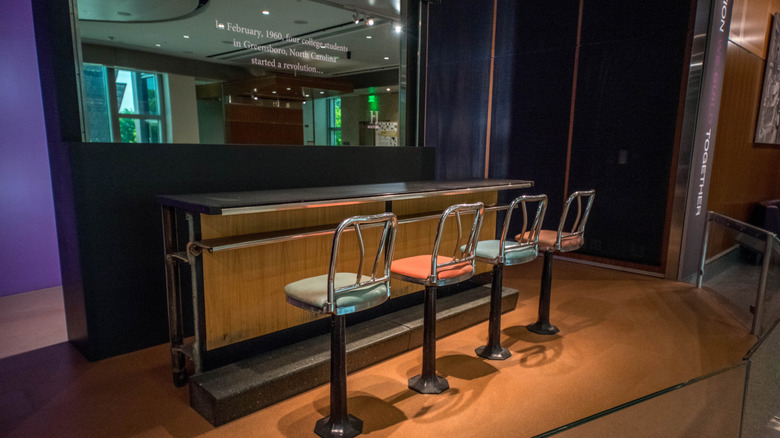
To many, five-and-dime food bars spark up nostalgia. For others, the lunch counter is a symbol of something that once separated them from society. In the segregated South, Black people couldn't sit alongside white diners. That is until February 1, 1960, when four brave young men in a Woolworth's in Greensboro, North Carolina, sat down and politely requested service. When the staff refused, the men remained in their seats until the store closed. They returned each morning after that, with more people joining them every day, in what became the Greensboro sit-ins. That July, the Greensboro luncheonette was desegregated and Black people were finally allowed to dine with everyone else, marking a momentous victory for the Civil Rights Movement.
The social importance of lunch counters cannot be denied, but as the '60s gave way to the '70s, another major shift in America occurred as people moved away from downtown areas and into suburbs. Cars and highways made it easier to live away from the noise and congestion of the major metropolis while still making your way in when necessary. The added space of these areas led to bigger stores like Kmart, Target, and Walmart. The five-and-dime store couldn't compete and the final Woolworth's stores closed in 1997. Today, one Woolworth's luncheonette remains in Bakersfield, California. When the store closed, the community insisted on preserving the building and kept the dining service running. It's one way of reliving — or experiencing for the first time — the five-and-dime luncheonettes of the '50s that became such a poignant symbol of 20th-century America.