

The Right Way To Grill A Ribeye For The Most Juicy, Tender Results
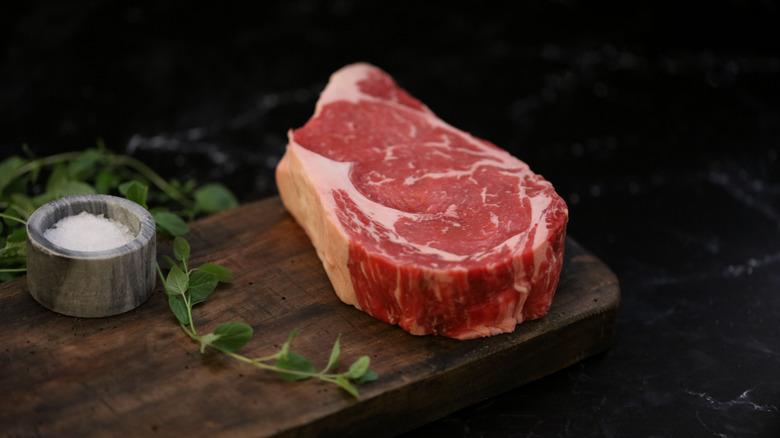
Ribeye is a great choice for a steak, as long as it's cooked right. Done wrong, it can be dry and tough. In other words, the exact opposite of what you want from a steak. To help you grill the most delicious, tender, and juicy ribeye the next time you are hungry for a good steak dinner, Chowhound reached out to an expert to learn the right way to grill this popular cut of meat. William Eck III, the in-house meat expert at Verde Farms, has more than 20 years of experience in the industry. He's a graduate of Le Cordon Bleu, an HACCP-trained food safety expert, and has worked in James Beard Award-winning kitchens and boutique butcheries — so yeah, he knows his stuff when it comes to cooking meat, and he shared some expert tips so you can grill a ribeye like a pro.
Ribeye is one of the cuts of beef you should always buy. It's a great bang for your buck, especially when it's on sale, but once you get it home to cook it, you've got to treat it right. According to Eck, that starts before you even start cooking. He recommends letting it sit out on the counter for about 20 minutes before you throw it on the grill, giving it a chance to get closer to room temperature. "Putting a cold steak onto a hot grill means the outside will get done faster than the middle will come up to your desired temperature," says Eck. Bringing it to room temperature first will make it easier to get an even cook throughout the steak.
Once your ribeye is prepped, it's time to cook it properly
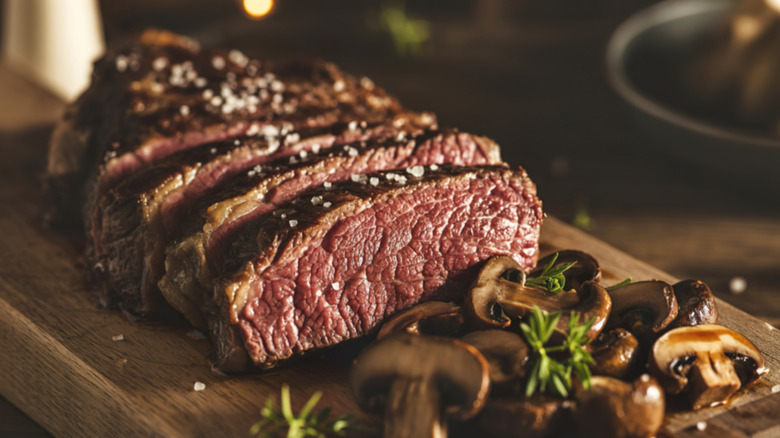
There is another important technique that happens before you start cooking. William Eck III suggests using a paper towel to pat the steak dry and then season it with salt. If you let the salt sit for at least 10 to 20 minutes, it will pull the juices to the surface where they will absorb that salt. This has an interesting effect: The now-salted moisture is then pulled back into the meat, which seasons the inside of the steak along with the surface.
Don't forget to pat the surface dry again because you'll want it nice and dry for the next step. "Exterior moisture prevents a nice Maillard reaction, which is the chemical reaction that creates the browning on foods when reacting to heat," says Eck. That Maillard reaction is exactly what you want to happen, so after this step, your meat will be all ready to go on the grill. Eck suggests high heat (450 to 500 degrees Fahrenheit) to get a good sear. "Searing the exterior traps the moisture inside the steak, as opposed to lower temps which can cause the steak to release moisture as it cooks," he says.
Once you've got a good sear, Eck recommends lowering the temperature to 350 to 400 degrees Fahrenheit and keep cooking until it's cooked the way you like it. Once you take your ribeye off the grill, you'll want to let it rest — at least for 10 minutes, according to Eck — so the juices have a chance to evenly distribute throughout the meat. "If you cut into a steak fresh off the grill," he says, "you will literally be able to see all the juice leave the steak and run onto your plate."
A few extra tips and tricks will seal the deal
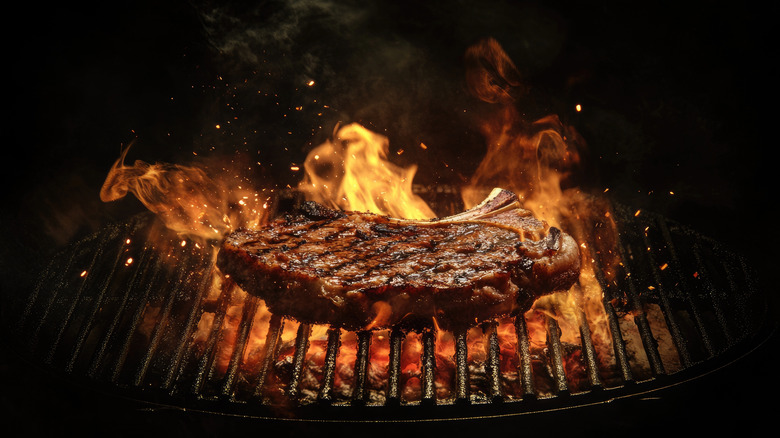
There are a few other things you'll want to keep in mind so your ribeye comes out tender and juicy. When you are cooking on a grill, airflow is important to maintaining the right temperature. "More air, more heat, and vice versa," says William Eck III. So don't overcrowd your grilling surface with steaks. You can also use a combination of a grill thermometer to keep an eye on the grill temperature, and a meat thermometer to keep an eye on the meat temperature as it cooks.
The heat issue also has something to do with the meat itself, or rather the fat in the meat. As Eck points out, ribeye is known for its high fat content. It's actually considered one of the unhealthiest cuts, albeit one of the most flavorful, with about 10 percent saturated fat per 100 grams of steak. All that rich marbling makes it an indulgent treat when you want something decadent and flavorful, even if you opt for an organic, 100 percent grass-fed ribeye which, according to Eck, is leaner but just as delicious. But as it cooks, that fat renders, and will drip down through the grates of your grill. If you're not paying close attention, those fat drips can cause the flames to flare up, which can quickly overcook or even burn the meat. And don't forget that the meat will experience some carryover cooking once it comes off the grill. "The best method to counter this is to pull the steak about five degrees below your desired doneness," says Eck. Armed with these expert tips and tricks, you can now buy ribeye with confidence, knowing it will be perfectly cooked every time.