

These Whimsical Vintage Jars Sold For $1 In The '60s — Now The Set Is Worth Big Money To Collectors
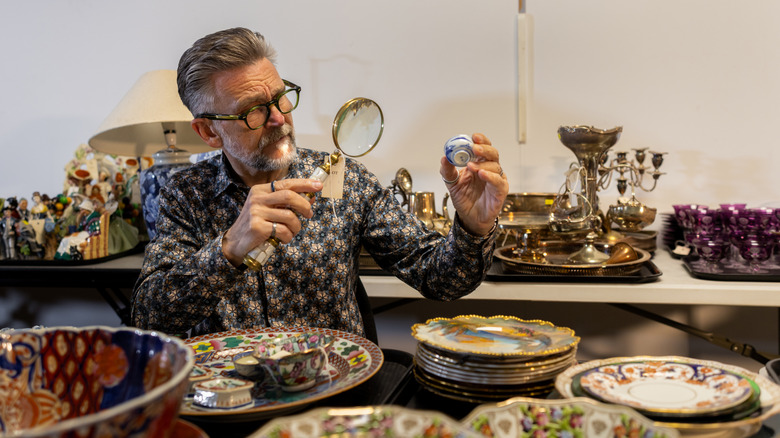
Being a vintage collector is something of an endurance sport. Whether it be vintage cookbooks that are now worth a pretty penny, classic Barbie dolls (I still have every holiday Barbie doll in their original box dating back to my birth year), or canned soup memorabilia; collectors will comb through antique stores and websites in search of their favorite trinkets, often regardless of the hefty price tag. One such retro collectible, Holt Howard's Pixieware line, is currently having its moment.
New York-based Holt Howard was founded in 1949 by Robert Howard, John Howard, and Grant Holt at the dawn of the postwar modern design era. The company's concept was to combine American design with Japanese manufacturing, which was brilliant and resulted in high-quality, hand-painted ceramics that were both whimsical and affordable. It was ahead of its time, and relied on anticipating trends and identifying changes in the cultural landscape of a more optimistic America, and their wide range of products remain highly collectible to this day.
Holt Howard introduced Pixieware in 1958 to much applause and fanfare, bringing forth condiment jars, shakers, and other tabletop pieces that boasted a distinct personality and pop of color. The vintage kitchen design trend became prized possessions in kitchens across America, with individual pieces commonly selling for just $0.99, making them accessible to a wide range of consumers. Other Holt Howard collections included the Coquette line of sophisticated female figurines and the company's popular holiday ceramics, which have also attracted devoted fans.
Vintage Holt Howard Pixieware pieces and where to find them
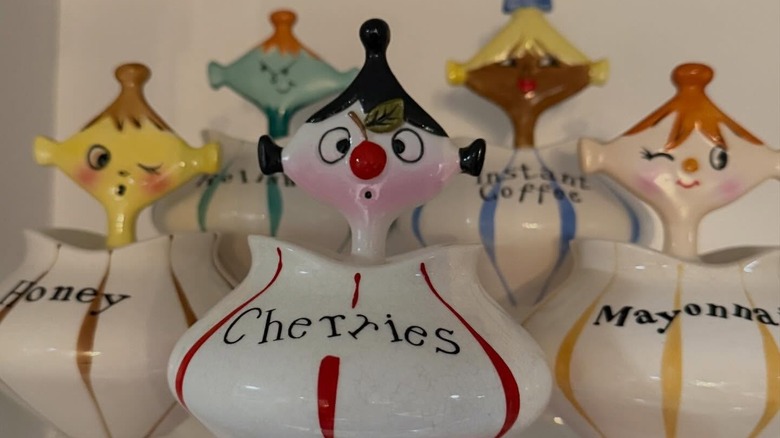
The original Pixieware lineup included Jam 'n Jelly, featuring cheerful rosy cheeks; Ketchup, with an orange face and green hat; and mischievous Mustard, with a yellow face and orange hat. Each ceramic's head — the topper — boasted a serving spoon attached to its underside for scooping or dipping. Instant Coffee, a winking Lil' Sugar and Cream Crock, as well as cocktail condiment jars for cherries, onions, and olives were also part of the original lineup in 1958. The cocktail condiments' spoons were replaced with perforated versions designed to drain the liquid. A notation indicating Japan as the country of origin as well as the year in which the piece was made can be found on the bottom of each collectible.
Long gone are the days of $0.99 Pixieware pieces. Today, these coveted collectibles are sought after by fans and decorators alike, with individual pieces fetching hundreds of dollars. When it comes to shopping for Pixieware, the general rule is simple: The more mass-produced the piece, the less expensive it tends to be and the more likely you are to find it at a flea market or online. (An original Instant Coffee piece, for example, is currently listed for $249 on Etsy.) Rarer finds, including complete sets and holiday pieces produced in limited quantities, command considerably higher prices, particularly when they're in pristine condition. Case in point: A Pixieware Berries Dish Snack Bowl is listed for a cool $1,100 on eBay at the time of writing.