

Forget Baked Potatoes — Make Your Spuds Danish Style For A Crispy, Caramelized Side
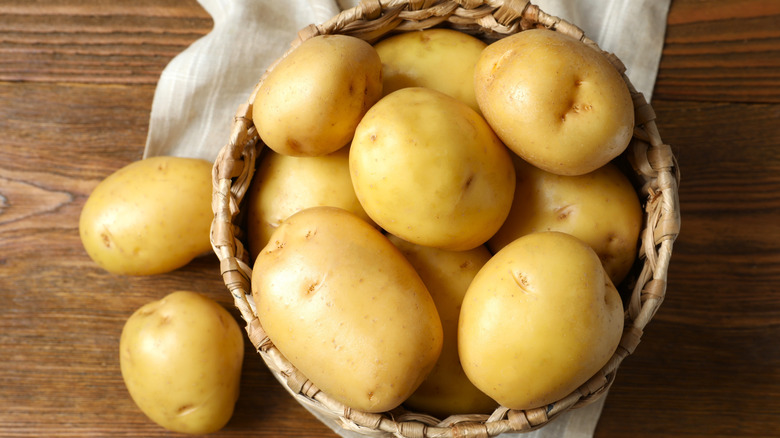
Starchy potatoes make an excellent accompaniment to just about any meal, happily sopping up the juices from whatever meat or vegetable entree they're paired with. Everyone has a favorite potato variety, and while there are plenty of potato side dishes that shouldn't be overlooked, there's one that deserves your utmost attention. Move over, baked potato — there's a new spud sheriff in town: Danish-style brunede kartofler.
Hailing from Denmark, brunede kartofler (literally "caramelized potatoes" in Danish) are small potatoes coated in a mixture of sugar and butter. It's said that the dish can be traced back to the 18th century, though it became more widespread in the 19th century, when caramelized chestnuts were often served alongside Christmas goose. In some households, small potatoes were used in place of chestnuts because they were more affordable, and brunede kartofler eventually became a staple. Now traditionally served in households across Denmark during the holidays, we believe these darling potatoes should be adorning dinner tables all year-round.
Tips and techniques for mastering brunede kartofler
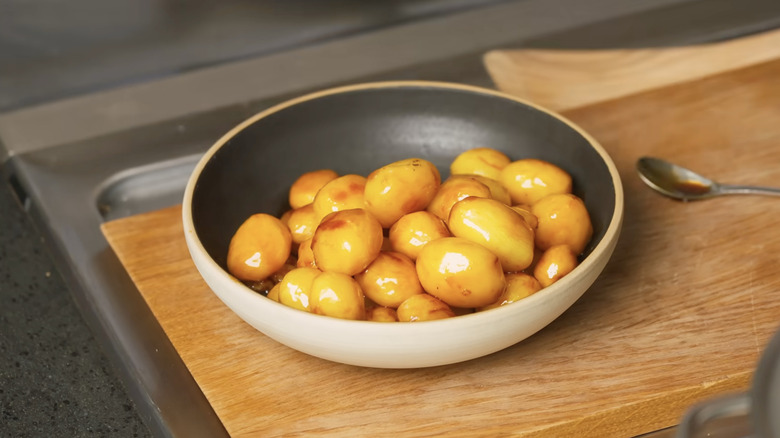
The potatoes are actually quite simple to reproduce in your own kitchen. Small, waxy potatoes — such as new potatoes — are first boiled in salted water until tender, peeled once cooled, and thoroughly dried. Next, sugar is heated in a skillet until it forms an amber caramel, and butter is stirred in to create a rich sauce. The prepared potatoes are then added to the pan and continually flipped until all sides are coated in a beautiful golden, caramelized crust while the interiors remain tender.
For those making caramel for the first time, not to worry: We're here to help. Indeed, making caramel can be a slippery slope — take it just a second too far, and the sauce can go from beautifully caramelized to a burnt, black paste in the blink of an eye. Because of this, it's important to never walk away from the pan. Using a heavy-bottomed skillet will distribute the heat evenly, and a light-colored one will let you see the sugar change shades so you don't accidentally take it too far.
From there, you can also elevate your caramel sauce for your new favorite potato sidekick. Scrape in a vanilla bean for more sweetness, or try infusing it with star anise for a caramel with spicy notes of licorice and cinnamon. Give it even further complexity by adding in a spoonful of miso paste for a deeply savory, umami vibe.