

Gummy Bears Could Come From A Surprising Source In The Future: Recycled Wind Turbines
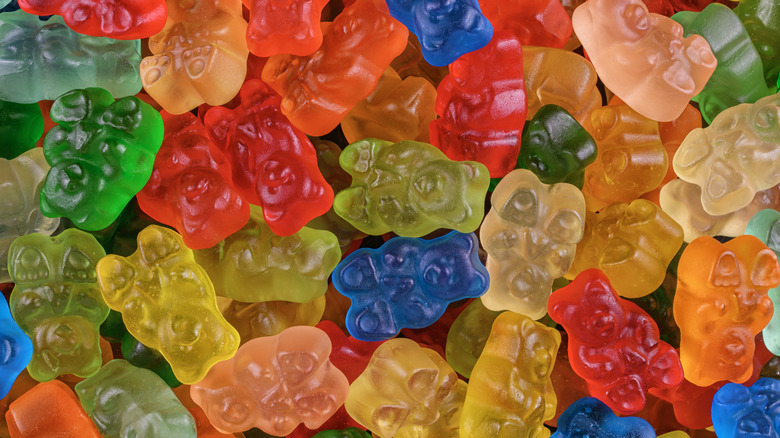
Gummy bears are a guilty pleasure that people of any age find hard to resist. They're chewy, fruity, and come in a rainbow of colors, so it comes as no surprise that they're James Beard Award-winning chef Tiffani Faison's favorite candy. The main reason they're so addictive comes down to (you guessed it) sugar. As it turns out, nearly half of what's in a gummy bear by weight is pure sugar. But you'll also typically find gelatin, glucose syrup, starch, citric acid, food coloring, and flavorings in their composition. However, that tried-and-true recipe could soon change. Future gummy bears could come from (of all things) recycled wind turbine blades.
Oh boy. Feeling confused? Believe us, writing that sentence felt even stranger. Before you start imagining metal turbine blades being crushed or ground into gummy bears, just know that's not exactly how it would work. In 2022, University of Michigan researchers led by John Dorgan, PhD created a unique material that combines fiberglass with a plant-derived polymer to create a thermoplastic resin, per EurekaAlert!. That resin can apparently be used to create both wind turbine components and sweets.
When a wind turbine blade made of this material reaches the end of its operational life, it's capable of being dissolved and recycled into something new. That recycled material could become a brand new wind turbine blade or it could be transformed into gummy bears. Think Haribo, Black Forest, Albanese, or your go-to bag of chewy treats from Trader Joe's. And that's only the beginning. The resin can also be recycled into countertops, car lights, and diapers.
Turning a wind turbine blade into candy

While this sounds like something straight out of a Harry Potter movie, there's some fascinating science behind it. Depending on how they process the resin, manufacturers can break it down to produce several useful substances. Dissolving it in an alkaline solution allowed them to produce polymethyl methacrylate. This synthetic polymer is better known as plexiglass, which is widely used to make windows, skylights, signs, and aircraft canopies. Alternatively, placing the resin under high temperature converts the material into poly(methacrylic acid), which is an absorbent material commonly used in diapers.
Here's where things get interesting. The resin can also be recycled into potassium lactate, which is a food preservative found in dairy products and fruit juices, for example. (To be fair, it probably wouldn't rank very highly in the juice brands with the best and worst ingredients.) While demonstrating their new resin at a meeting of the American Chemical Society, the team of researchers discussed the gummy bears. "We recovered food-grade potassium lactate and used it to make gummy bear candies, which I ate," John Dorgan said at the meeting (via EurekaAlert!).
According to the scientists, the goal in producing this new resin was to incentivize companies to recycle more frequently by increasing the profitability of recycling. (They are apparently unconcerned with the yuck factor here.) It might be a while before we get the chance to try this out ourselves, so until wind turbine gummy bears make their supermarket debut the Haribo trick or treat trio should satisfy your Halloween candy cravings.