

Transform Corn Into Lush, Decadent 'Butter' That Makes The Perfect Pasta Sauce
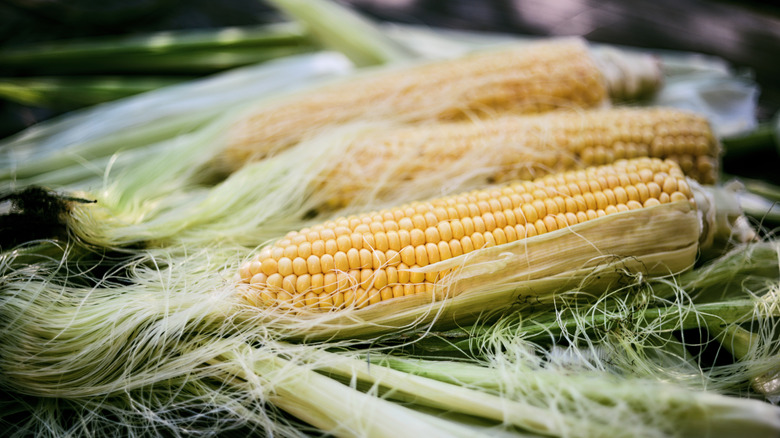
Come summertime, eating a freshly shucked sweet ear of corn right off the grill — whether doused in butter, served elote-style, or dusted with iconic Old Bay seasoning — brings sheer joy to the masses. But there's a way to harness and amplify that sweet corn flavor: Turn it into a rich, spreadable corn butter that you can enjoy long after summer's over. It's delicious on its own, slathered on sourdough or cornbread, or even used as a sandwich spread, but its creamy texture and sweet flavor also make the perfect canvas for a variety of pasta dishes.
Give your corn butter the luxurious carbonara treatment by adding diced, crispy pancetta or bacon, whisking in an egg yolk (or two), and topping it with freshly grated Parmesan cheese. Or celebrate the flavors of summer by tossing it with other produce at its peak, including fresh cherry tomatoes and basil. Toss it with your favorite ravioli or stir it into a pan of risotto, and add some crumbles of salty ricotta salata for extra texture and zip. You can also riff on the classic seasonings you'd reach for with corn on the cob, adding a hefty hand of spicy gochugaru or even tried-and-true Old Bay.
How to make corn butter at home
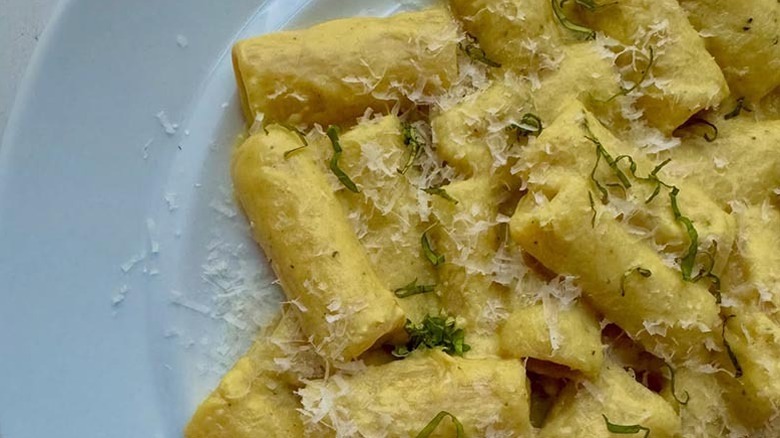
You can achieve glorious corn butter greatness in the comfort of your own kitchen. The genius hack couldn't be simpler: Strip the kernels from the cob and blend them until completely smooth, then press the mixture through a fine-mesh strainer to remove any remaining solids. The resulting concentrated corn liquid has a consistency similar to water, but once it's reduced over low heat, it transforms into a thick, almost polenta-like consistency. There's a bit of science that happens by way of the corn kernels' natural starches; once heated, they release, thickening the corn butter. You'll know it's nearly ready when you can drag a spatula across the bottom of the pan and see the bottom clearly. Remove it from the heat, season it with salt, and store it in the refrigerator for three or four days or freeze it for a later use. The end result is a vibrantly yellow, one-ingredient spread with no stabilizers or other additions — just pure, concentrated corn, gluten- and dairy-free.
Buying pre-shucked fresh specimens from the grocery store is a common corn mistake, as they begin to lose sweetness once shucked. Frozen corn, on the other hand, makes for a fine substitute — just make sure the corn is fully thawed, at room temperature, and dried well to prevent excess moisture from affecting the final product.