

Prime Vs Choice Filet Mignon: What's The Difference?
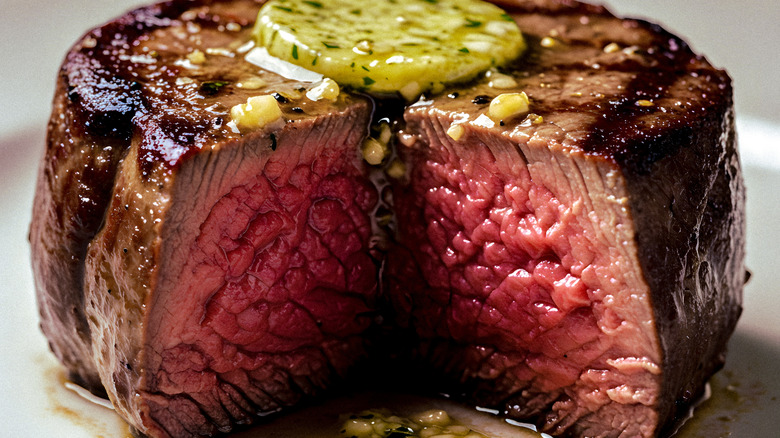
Gordon Ramsay has called filet mignon "a chef's dream." Though it's one of the leaner cuts of steak, a filet mignon is often incredibly tender and receptive to seasoning. Whether you cook it on the grill or in a scorching hot cast iron pan, this cut is one of the more delicious steaks you can make at home.
That said, not all filet mignons are created the same. That's where USDA grading comes in. The three highest USDA grades you'll see for steak are — from best to worst — Prime, Choice, and Select. Typically, Prime steaks are graded as such because of their marbling, the lines of intramuscular fat you'll see throughout the raw steak. The more marbling, the better the steak should be.
Choice and Prime are the most common options you'll see in standard grocery stores and most mid-level to high-end steakhouses. While the Select grade is available at some stores, its lack of marbling and intramuscular fat makes it more ideal for preparing with marinades in dishes like fajitas. It's not ideal to purchase as a whole cut of steak on its own. So, for the purpose of this article, we'll focus on what you can expect from Choice and Prime filet mignons, enabling you to make the best decision the next time you're at the meat counter.
What factors go into a USDA Choice graded filet mignon?
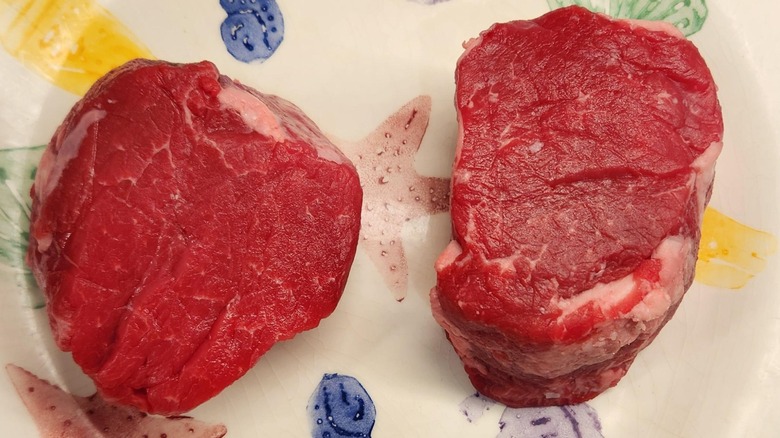
Choice is the most common grade of filet you will see at the grocery store. It's also what you'll find at popular chain steakhouses like Texas Roadhouse. Choice steaks generally have a small to moderate amount of marbling throughout the meat. Being a leaner cut, expect a Choice filet to be mostly red, with a few thin, white streaks and threads. While it doesn't have the same level of marbling as a Prime graded steak, it is still considered high quality and can be delicious when seasoned and cooked properly.
A Choice filet mignon also offers a nice balance of quality and cost. It's not nearly as expensive as Prime graded steak, but it can still be quite flavorful. Choice filets currently start at around $19 per pound at mainstream grocery stores like Kroger, though costs might differ based on where you live.
You can prepare it in all the same ways as you would the Prime cut: simply grilled, reverse seared in the oven and onto a cast iron, or get a hard cast iron sear on the filet first before finishing in the oven. A marinade is unnecessary for a filet given its inherent tenderness, but some people enjoy the extra flavorful results of a short soak. Many chefs and home cooks find medium rare the ideal temperature for this cut, given its lower fat content. With Choice beef already on the low to moderate end of the marbling spectrum, medium rare is a particularly smart choice to ensure the juiciest, most tender filet possible.
What factors go into a USDA Prime graded filet mignon?
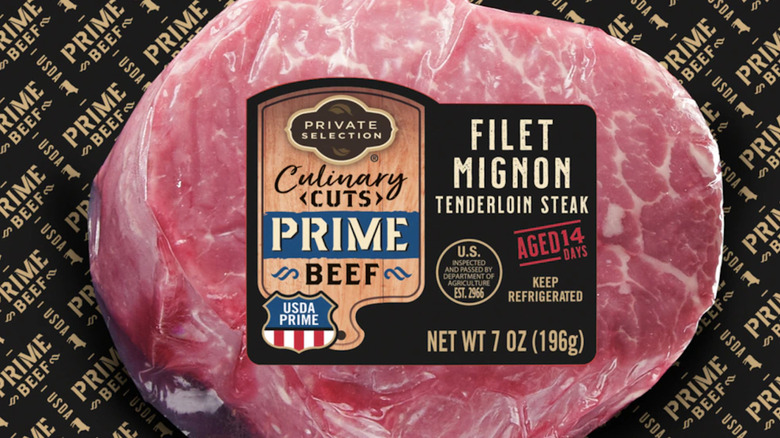
If Gordon Ramsay calls the filet mignon a "chef's dream," then the Prime filet mignon might be a chef's fever dream. This truly might be one of the most high-end cuts of beef you can purchase because only 2% to 5% of beef gets this grade. So what makes the prime grade filet mignon so, well, prime?
Again, the biggest difference between the Prime and Choice grade is the marbling. While every individual cut can be a little different, Prime graded filets will have more flecks and streaks of marbling across the board than Choice. That equates to incredibly flavorful and tender steak that has the melt-in-your-mouth qualities most steak lovers are looking for. Just sprinkle a generous portion of salt and pepper all over the exterior of the steak, let that fat render down, and you've got one of the tastiest cuts you'll find in the U.S.
Is it more expensive? Absolutely. By comparison, we found a Choice filet mignon at Costco that runs for around $26 per pound, while the Prime graded cut sells for about $36 per pound. That said, depending on where you live and where you're purchasing the steak from, the Prime cut can cost between 30% to 60% more than Choice at standard supermarkets.
Bottom line: You can definitely cook an excellent steak with a Choice filet. This grade offers a good balance between quality and affordability. But, if you're wanting a next-level steak without dipping into Wagyu prices, purchase a USDA Prime-graded filet and enjoy tenderness and flavor that's hard to beat.