

Ribeye Steak Stays Juicy With A Crispy Crust Thanks To This Flipping Tip
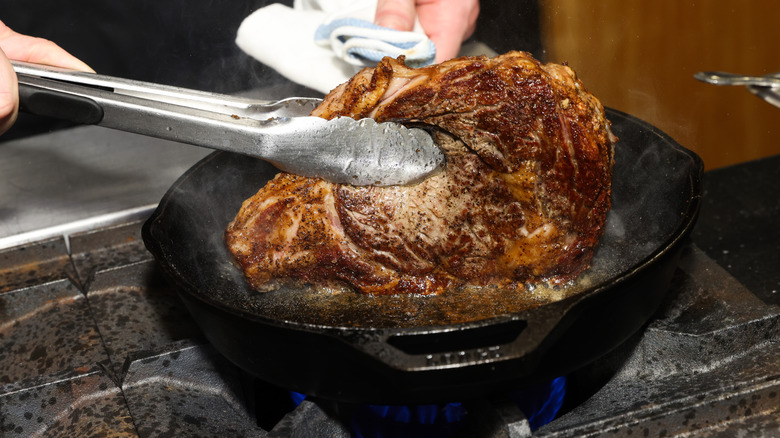
As we've previously established, ribeye is the perfect steak for grilling, but it's also fantastic seared to perfection on a stovetop. However, like other cuts, it's been subject to one of steak's most persistent myths: You should only flip once for a perfect cook.
In reality, turning a ribeye repeatedly in the pan produces a balance of browned crust and evenly pink center. As you can imagine, cadence is key. You want to flip every 30 seconds to two minutes, depending on the thickness of the steak and how hot your pan is. Avoid letting one side sit for too long to prevent an uneven cook. As long as your pan is hot enough and the ribeye starts dry, frequent flipping won't prevent browning. Steam escapes every time you peel the steak off the metal, allowing the exposed surface to dry. When it returns to the hot surface of the pan, it's perfectly primed to brown.
Ribeye landed in the pro column of our list of steak cuts to buy (and those you should avoid) because it's the rare cut that shines when you cook it a little longer, to a medium-rare or medium. That slightly longer cook time means more flipping and more opportunities to develop a perfect, golden-brown crust. Just make sure it hits the United States Department of Agriculture's (USDA) 145 degrees Fahrenheit internal temperature recommendation.
The pan, oil, and reverse-sear difference
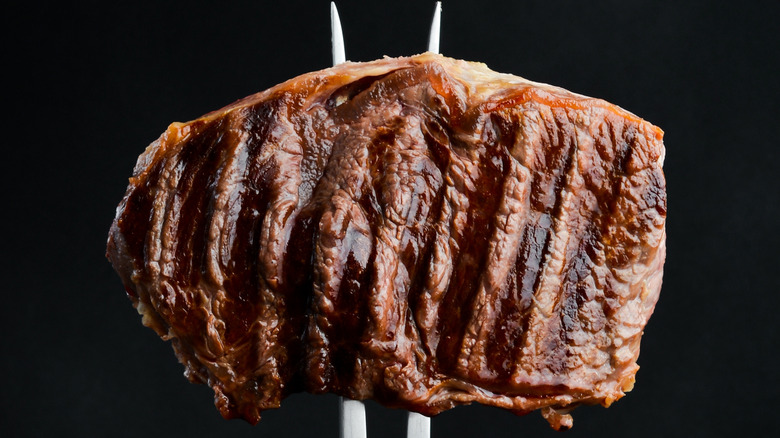
Ribeye took top honors on our ranked list of popular steak cuts, but the cook is as important as the cut. To give yourself a leg up, choose your tools and method carefully. A cast iron or carbon steel pan can retain heat well, though a truly heavy-duty stainless steel skillet also works if properly preheated.
You also want to avoid crowding. Too many steaks in the pan will cause the temp to dip, which can lead to steaming rather than developing that gorgeous crust. Also, be sure to pat your ribeye dry with a paper towel before you start frying. Start with a thin film of a neutral oil with a high smoke point, just enough that there's even contact across the surface of your steak. 2 tablespoons is generally enough for a large skillet. Butter can be great to flavor your meat later, but you risk burning its milk solids if you lead with it. After the steak is nicely browned, feel free to drop the heat and toss in some butter, herbs, or garlic for a quick baste.
Reverse searing changes the formula. The steak is already largely cooked, so it's just about developing that outer crust without overcooking the center. You still want to flip frequently for even browning, but you'll want to keep the final sear short, and a close eye on the thermometer (remember to pull it off the heat a little early to leave room for carryover cooking).