

Skip Butcher Block: The Countertop Material That's Cheaper And Sturdier
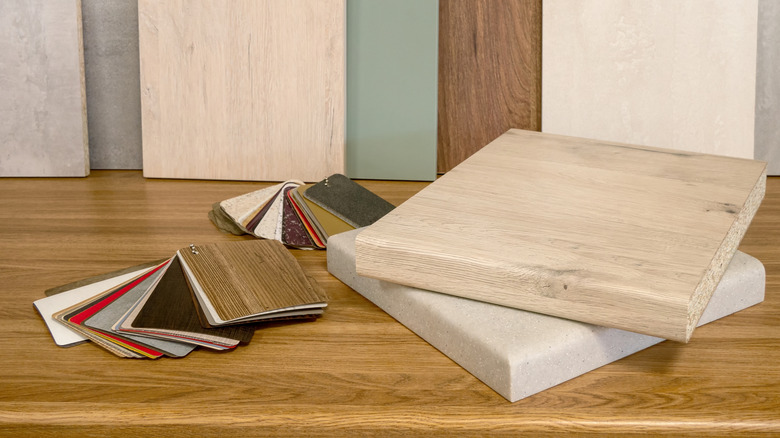
Butcher block has definitely had a moment. It's warm, looks great in almost any kitchen, and photographs beautifully (we see you, influencers). But if you've ever actually lived with it, you know butcher block can come with a list of unexpected problems that nobody ever warns you about, such as warping, staining, and constant need for oiling. And for most people, that reality doesn't quite match their Pinterest dreams.
Laminate is the countertop material that doesn't get nearly enough credit. It generally runs somewhere between $10 and $35 per square foot installed, compared to $40 to $80 for butcher block. That's a pretty big difference, especially if your kitchen budget is already tight. Unlike butcher block, laminate is resistant to everyday spills and stains and requires far less maintenance. You'll still need to protect it from direct heat and use a cutting board, but routine upkeep is minimal.
The other thing laminate has going for it is its aesthetic. The days of obvious, plasticky-looking laminate are largely behind us. Woodgrain options have gotten pretty convincing — so much so that at a glance, they appear like the real thing. This means you can get that warm, natural look when choosing your kitchen countertop color without the maintenance of actual wood, or a variety of other styles and colors that suit your kitchen's theme. If you're still really on the fence, just compare the upkeep of the two materials and take a look at what's involved in cleaning butcher block countertops. Laminate gives you the look you want without adding another maintenance task to your kitchen routine.
How upkeep differs for this countertop material
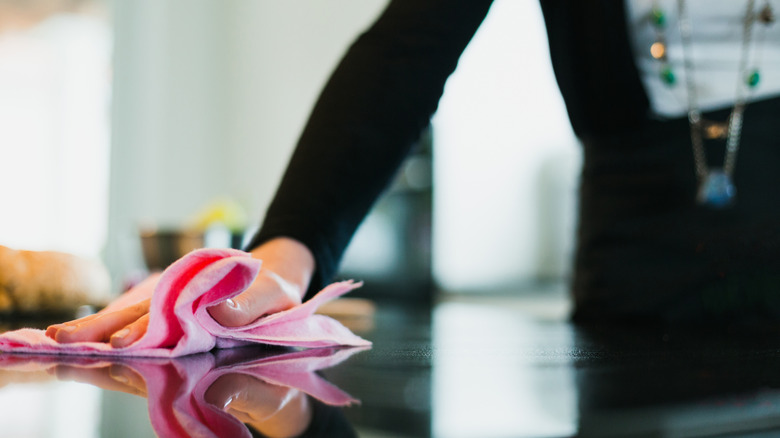
Another advantage of laminate countertops is how little effort it takes to keep them clean, sanitary, and looking great. For daily cleaning, a damp cloth and mild dish soap are pretty much all you need. Wipe it down, rinse it, and wipe it dry with another cloth. There's no special product required, and unlike butcher block, it doesn't need to be sealed or conditioned when you're done.
However, you do want to avoid anything abrasive, like steel wool, rough scrubbing pads, or powdered cleaners (or cutting directly on your counter). Those can dull and scratch the surface over time, and once the top layer is compromised, it can be harder to keep clean. Instead, stick to soft cloths or non-scratch sponges. And if you do have a tough mess, a paste of baking soda and water applied gently usually works well.
While a laminate countertop is forgiving of a wet dish or cloth accidentally left on its surface, especially compared to wood, it does have limitations. Laminate doesn't love prolonged standing water along the seams. The surface itself is water-resistant, but if water consistently sits at the edges or around the sink cutout, it can work its way underneath. Once there, it may cause the substrate to swell. Keep seams dry and reseal the edges with caulk if you notice any gaps, and your laminate countertop should hold up for years without much fuss.